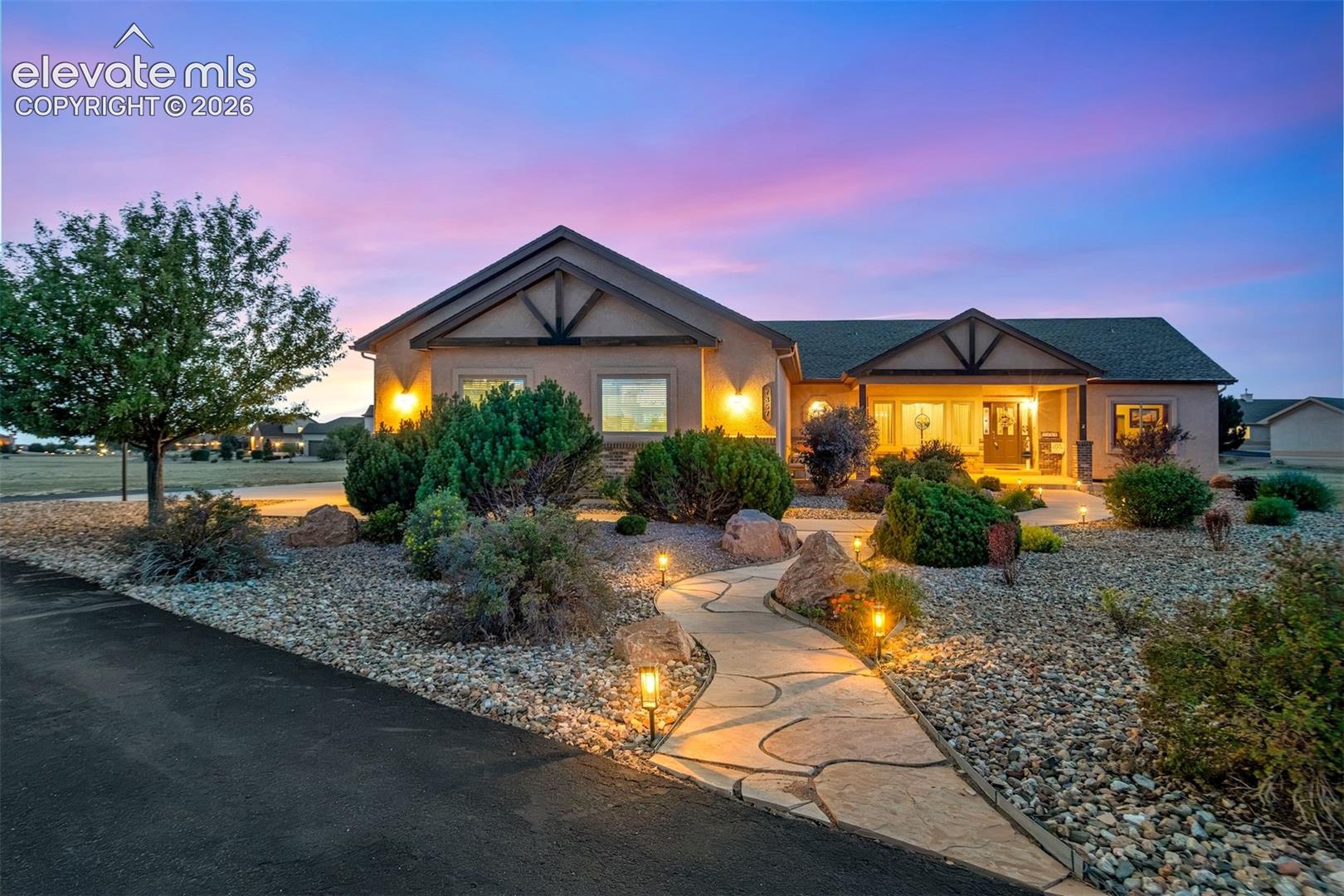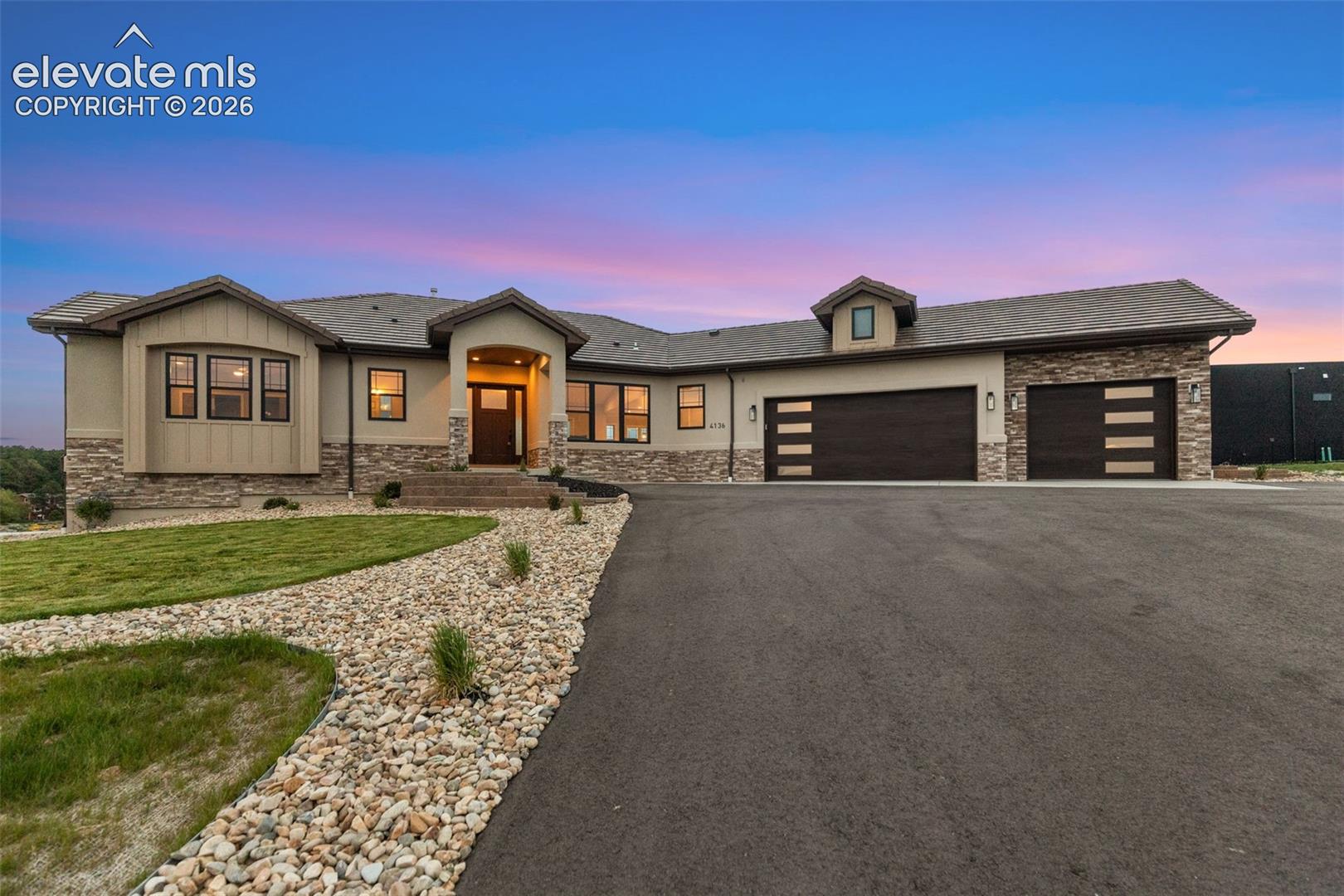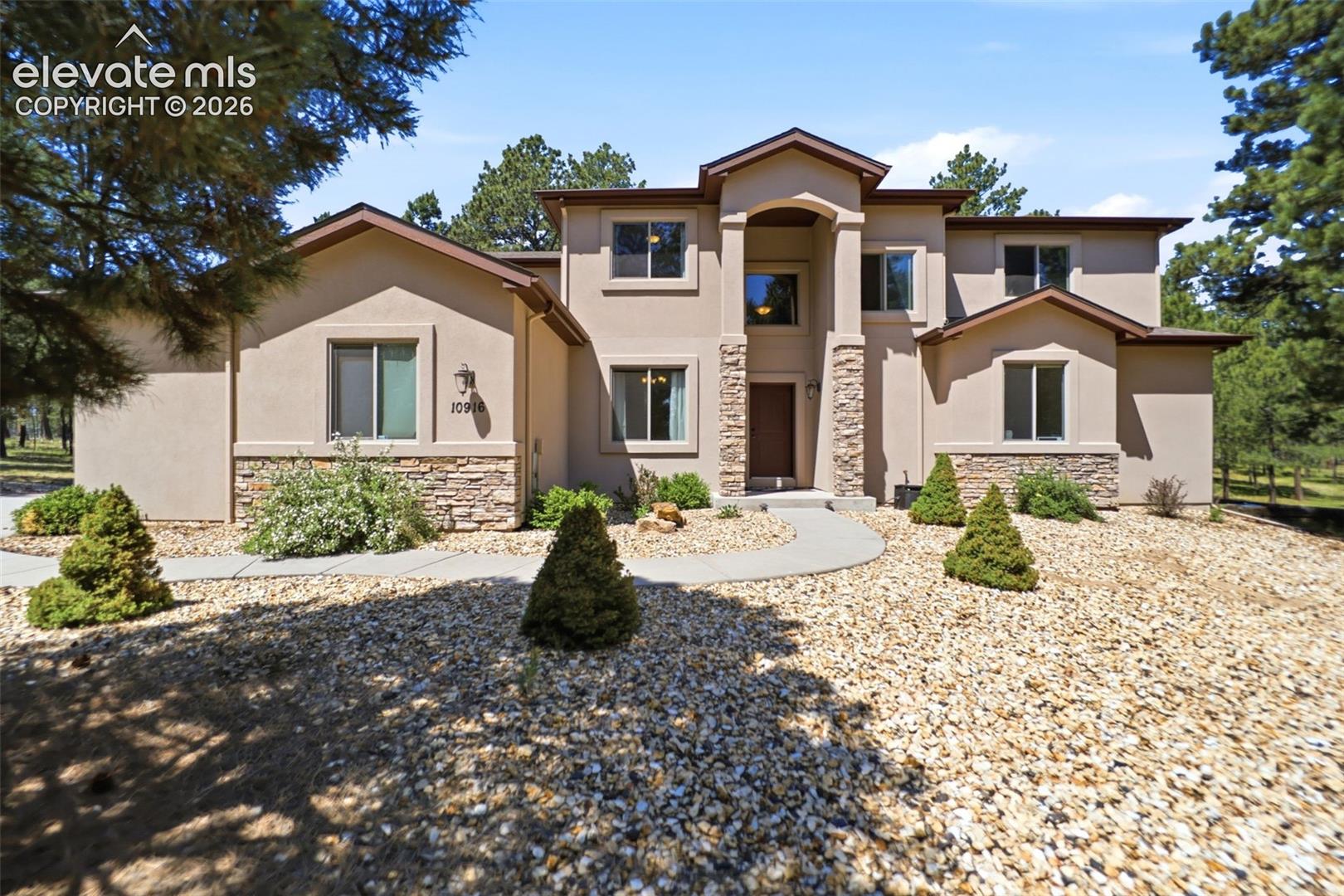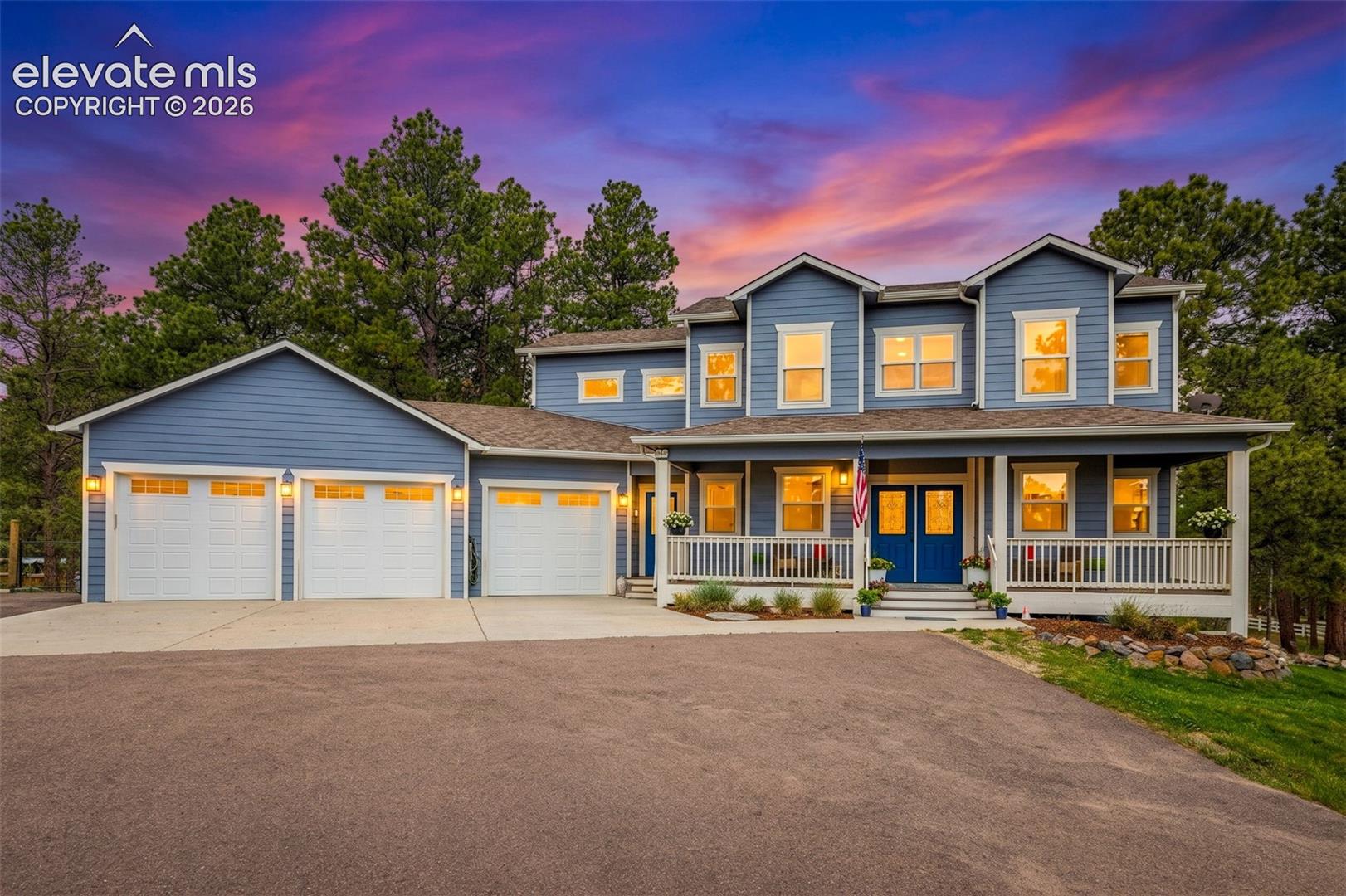
14,658 people live in Black Forest, where the median age is 48.7 and the average individual income is $65,532. Data provided by the U.S. Census Bureau.
Total Population
Median Age
Population Density Population Density This is the number of people per square mile in a neighborhood.
Average individual Income
Black Forest is unlike any other community along Colorado's Front Range. Tucked into the high pines of El Paso County, this unincorporated enclave northeast of Colorado Springs offers something increasingly rare in today's market: genuine seclusion, natural grandeur, and a lifestyle that simply cannot be replicated in a planned subdivision.
Life here is defined by towering Ponderosa pines, wide-open acreage, and a community that chooses its pace deliberately. There are no streetlights cutting through the canopy at night. There are no chain restaurants at the corner of every block. What exists instead is a culture of independence balanced with remarkable neighborly connection — the kind forged through shared history, shared land, and shared respect for the land beneath your feet.
The people who call Black Forest home are a deliberate mix: remote professionals who traded the daily commute for a Starlink connection and a quiet home office, military families connected to the Air Force Academy and Fort Carson who found they never wanted to leave, multi-generational households looking for acreage enough to house an aging parent alongside a growing family, and equestrians who need room to breathe — and to ride. What they share is the recognition that Black Forest is not simply a place to live. It is a way of living.
At approximately 15 to 20 miles northeast of downtown Colorado Springs, the community sits at the upper edge of El Paso County atop the Palmer Divide, placing it above the city in both elevation and pace. For buyers prioritizing privacy, quality of life, and long-term value in a landscape that has no real equivalent nearby, Black Forest belongs at the top of the list.
Long before Colorado Springs was a city, the land now known as Black Forest served as seasonal territory for the Ute, Comanche, Kiowa, Cheyenne, and Arapaho tribes. The dense pine canopy offered shelter, fuel, and timber — resources the land has never stopped providing, though the way people relate to those resources has evolved dramatically over the centuries.
In the 1860s and 1870s, the area was known simply as "The Pineries," and it was the lumber capital of the developing Colorado Front Range. At its peak, over 1,000 lumberjacks worked the land, supplying timber for the railroads and the rapidly expanding cities of Denver and Colorado Springs. As the stands thinned and the timber industry wound down, the land shifted to ranching and farming. By the early 20th century, Black Forest had become known for its potato crops — a quieter chapter that gave way to consolidated ranches as the Dust Bowl and Great Depression reshaped rural Colorado.
Residential development began arriving in the 1920s with early "country club" ventures like Dreamland, followed by broader suburban interest in the 1950s. Recognizing the risk of unchecked growth, residents organized to protect what made Black Forest unique. In 1974, the community established the Black Forest Preservation Plan, which prioritized 5-acre minimum lots and deliberately rural density — a decision that continues to shape the character of the market today.
The single most defining modern event in Black Forest's history occurred on June 11, 2013, when a fast-moving wildfire tore through the community, destroying over 500 homes and burning more than 14,000 acres. The devastation was immense. But so was the response. Residents rebuilt — not in retreat, but with greater intention, using fire-resistant materials, creating defensible spaces, and thinning the forest in ways that have made the community more resilient than ever. The fire did not break Black Forest. In many ways, it defined it.
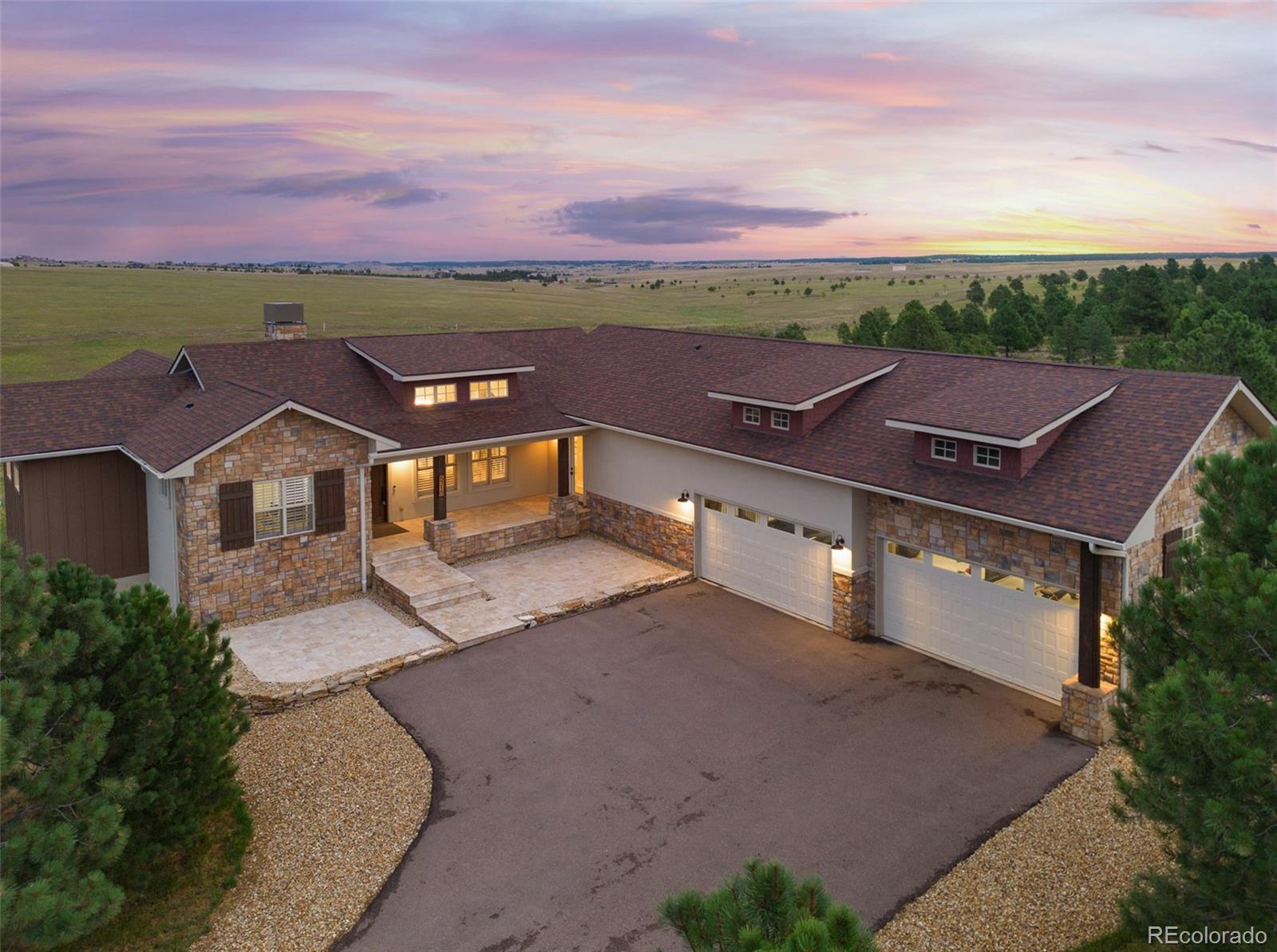
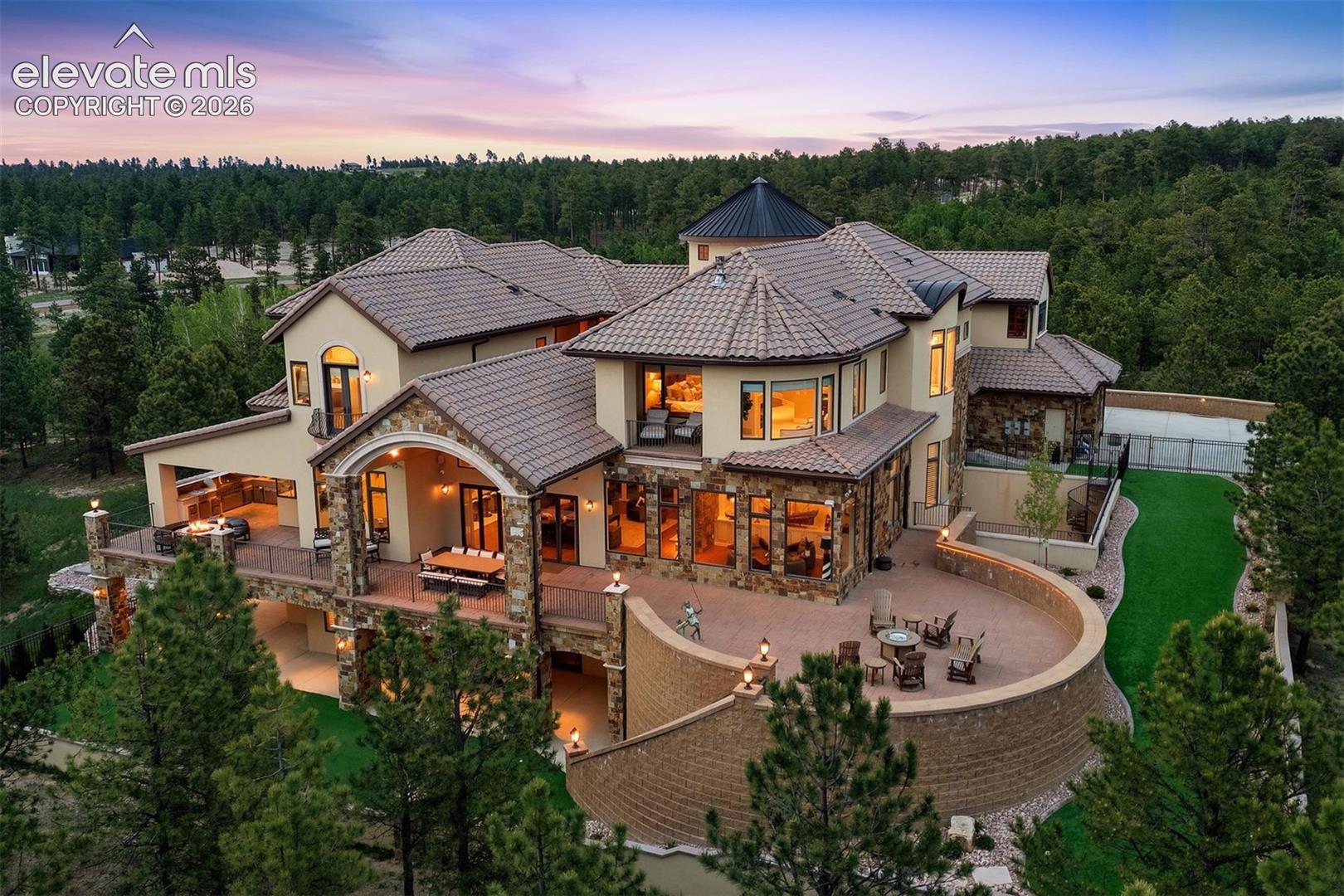
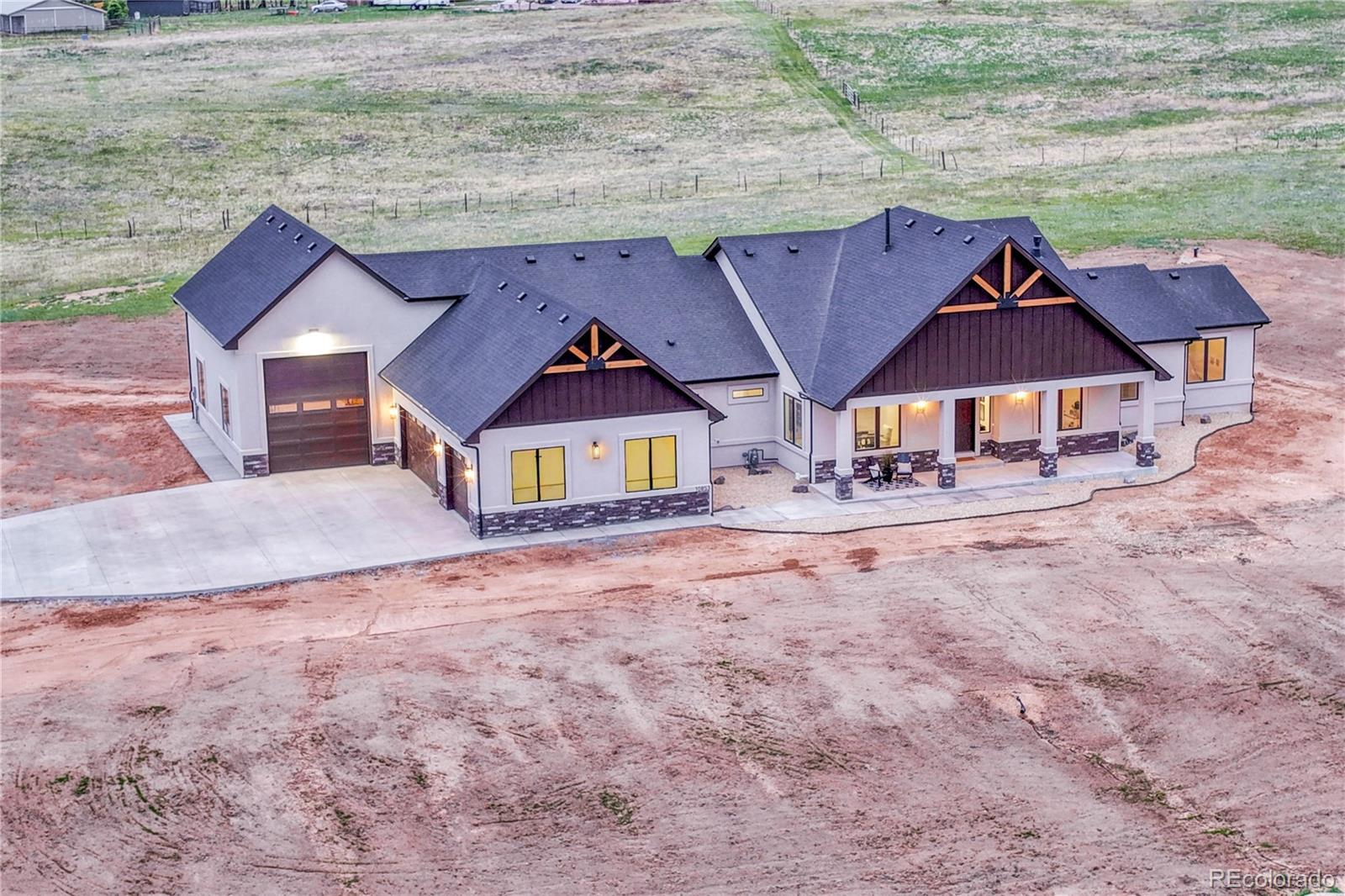
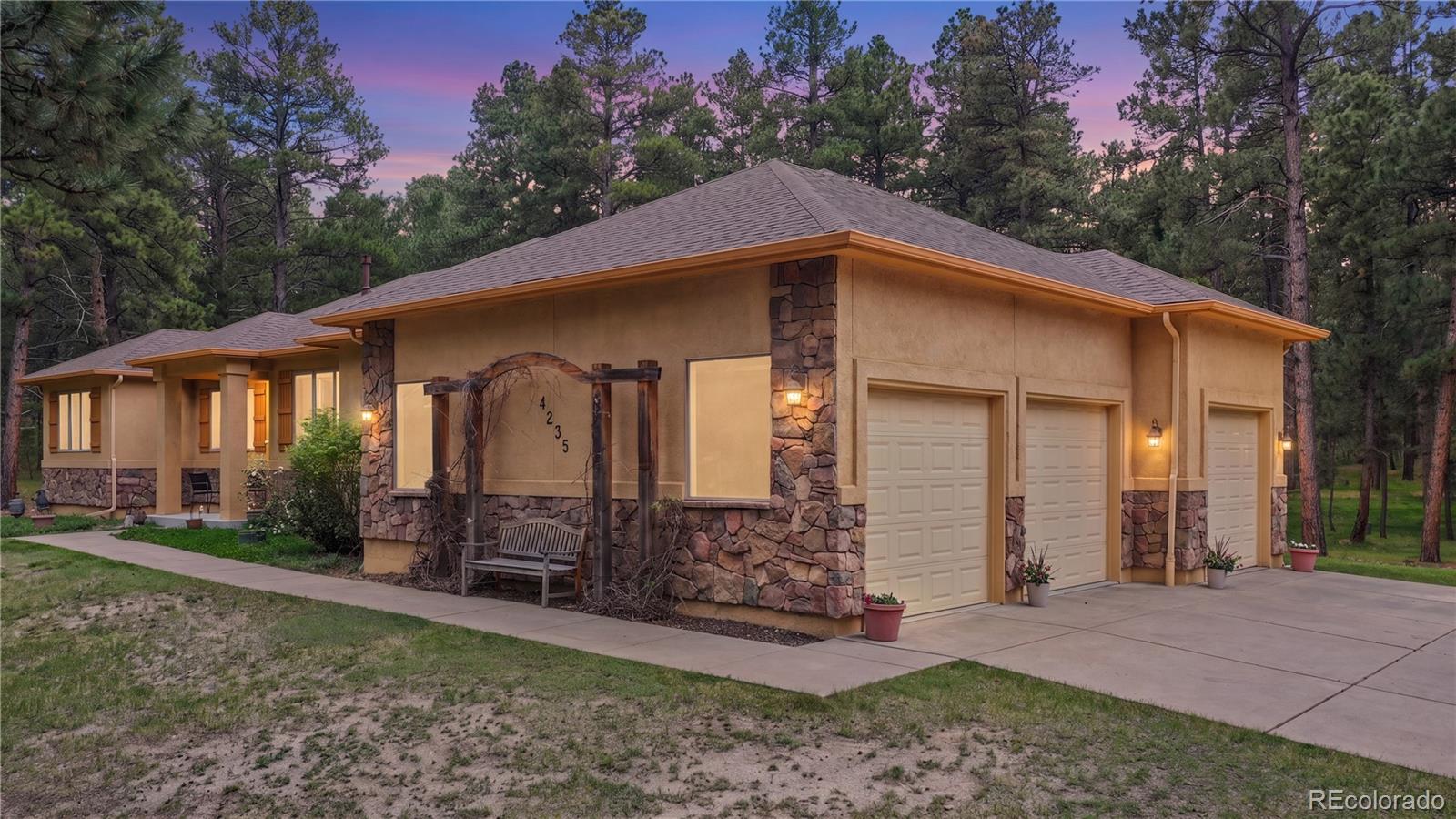
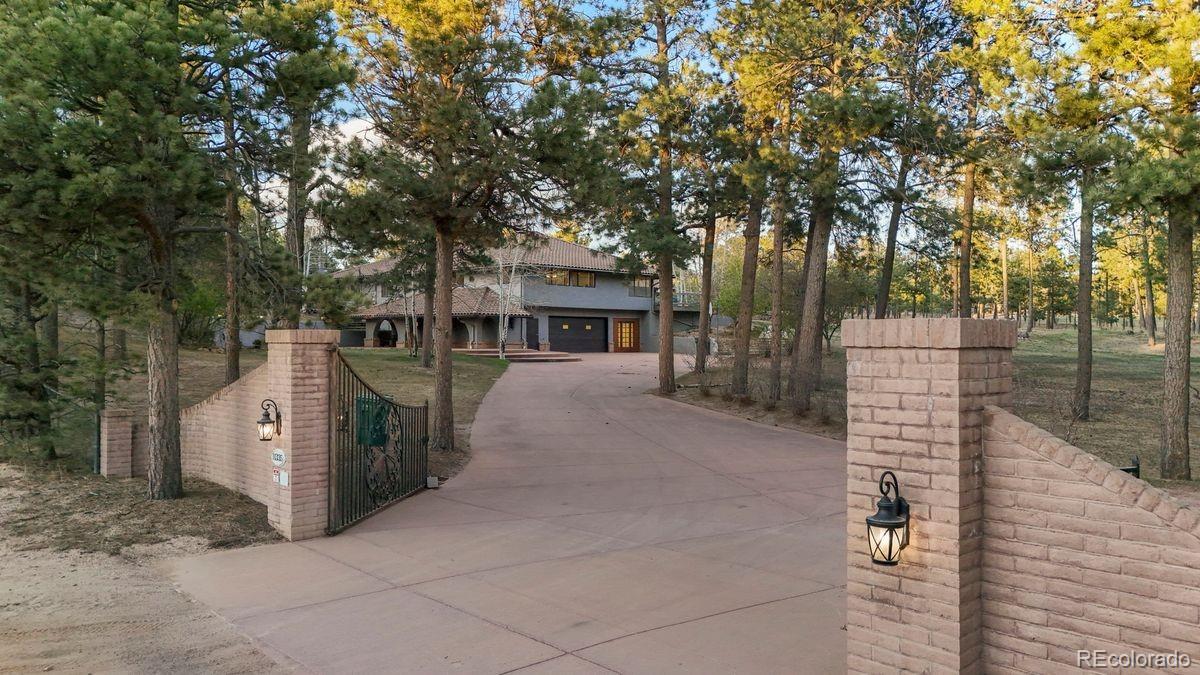
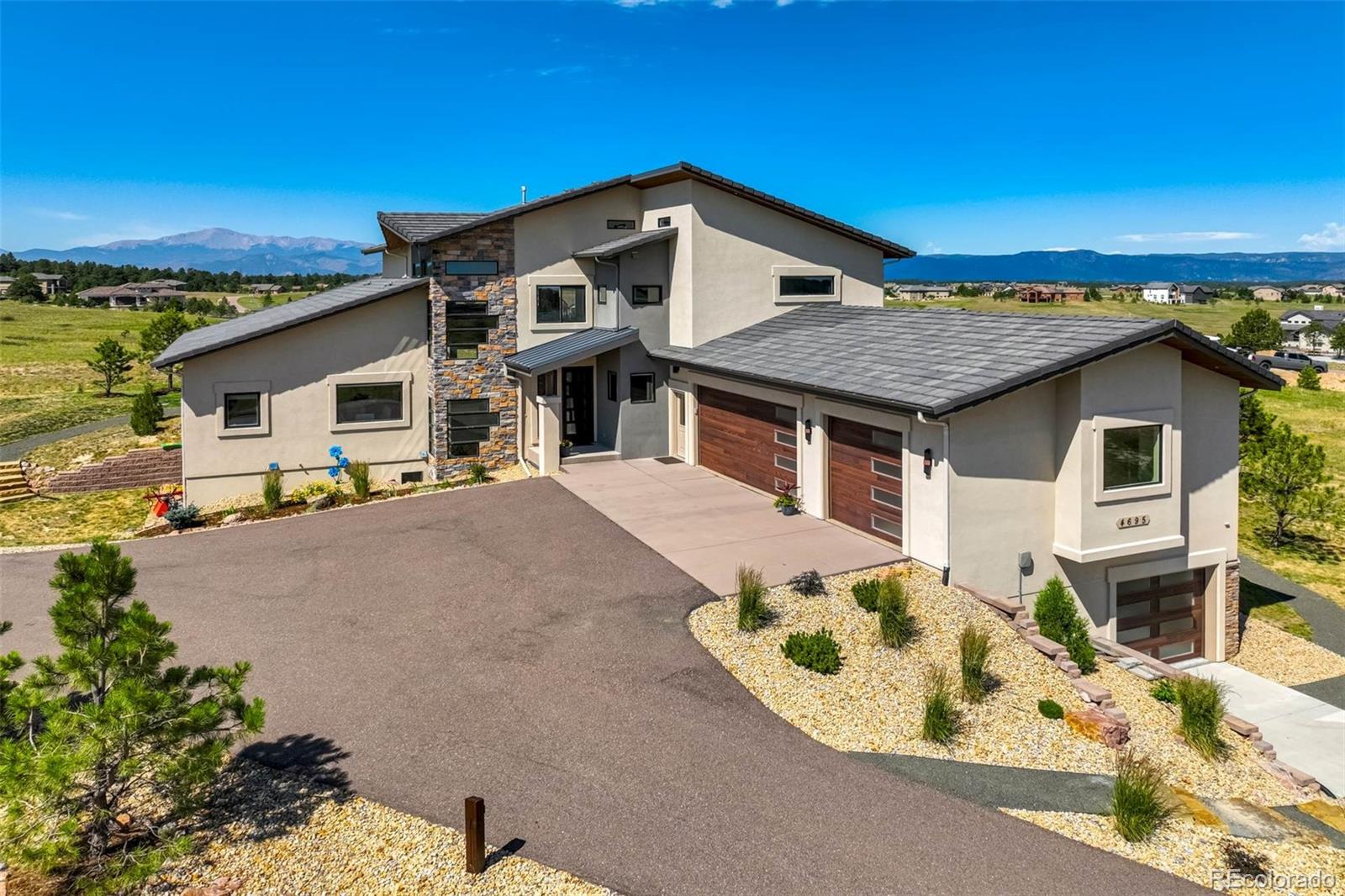
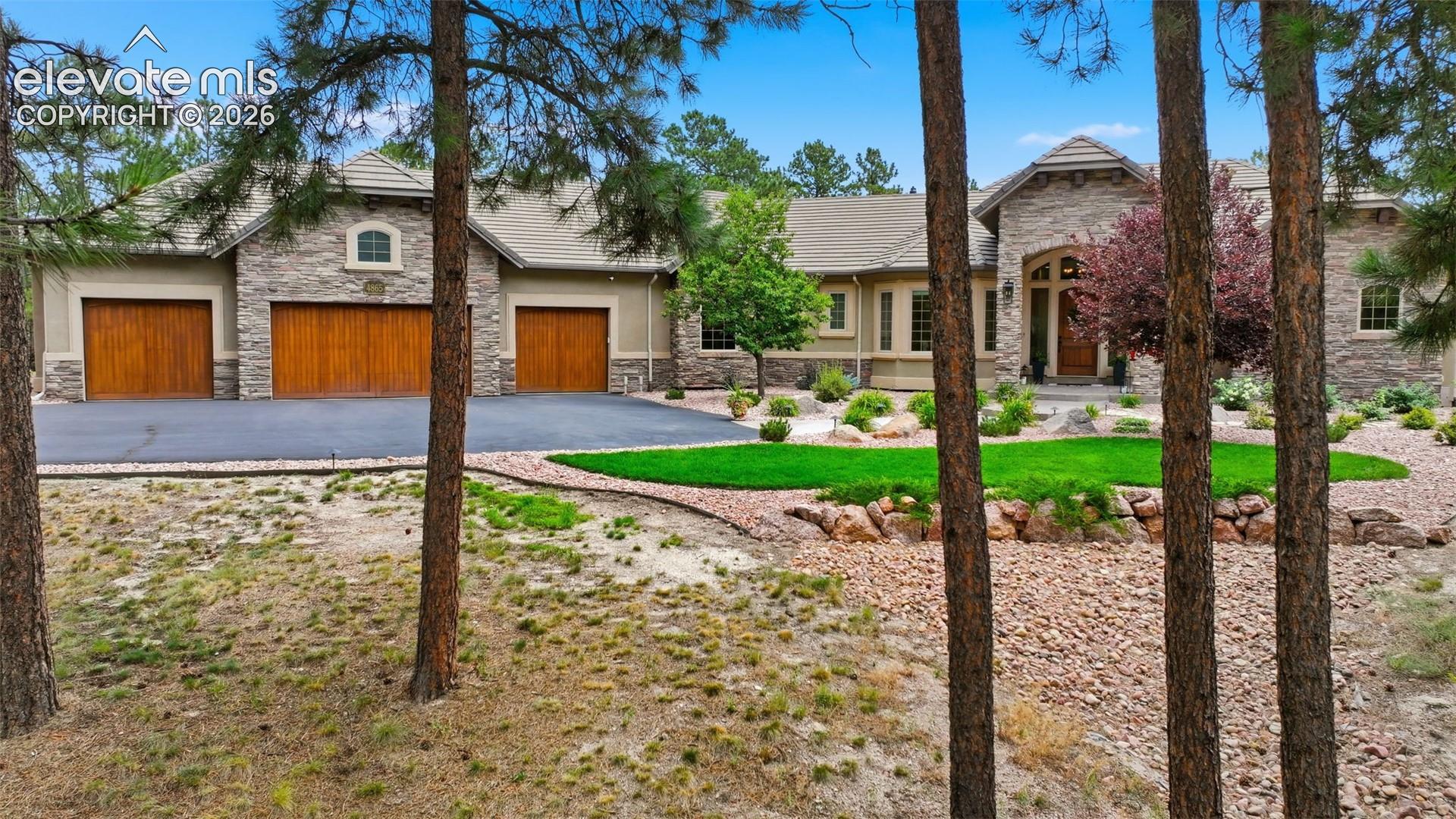
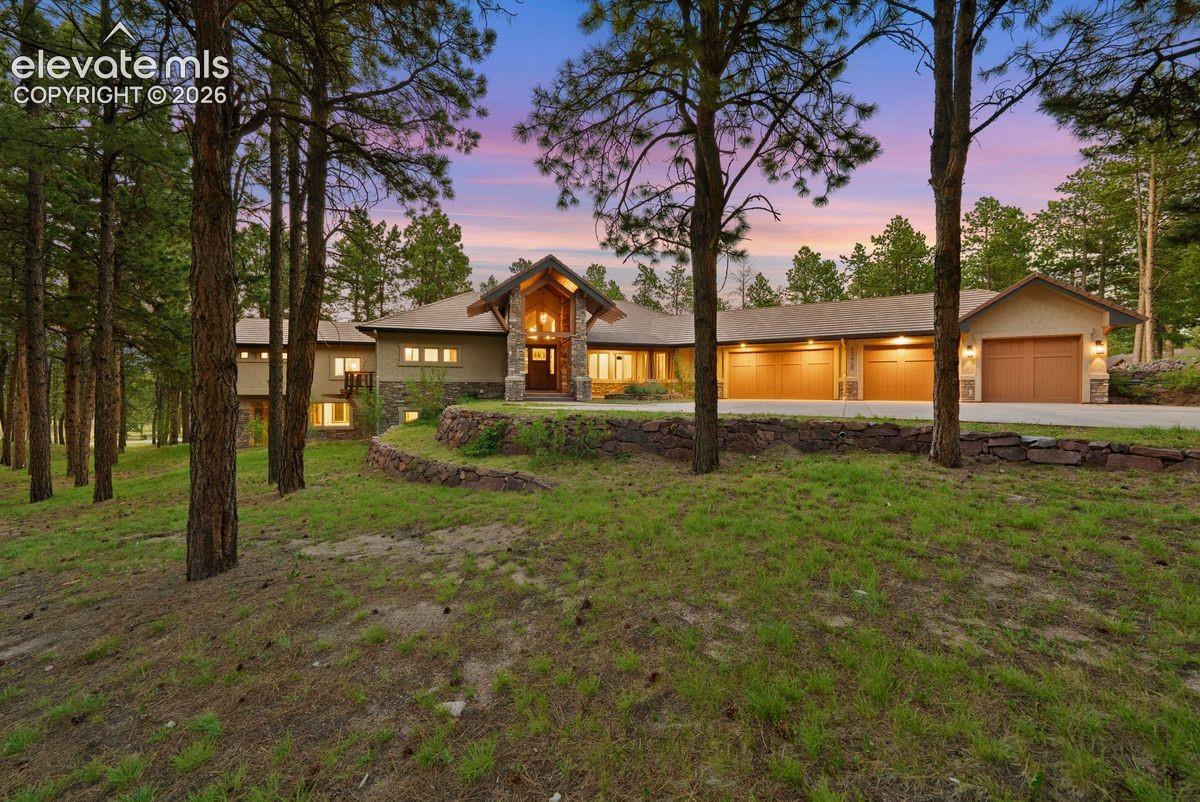
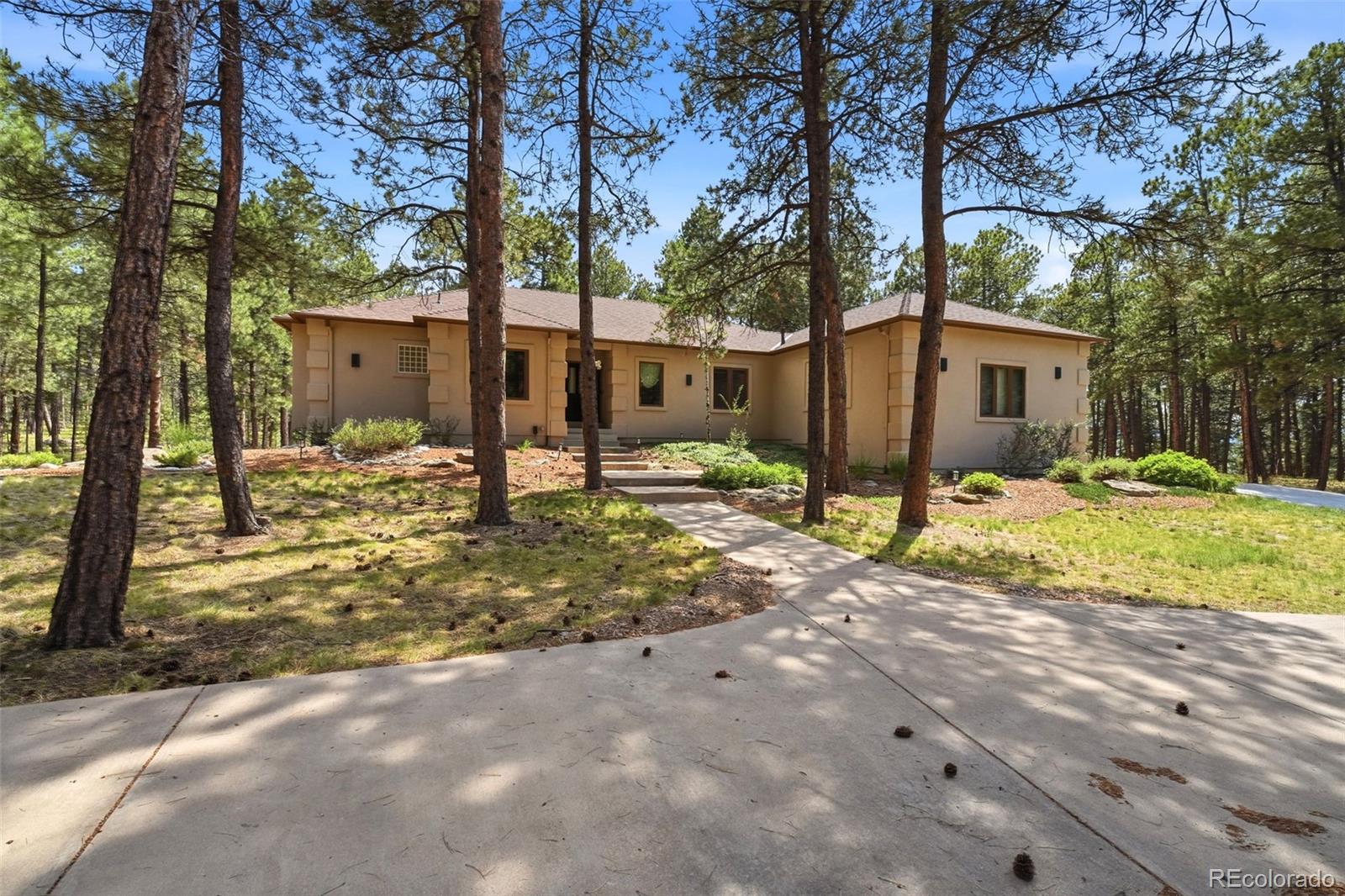
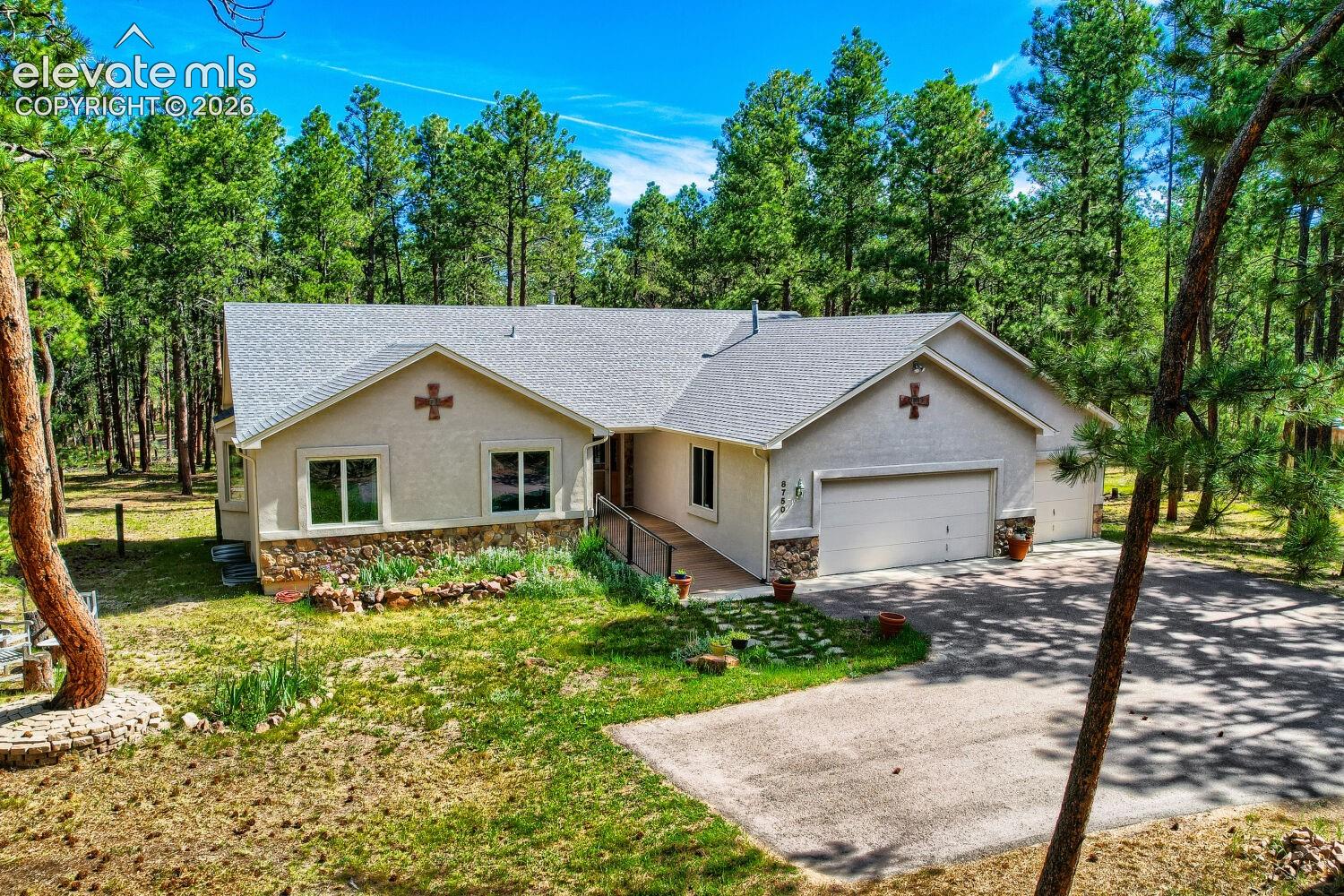
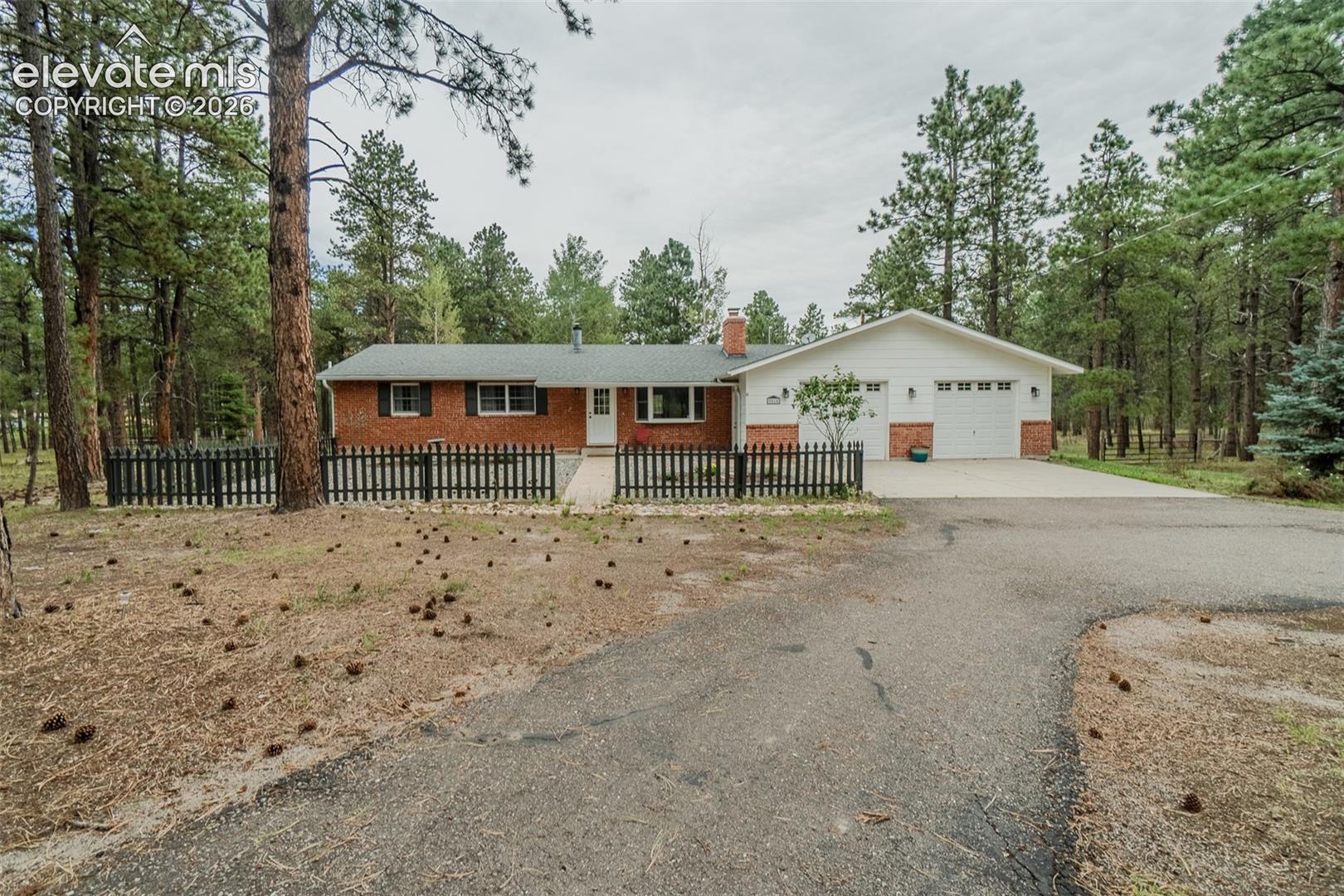
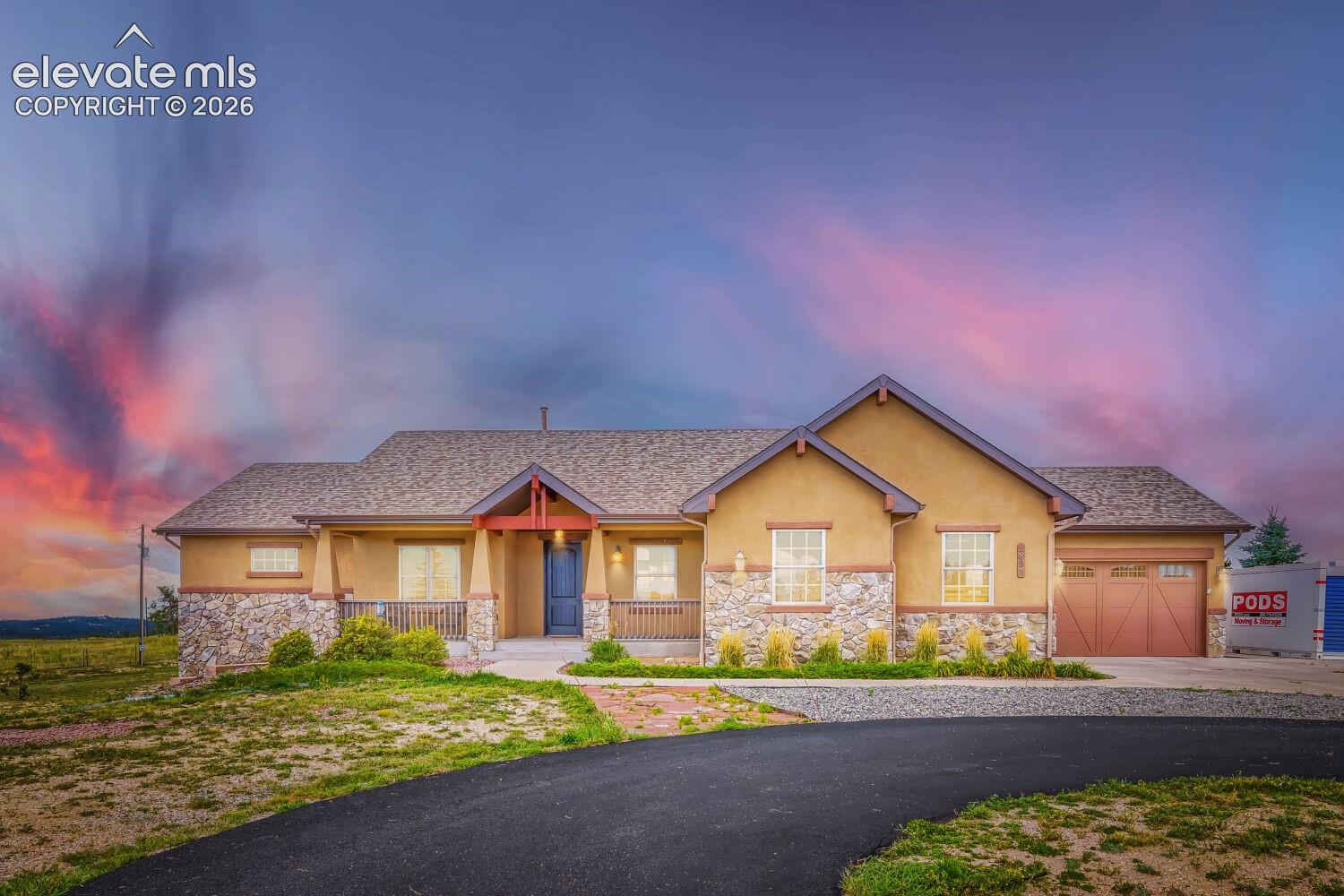
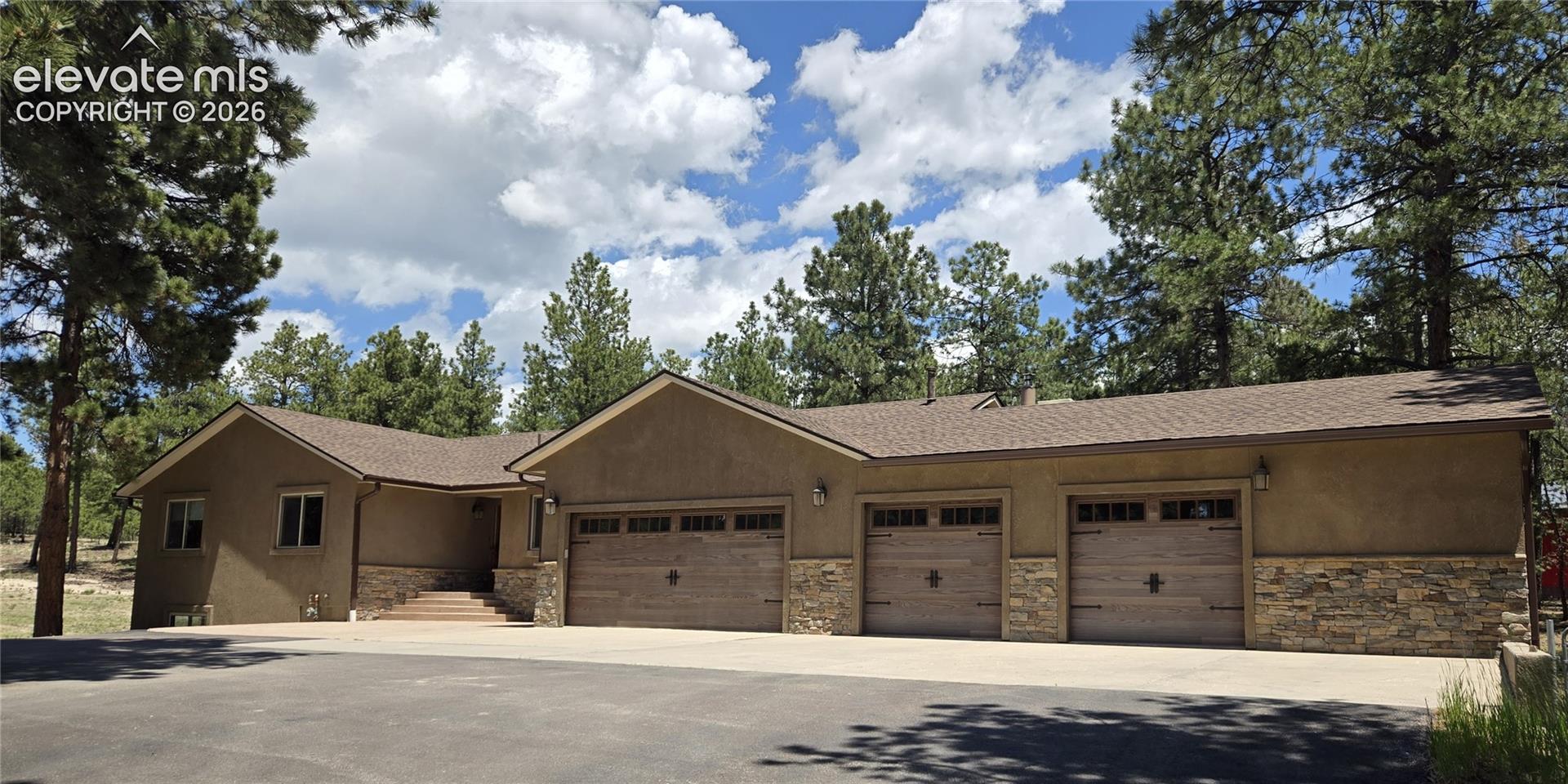
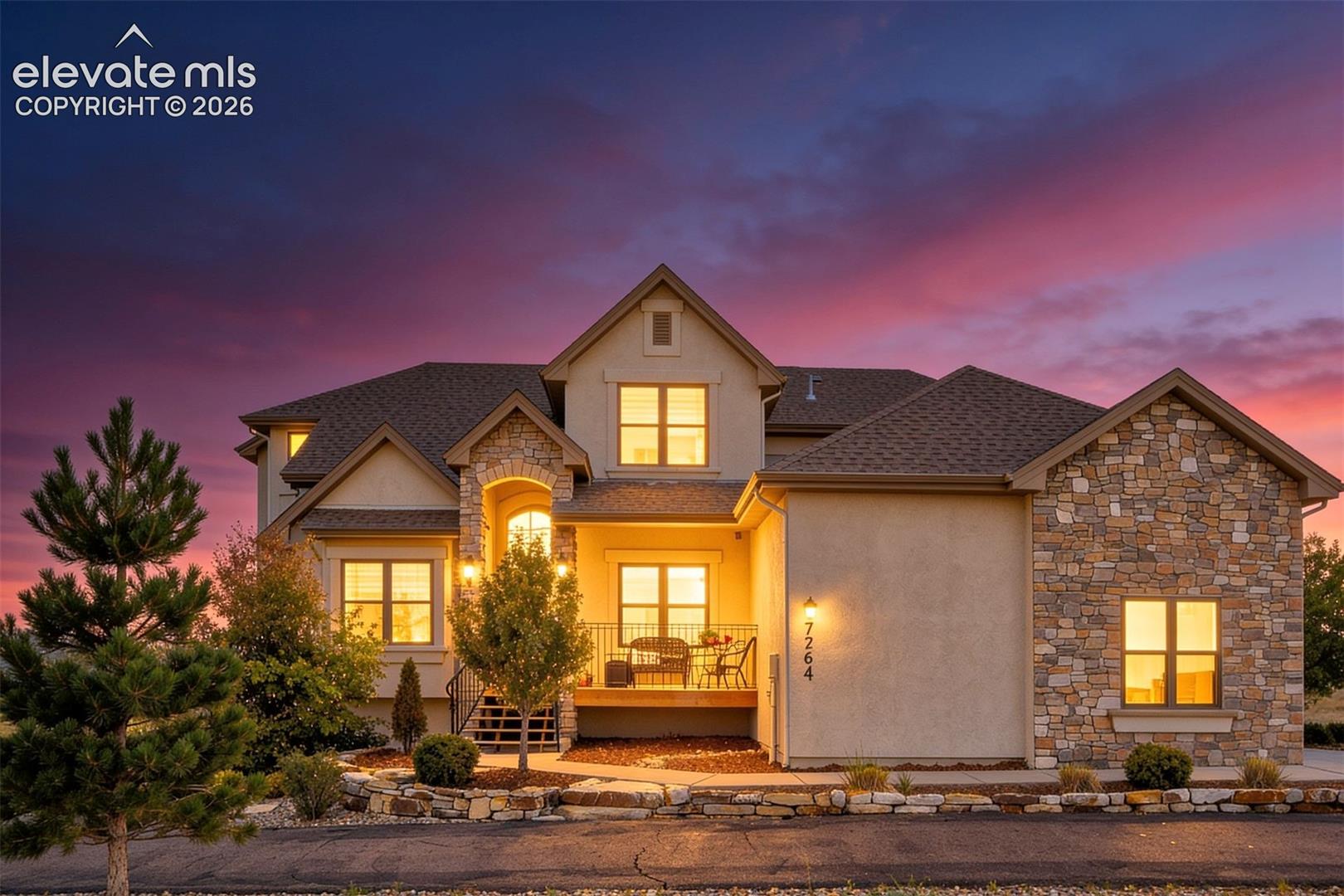
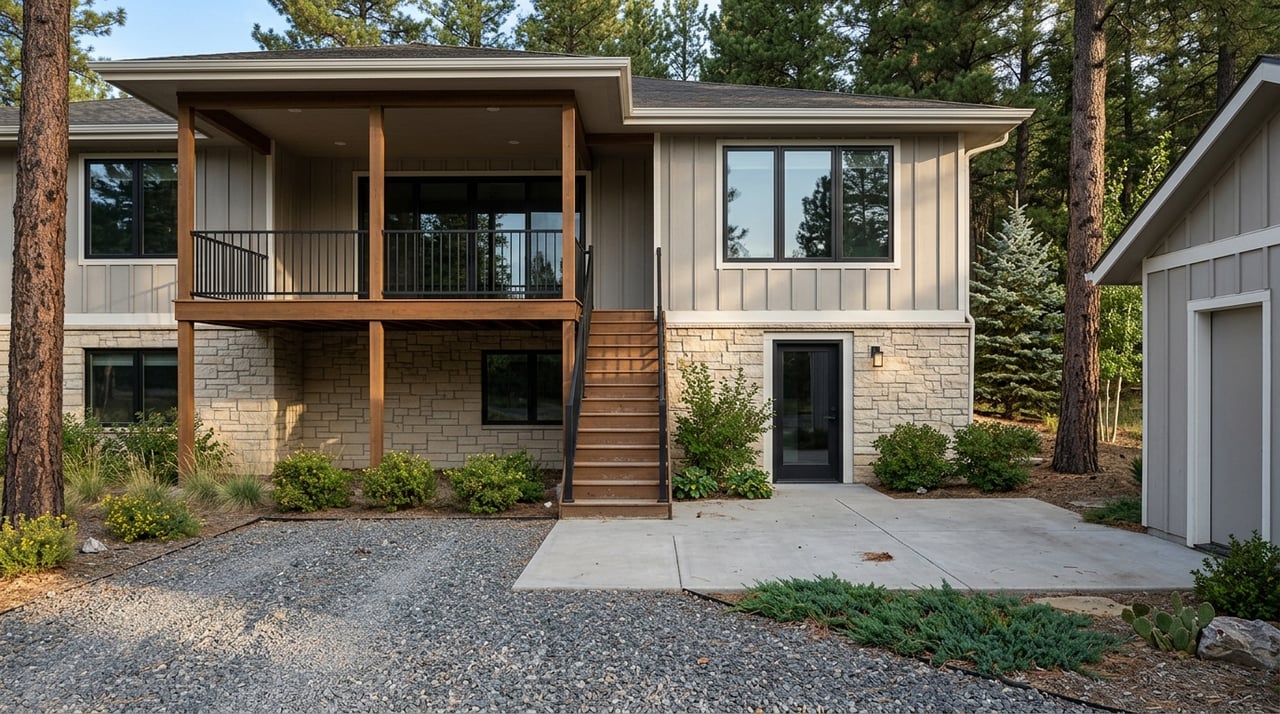
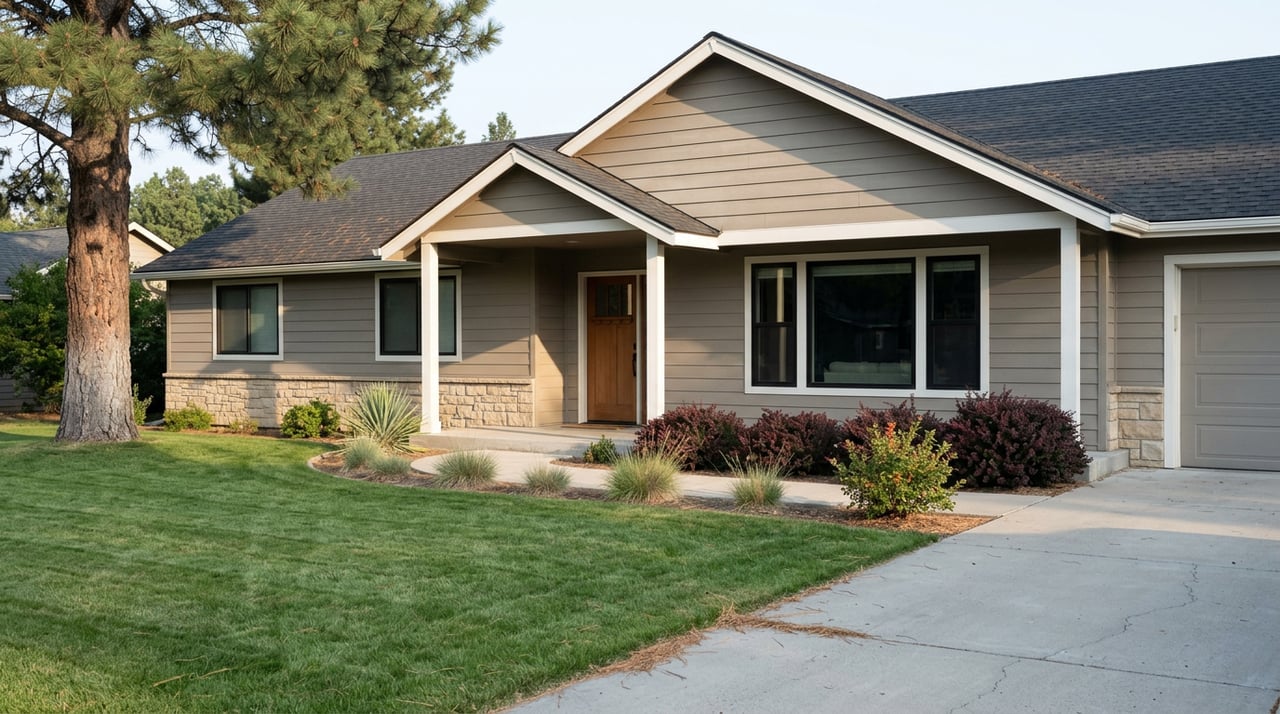
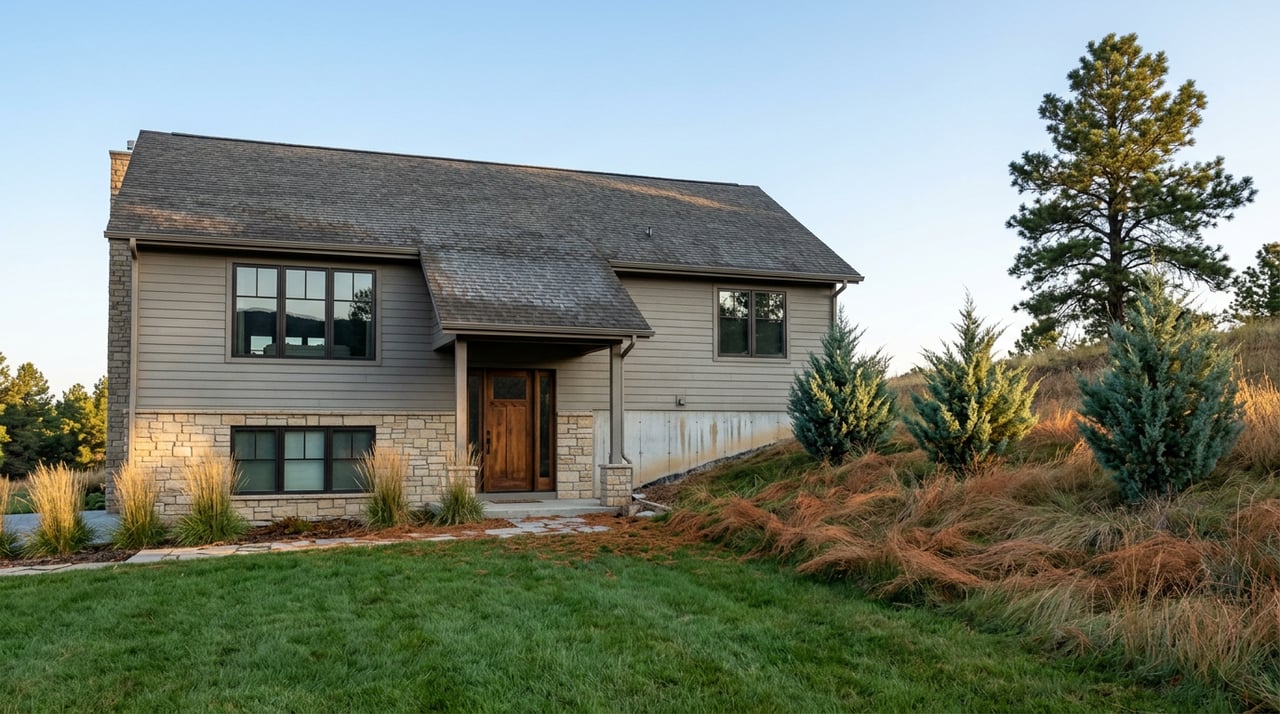
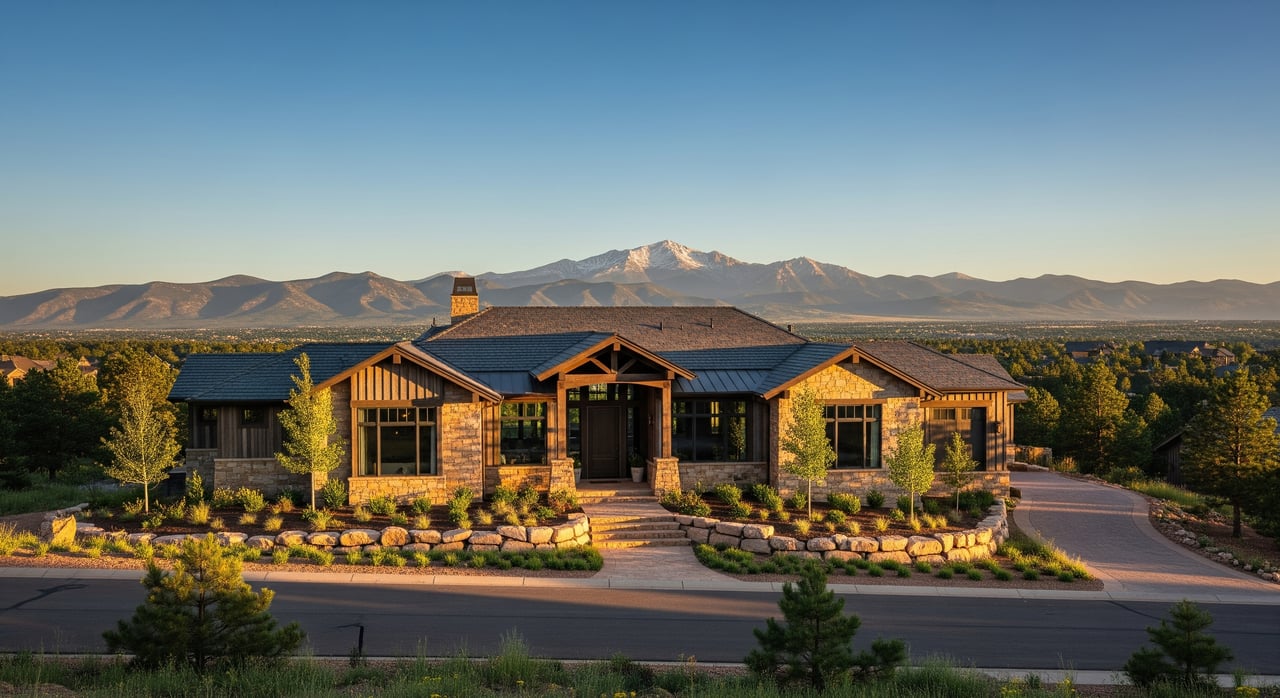
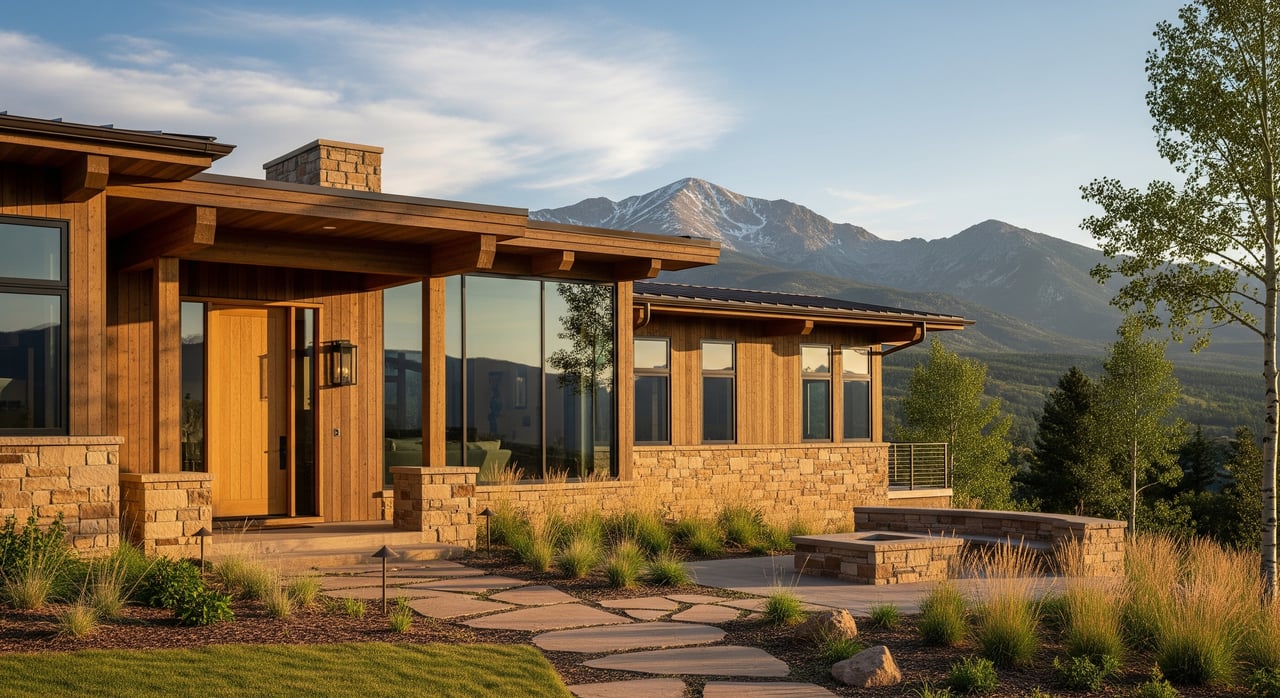
Architecturally, the community's identity has evolved from simple pioneer log cabins to the rustic stone-and-timber styles of the early 20th century, and today to sprawling custom ranch estates built with stucco, stone, and Class A fire-rated roofing. The "Black Forest look" is one that honors the land while meeting modern standards — durable, grounded, and unmistakably Colorado.
Black Forest occupies the high ground of El Paso County, generally bounded by Highway 83 to the west, Meridian Road to the east, County Line Road (Highway 105) to the north, and Old Ranch Road to the south. It is approximately 15 to 20 miles northeast of downtown Colorado Springs — close enough for convenient access to the city's amenities, far enough to feel genuinely removed from them.
The community sits atop the Palmer Divide, a high-altitude ridge separating the Arkansas and South Platte River basins, at an elevation of approximately 7,575 feet. That's nearly 1,500 feet higher than Colorado Springs itself, and the difference is felt in every season. Temperatures in Black Forest run 5 to 10 degrees cooler than the city below. Snowfall is heavier and more frequent, and "upslope" weather patterns — storms that bypass the city entirely — are a regular feature of life here.
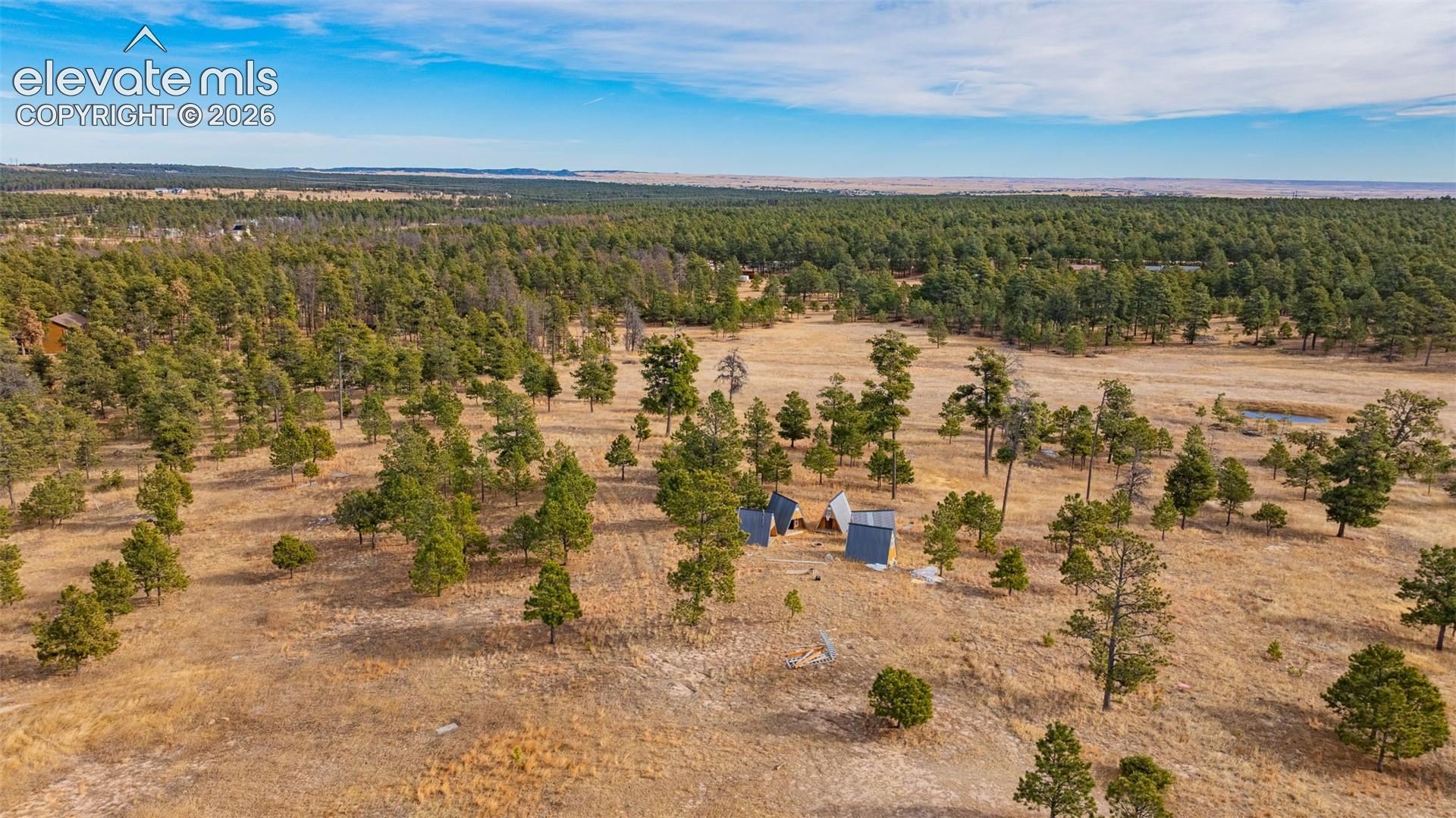
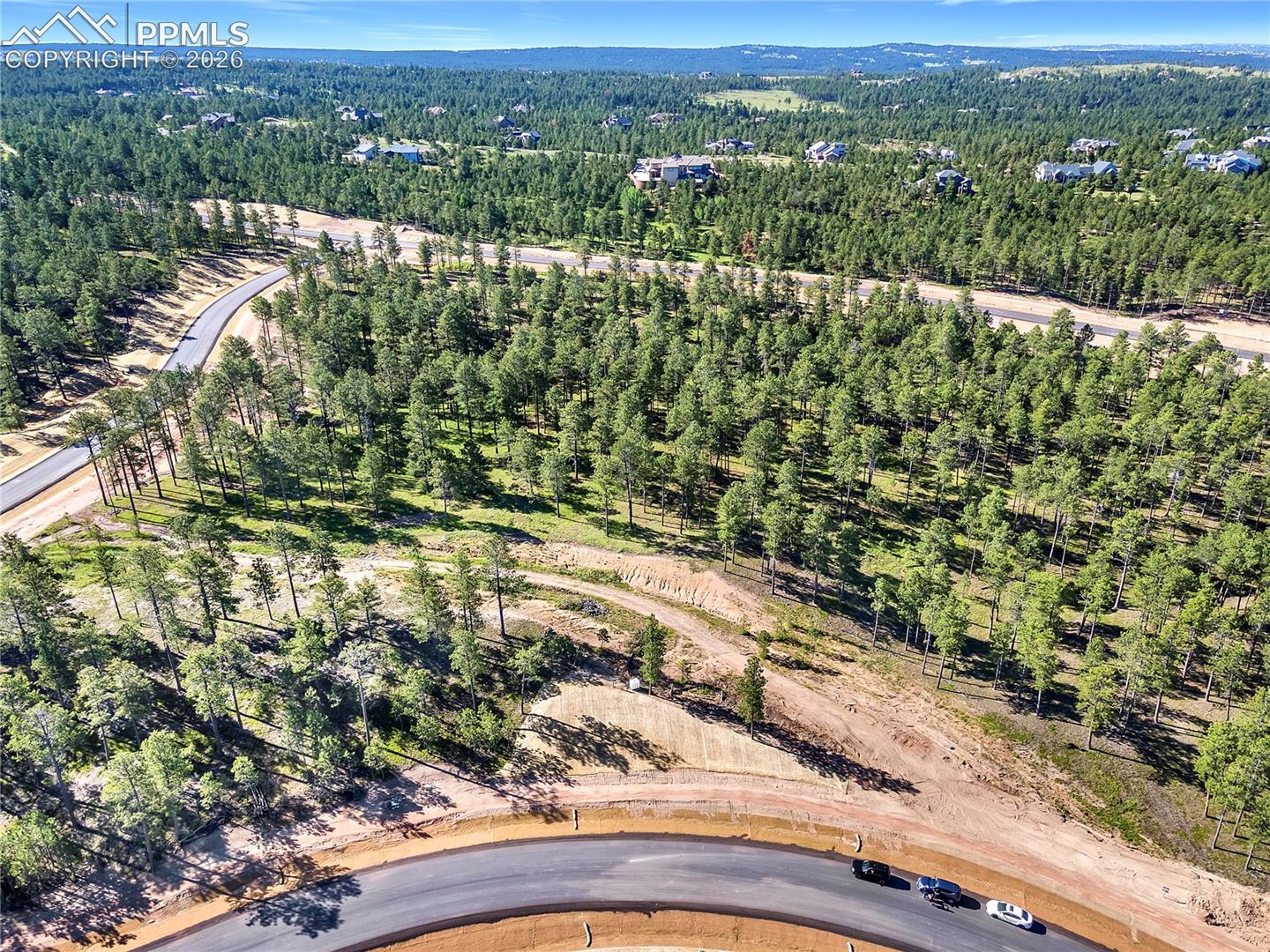
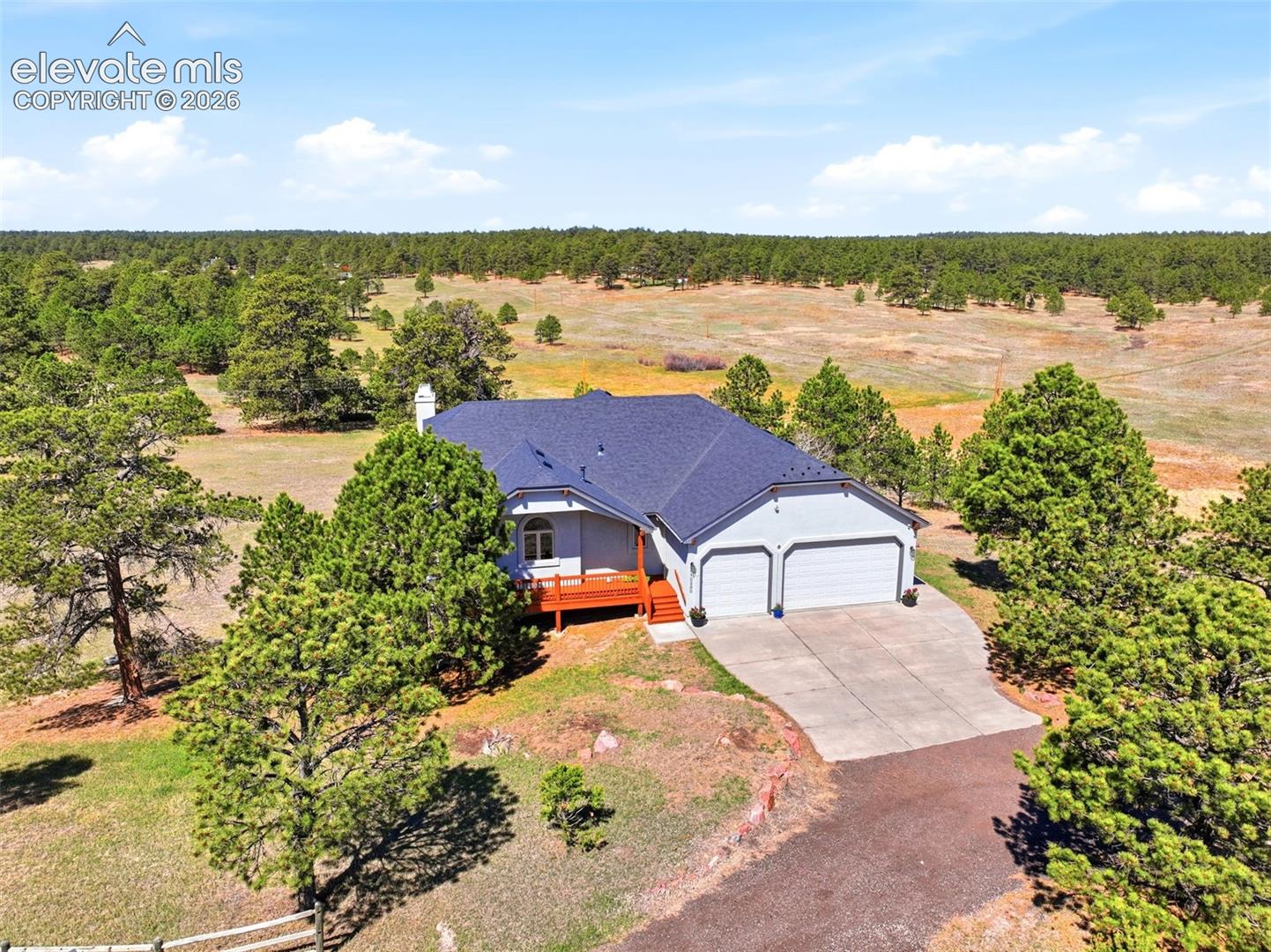
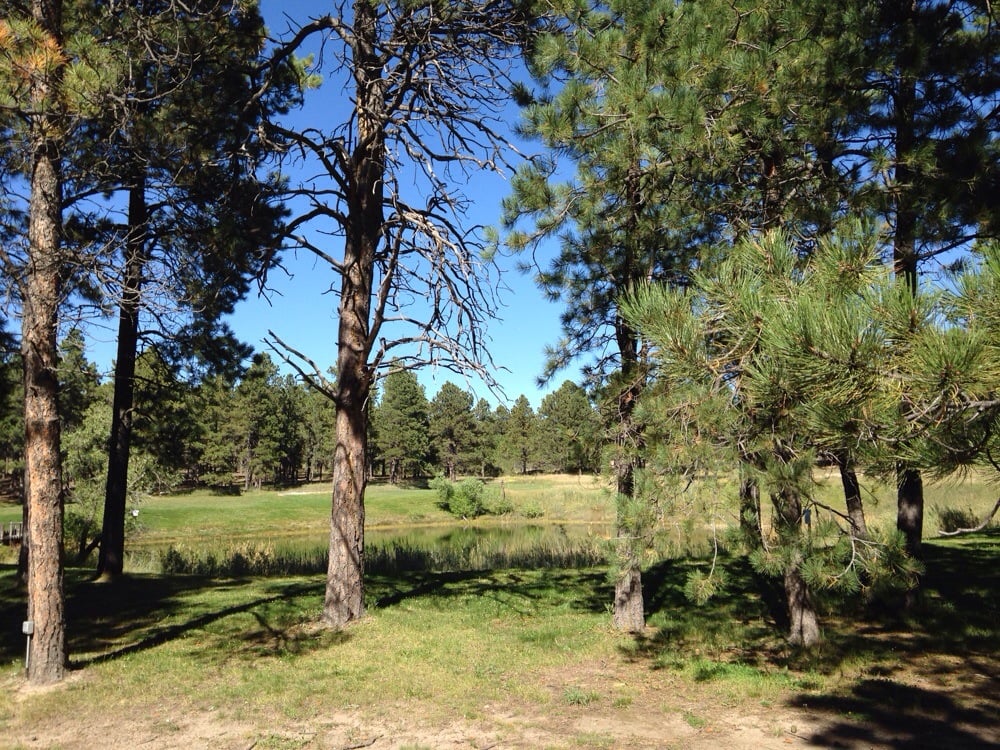
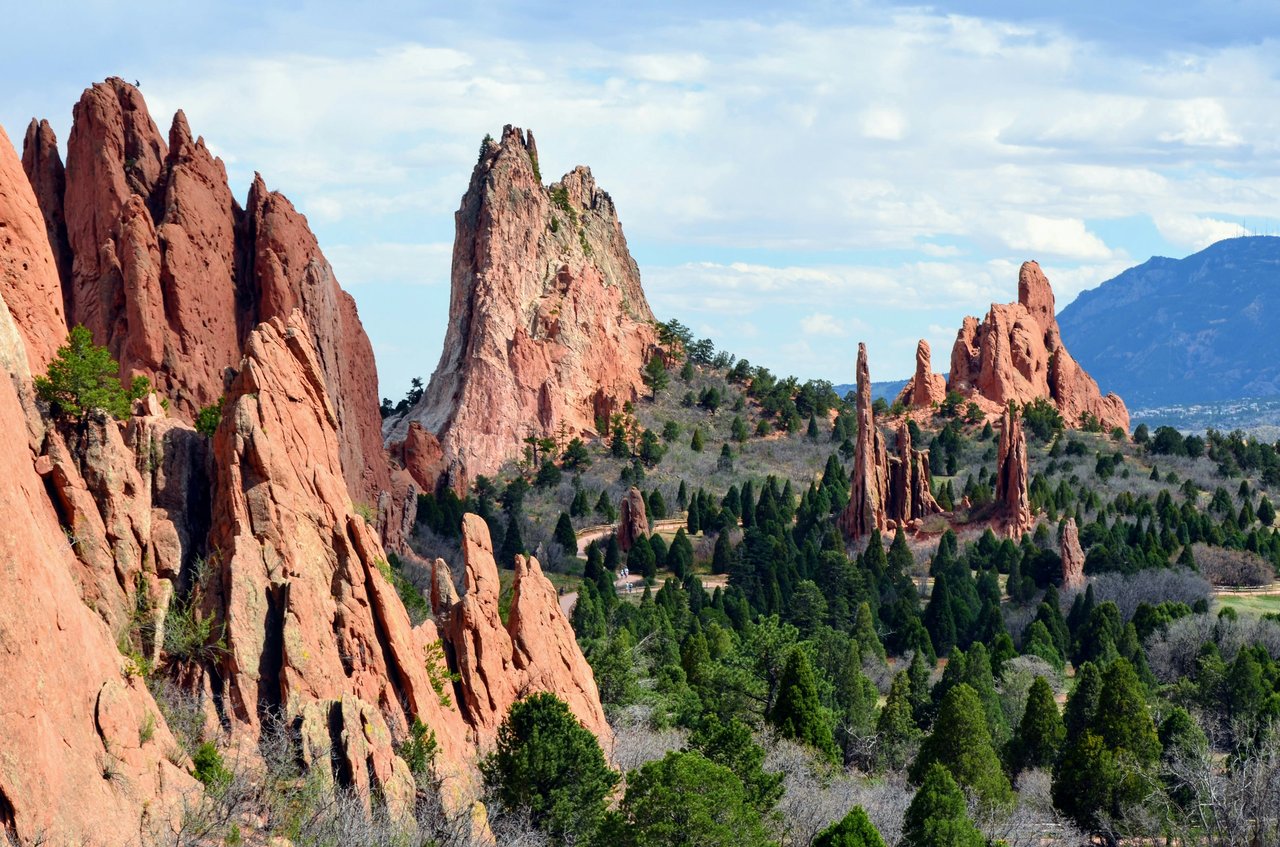
The pines that gave the community its name are Ponderosa, and they grow in such density that from a distance the hillsides appear nearly black against the surrounding golden prairie. That visual contrast is not incidental — it is the defining characteristic of the landscape and the reason buyers seek this area out specifically. Wildlife is abundant: mule deer, elk, black bears, foxes, and birds of prey, including Great Horned Owls, are regular presences on most properties.
For buyers considering the commute equation, Black Forest's ridge position on Highway 83 provides a convenient "backdoor" route to the Denver Tech Center, typically a 50 to 60 minute drive. Denver Union Station is accessible via the Bustang park-and-ride at Woodmen and I-25. Colorado Springs Airport is approximately 30 to 35 minutes south. A 4WD or AWD vehicle is not optional here — it is a practical necessity, particularly on the gravel roads and steep driveways that define the area in winter.
The Black Forest housing market in 2026 is best described as a balanced and buyer-favorable environment — a meaningful shift from the frenetic competition of 2021 and 2022, and an opportunity that well-informed buyers are beginning to recognize.
The market is meaningfully bifurcated by price point. Within the core Black Forest area, the median sale price sits at approximately $1,299,500, reflecting its standing as a genuine luxury rural enclave. The broader 80908 zip code, which captures newer developments along the forest's southern and western edges, has a more accessible median near $790,000 — opening the door for buyers who want proximity to the pines without the full acreage commitment.
Inventory has returned to healthy levels, with close to 200 active homes typically available at any given time. This represents a substantial improvement over the shortage years, and it has shifted negotiating leverage meaningfully toward buyers. Sellers are increasingly willing to offer concessions — covering closing costs, contributing to rate buydowns, or even funding professional forest mitigation as part of the transaction.
Days on market tell an important story here. Entry-level homes priced under $800,000 tend to move in the 60-day range. Mid-tier and luxury acreage properties average 68 to 110 days, and high-end estates frequently take 100 days or more to find the right buyer. This is not a sign of market weakness — it reflects the reality that Black Forest properties are niche assets that appeal to a specific, intentional buyer. Patience is part of the transaction.
Price appreciation has moderated to a steady 1% to 2% annually. For buyers, this means purchasing into a stable market rather than one inflated by speculative pressure. For sellers, it underscores the importance of precise, lot-specific pricing rather than relying on neighborhood-wide averages.
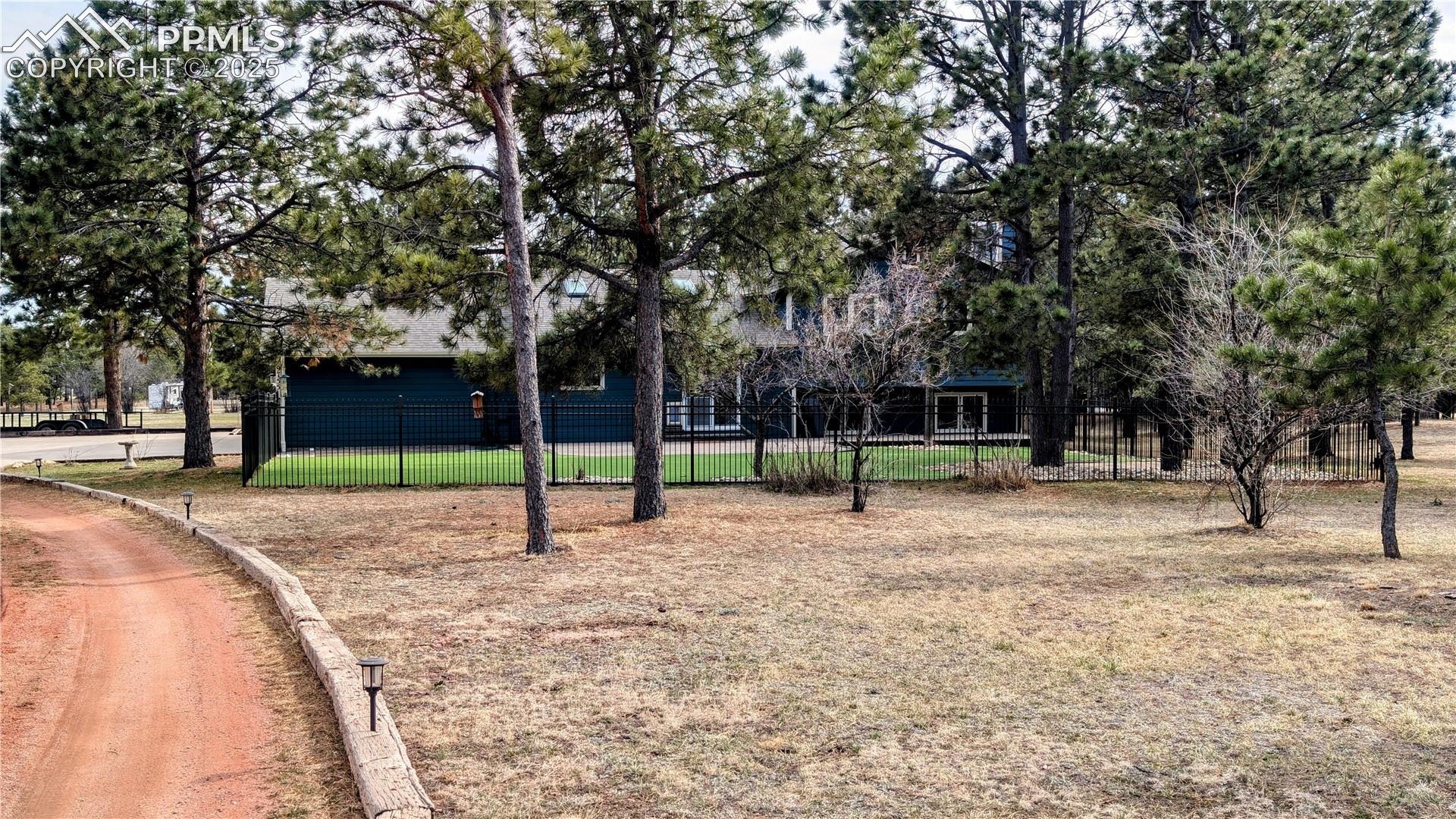
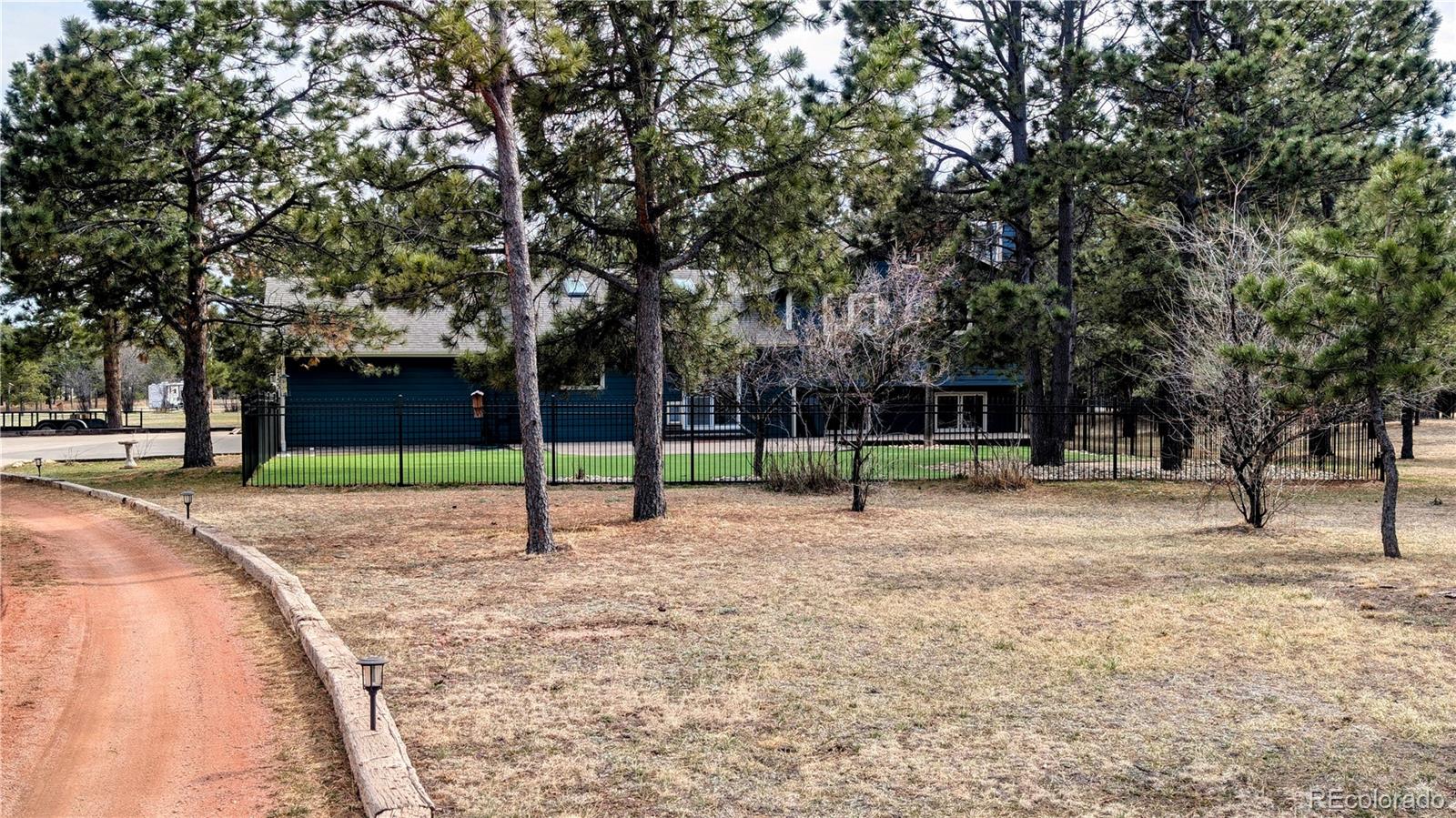
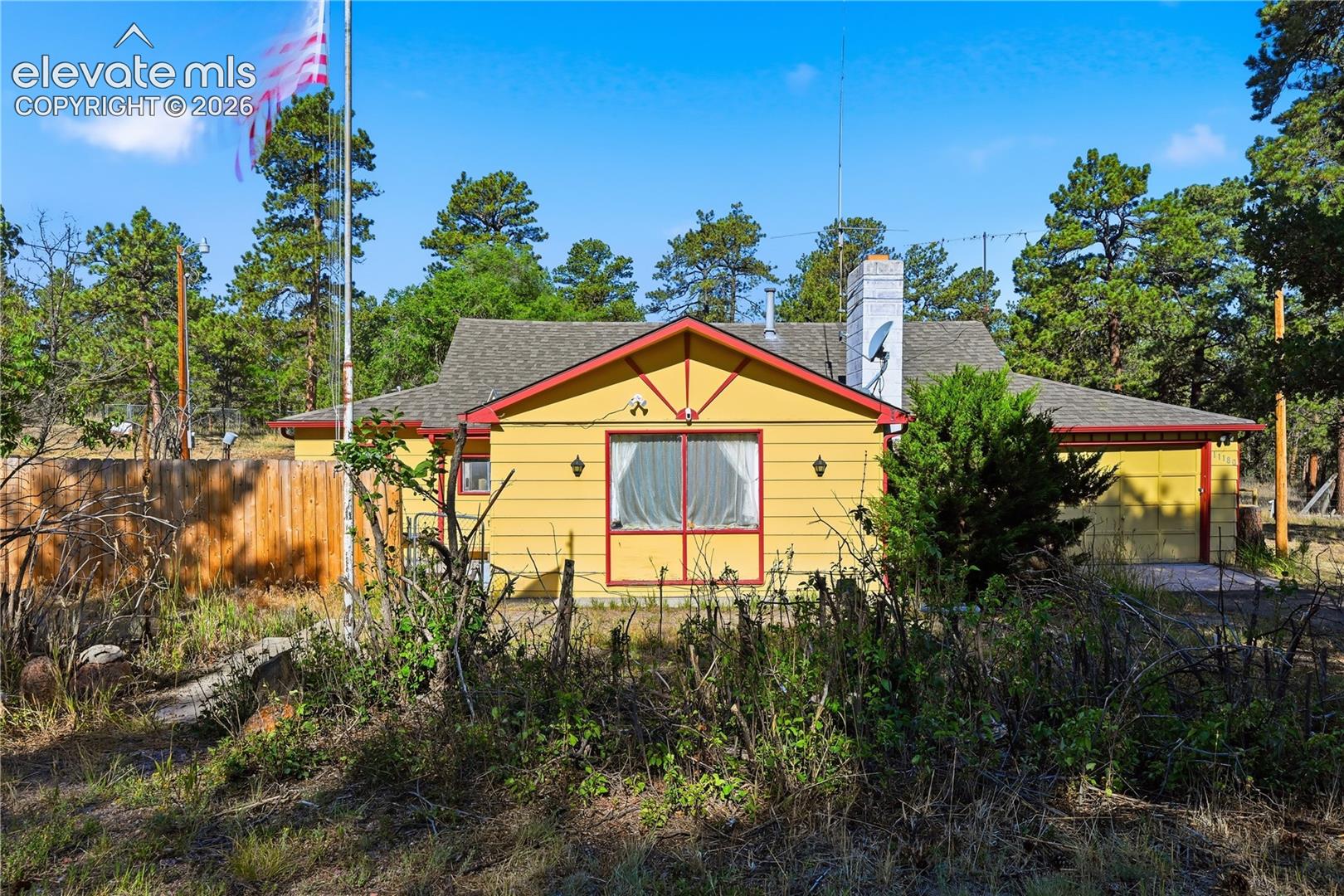
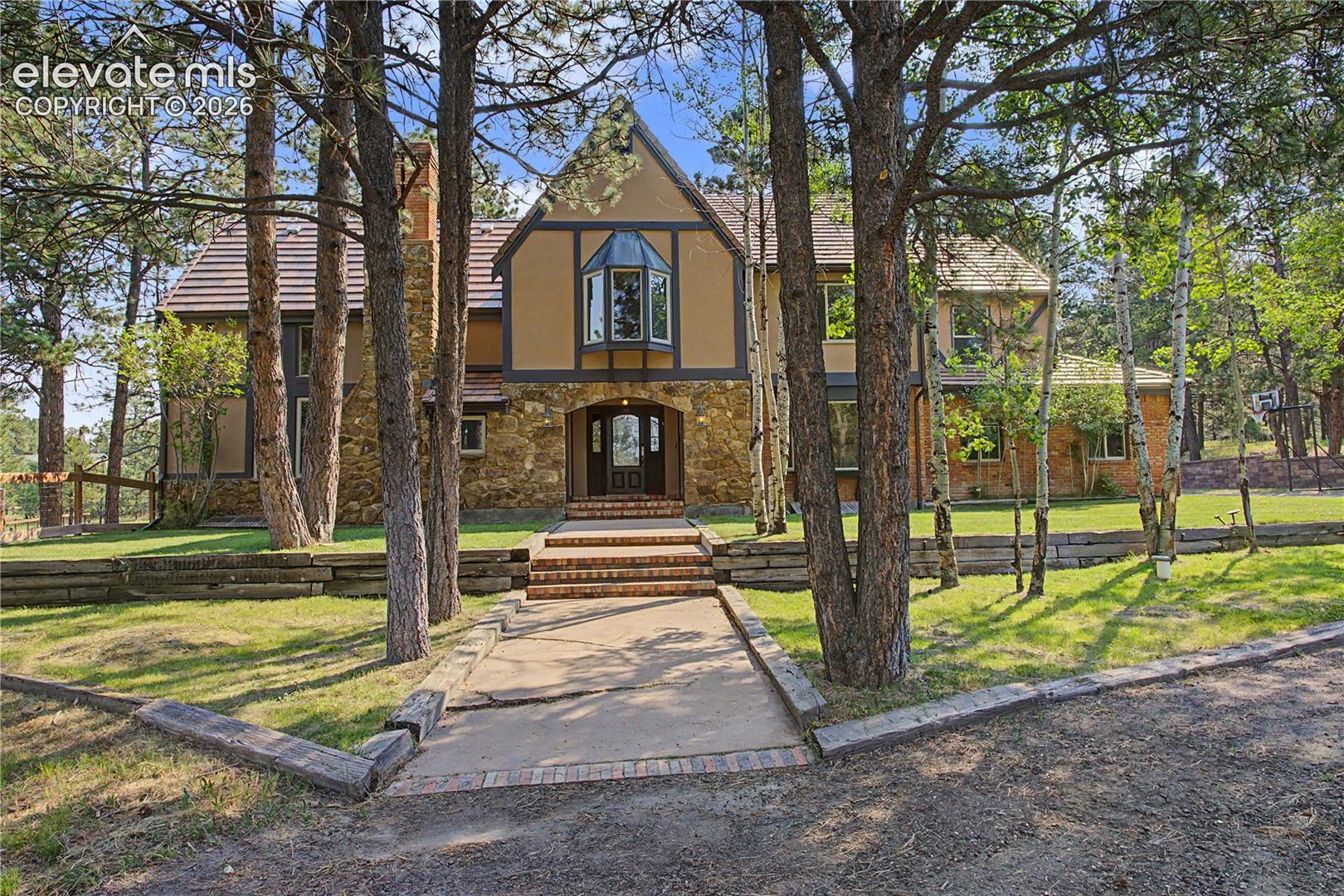
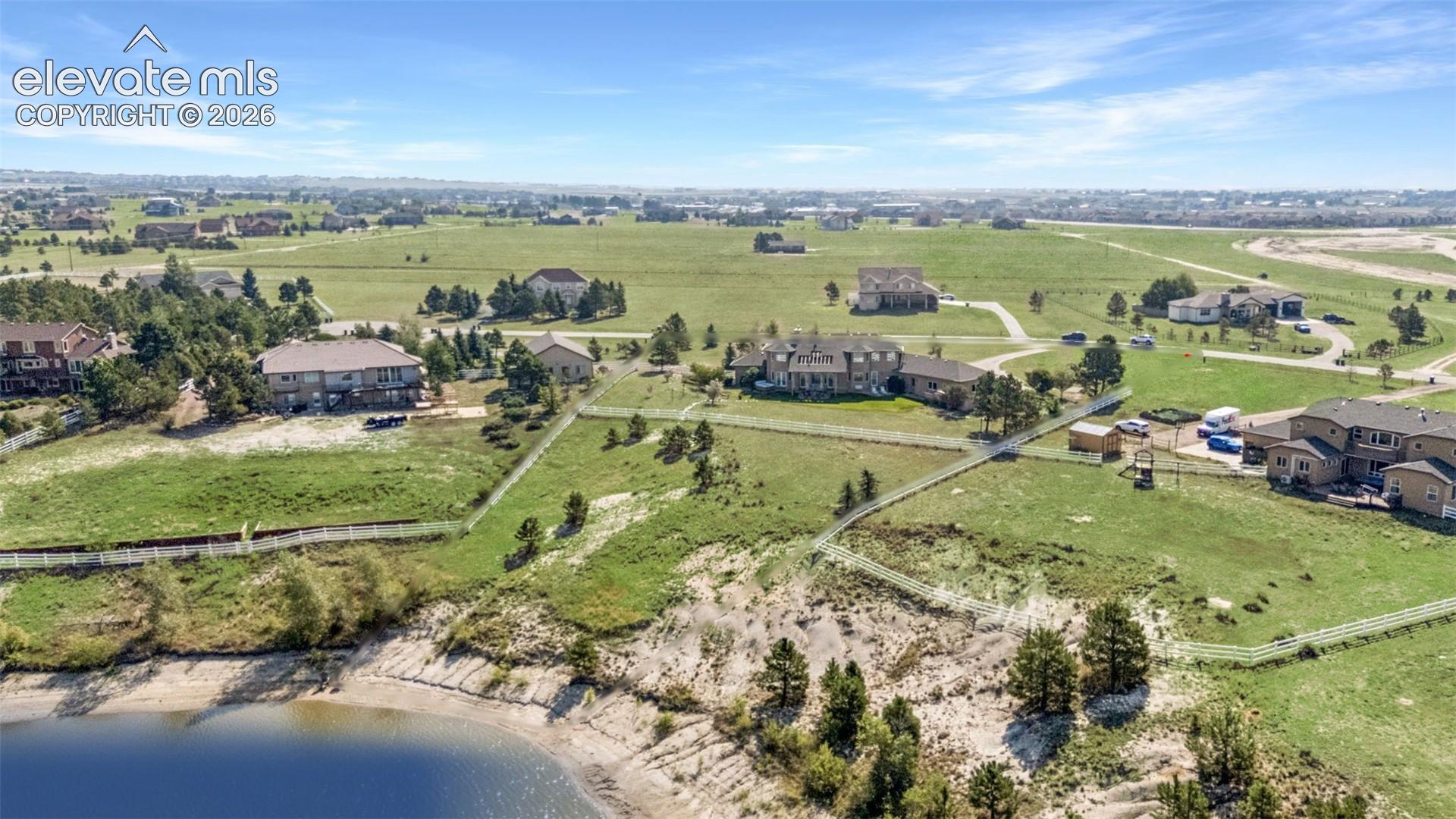
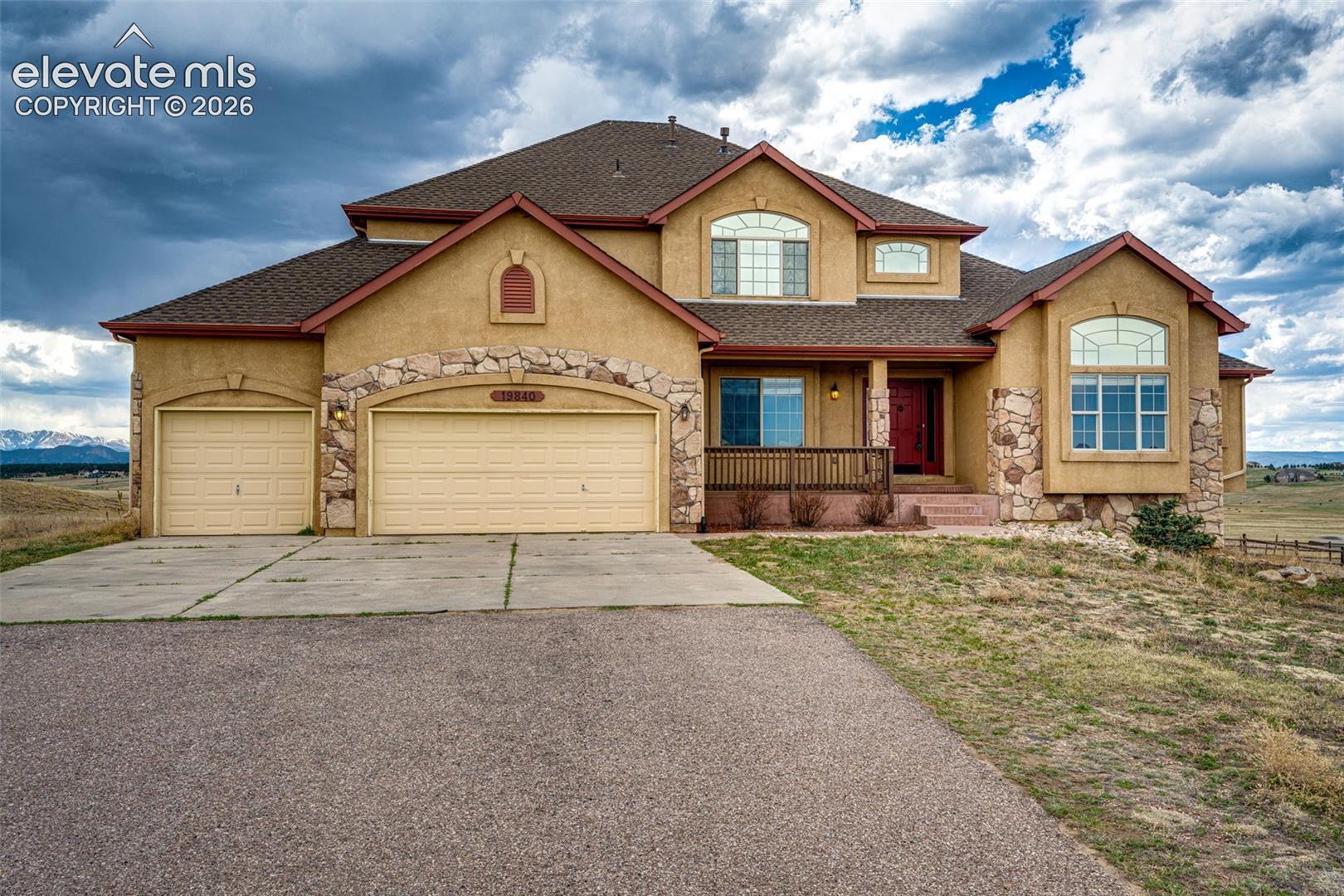
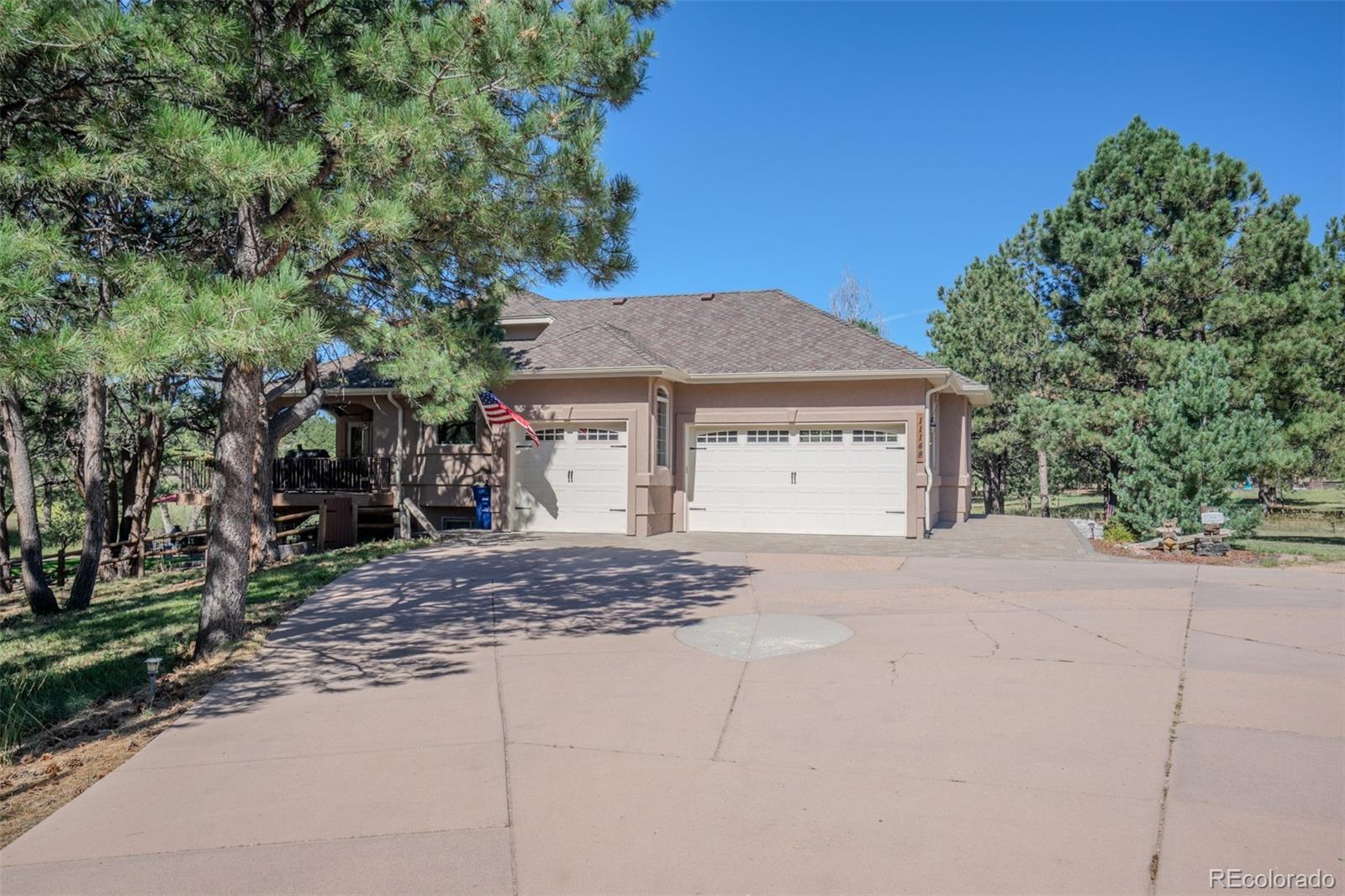
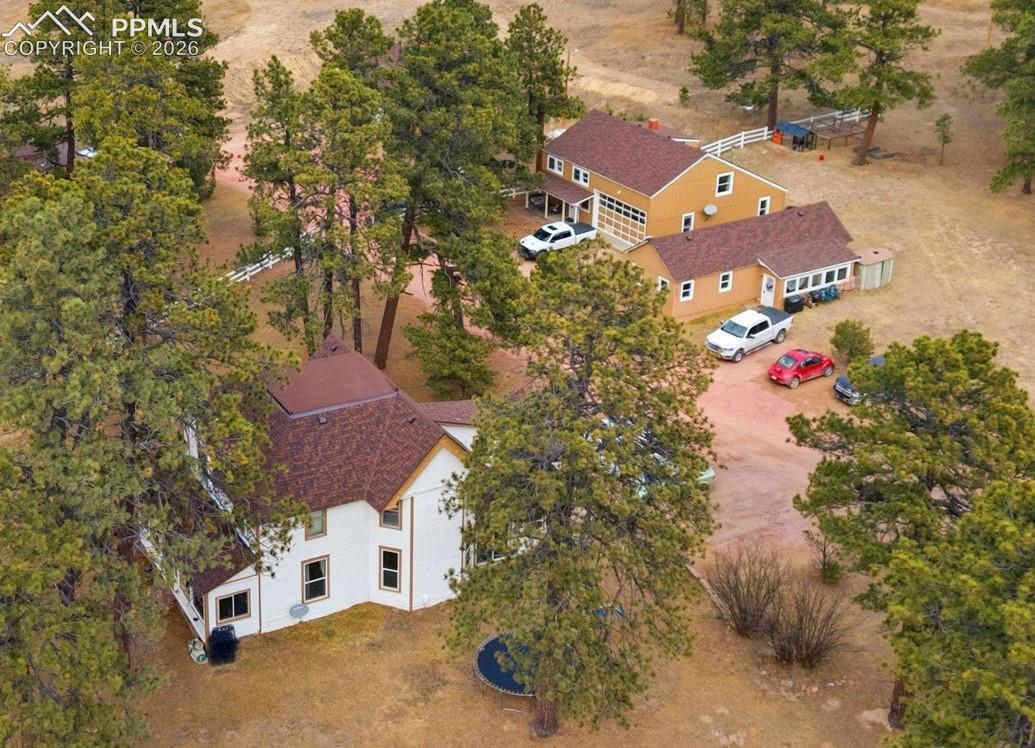
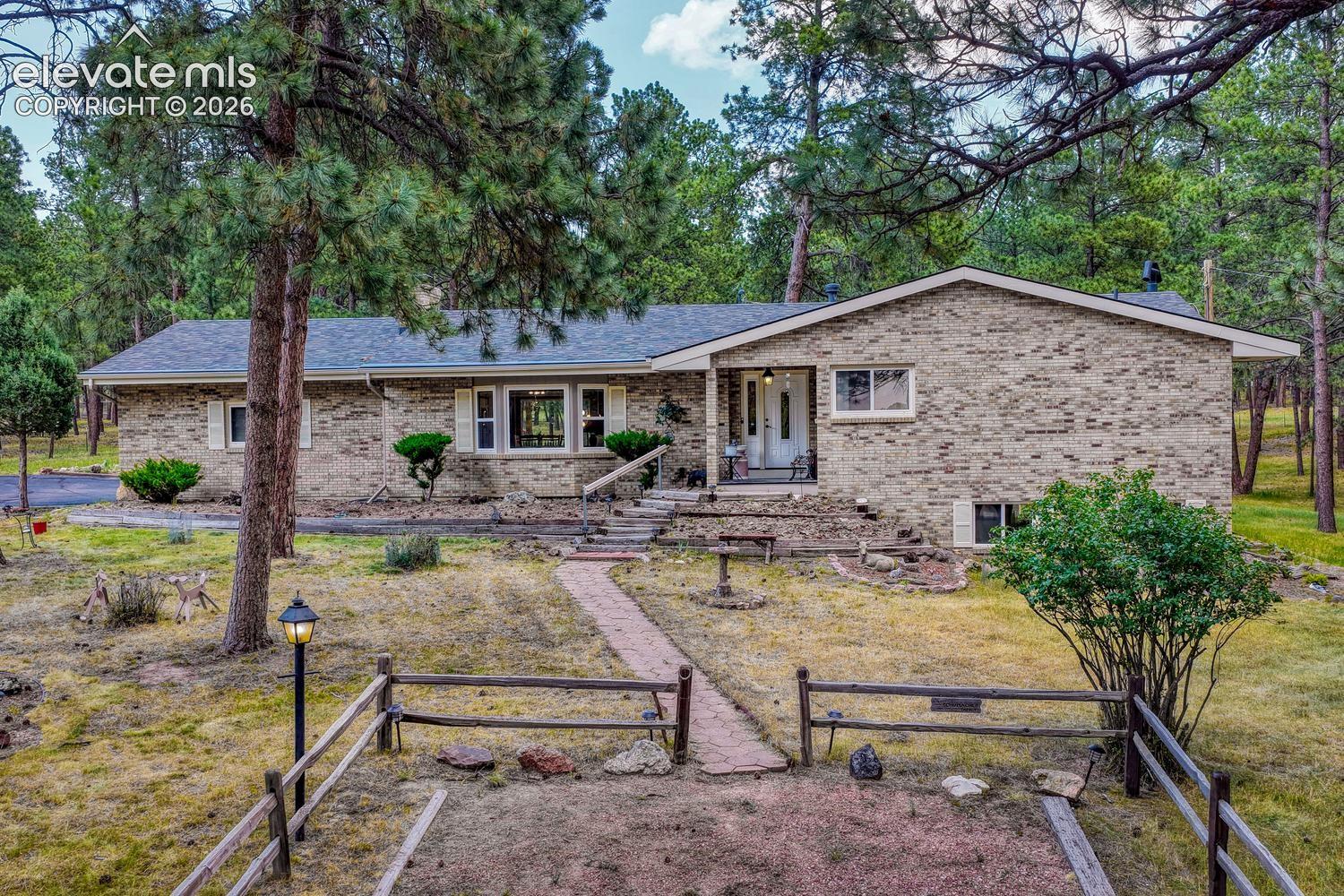
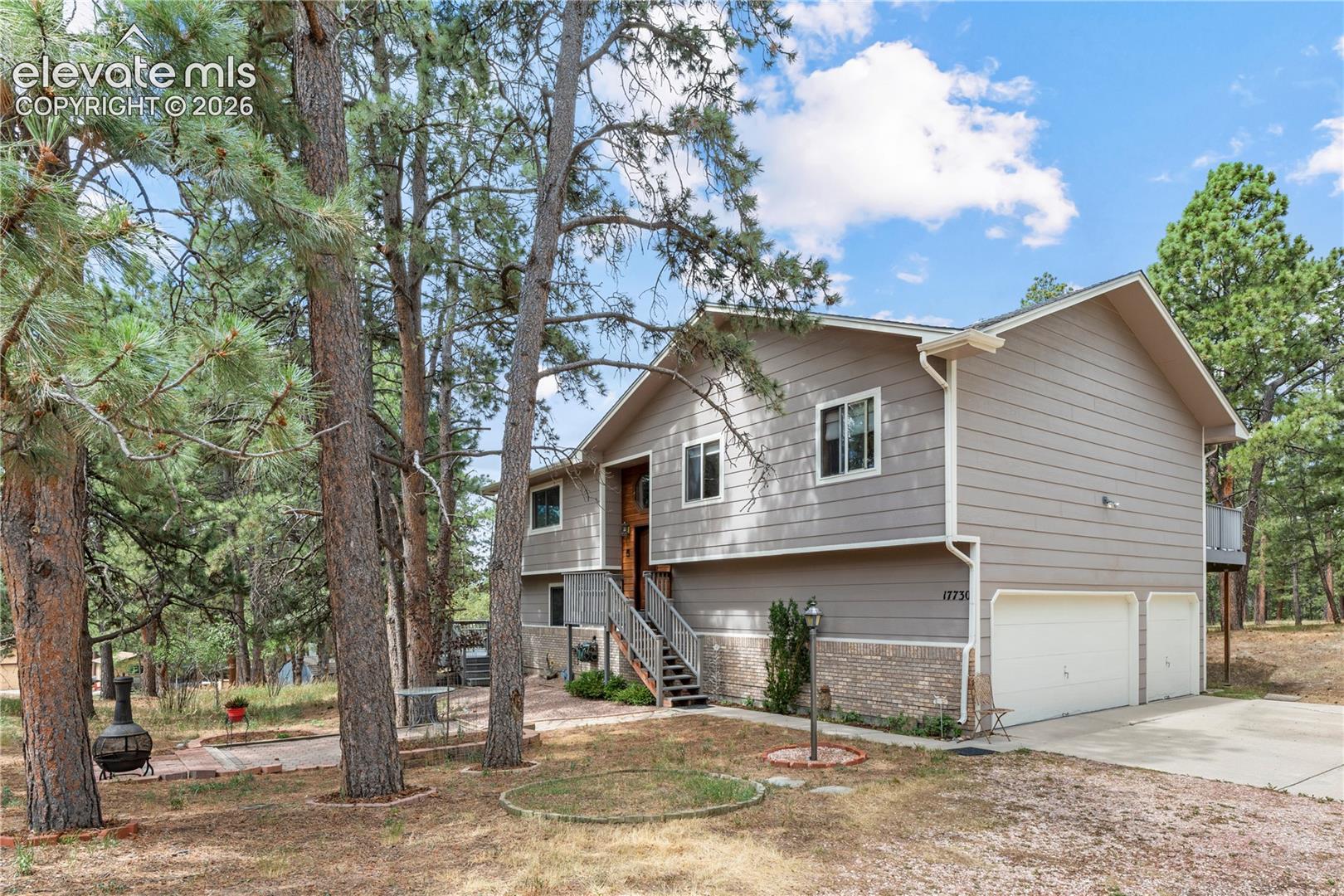
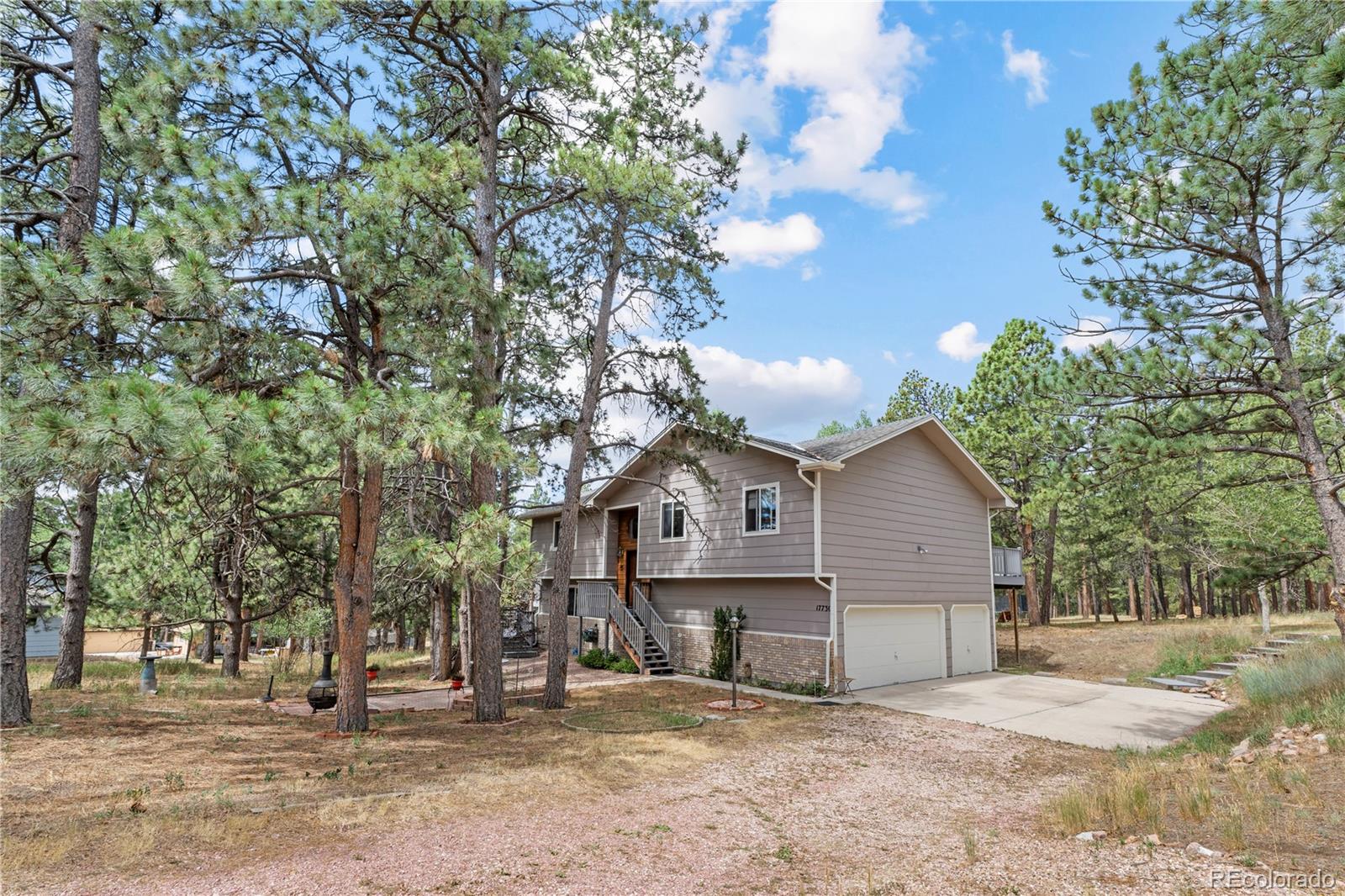
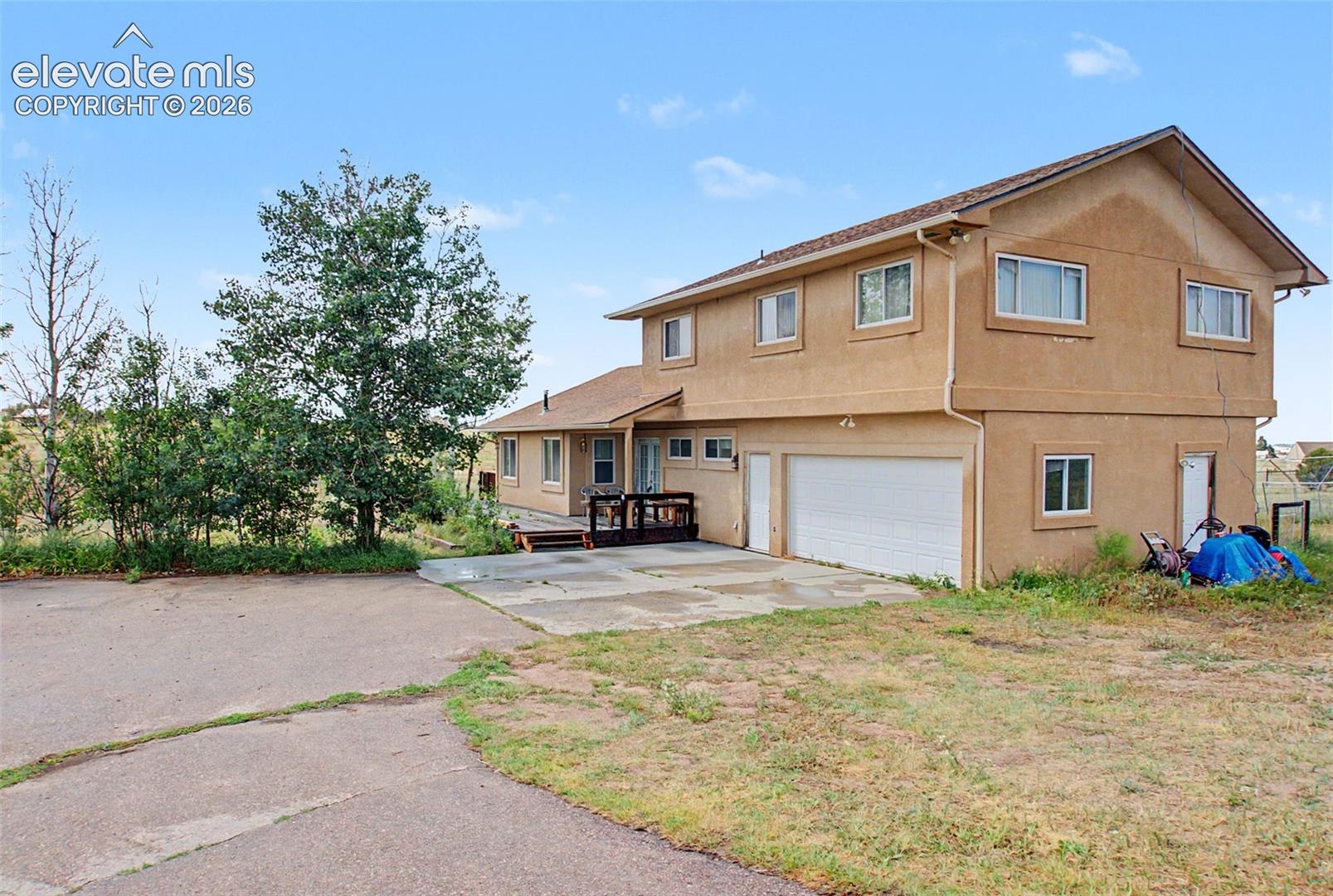
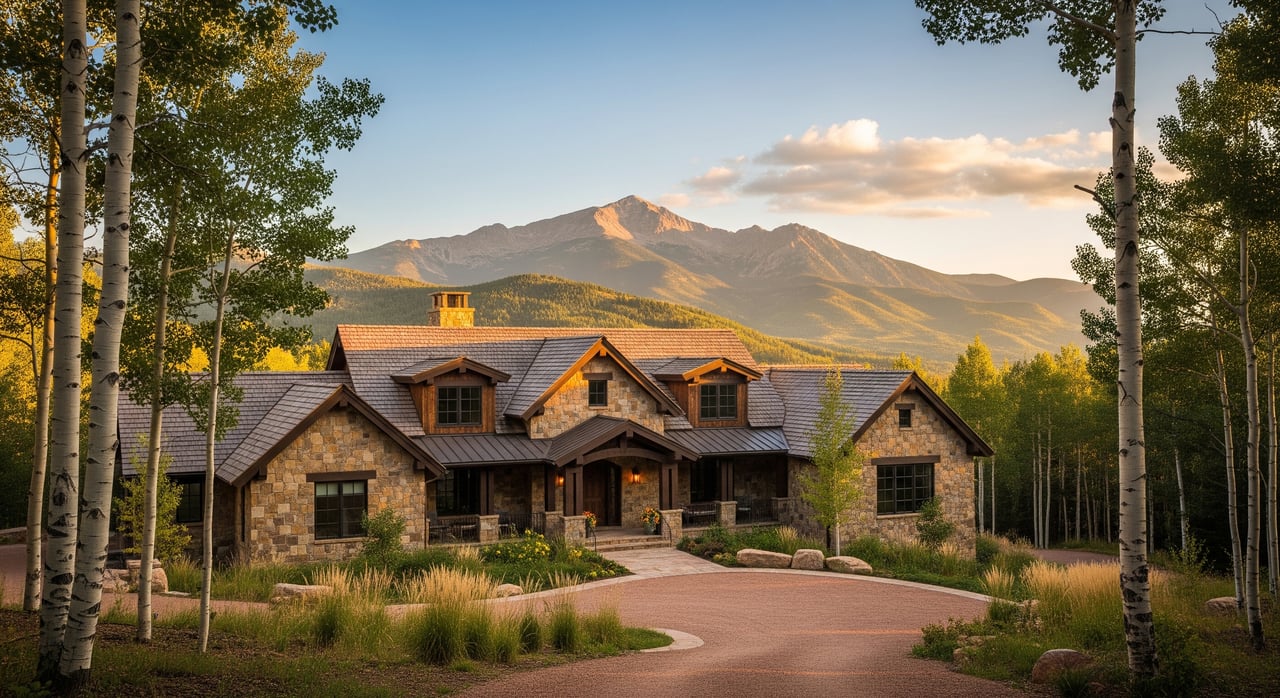
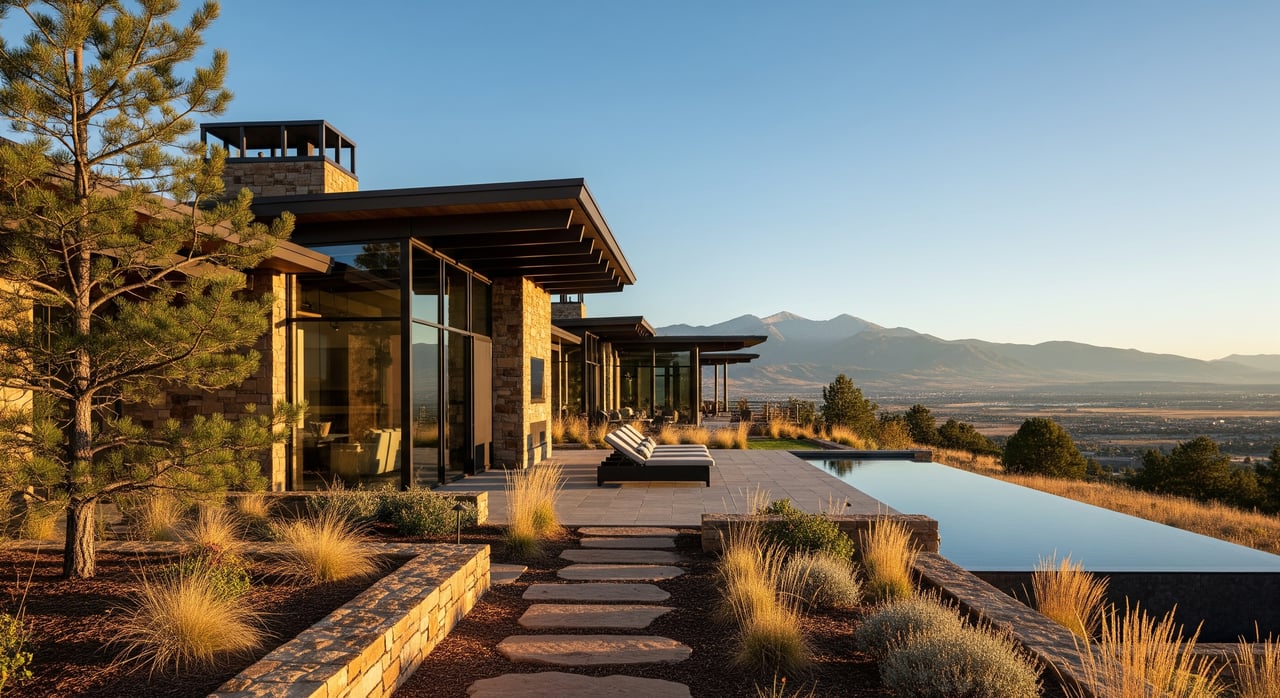
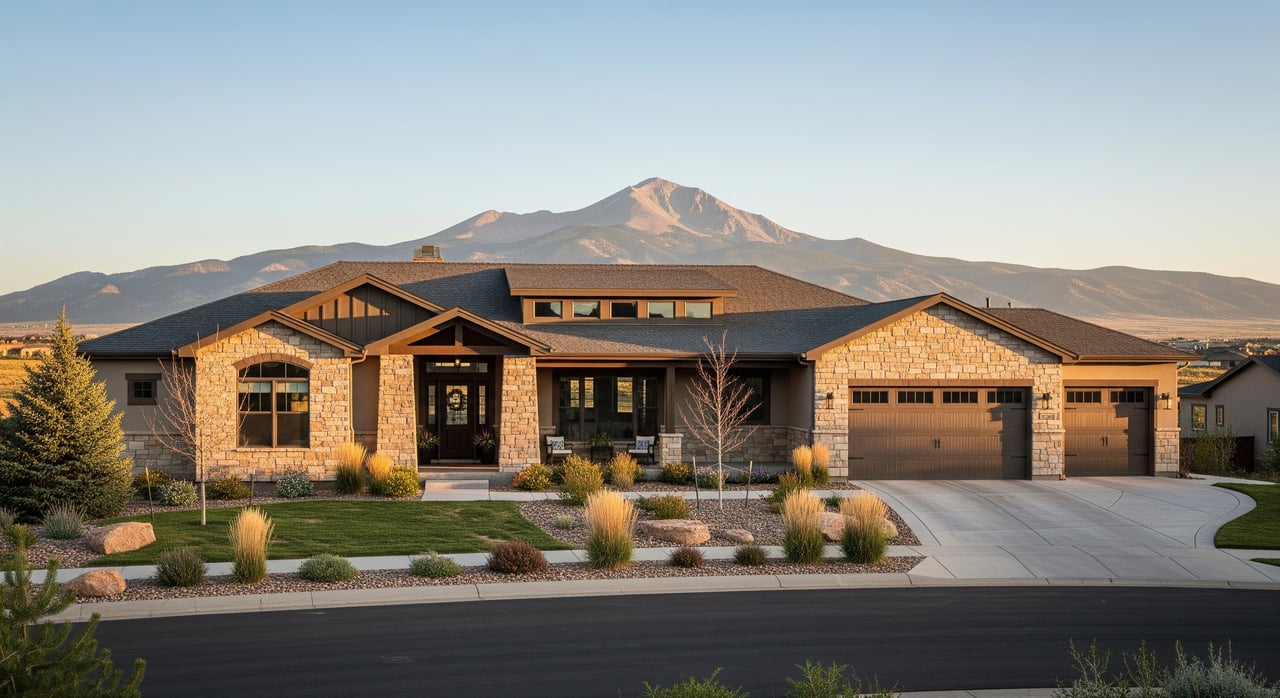
Single-Family Acreage Estates This is the defining property type of Black Forest. The traditional minimum lot size is 5 acres — a standard tied to private well and septic requirements — though properties of 10, 20, or even 40+ acres are not uncommon. The housing stock spans several decades and styles: 1970s cedar "mountain homes" with steep gable roofs and wood-paneled interiors sit alongside massive 6,000+ square foot modern custom builds featuring vaulted ceilings, open floor plans, and panoramic pine views. Equestrian properties with barns, cross-fencing, and dedicated pasture make up a meaningful segment of available inventory.
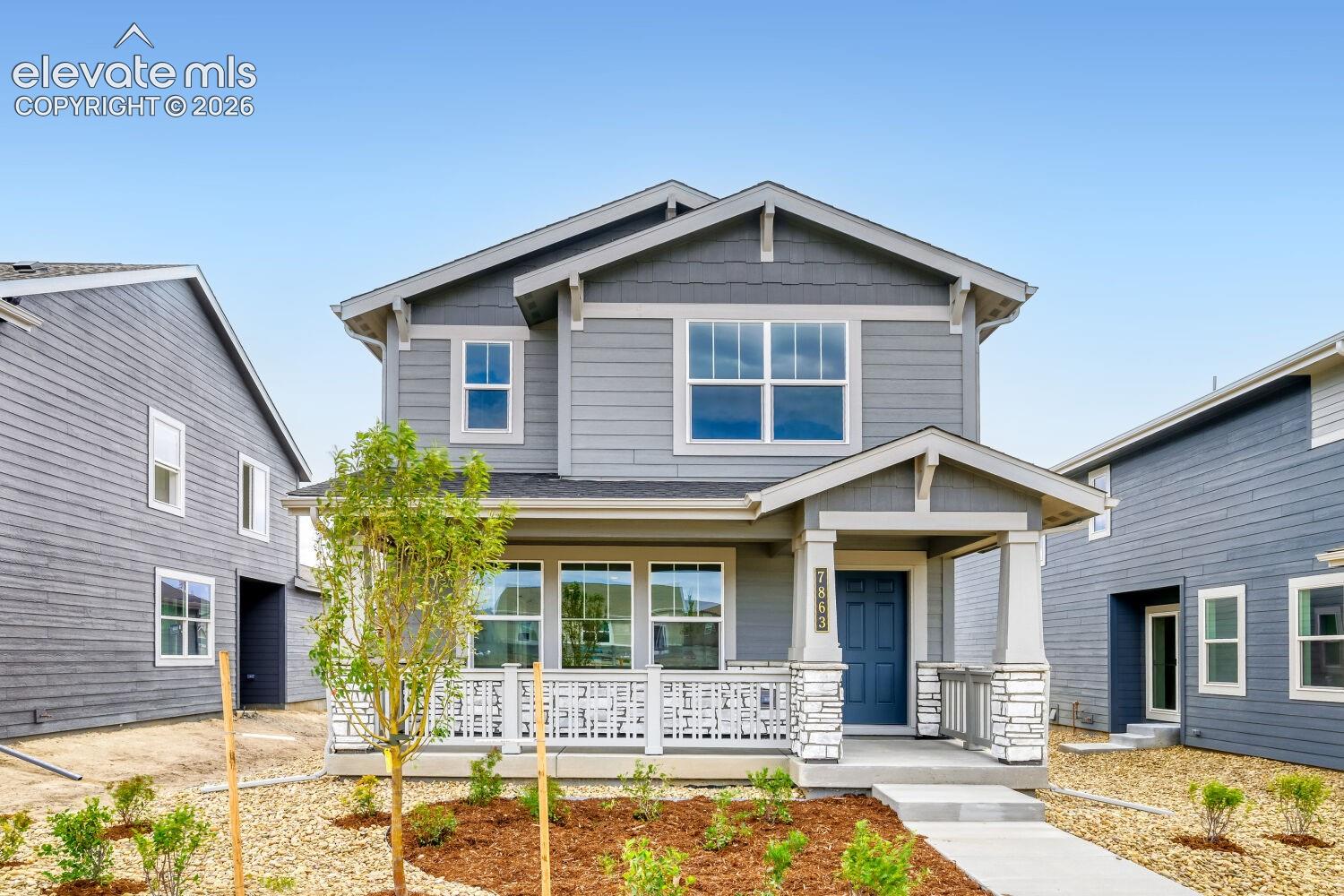
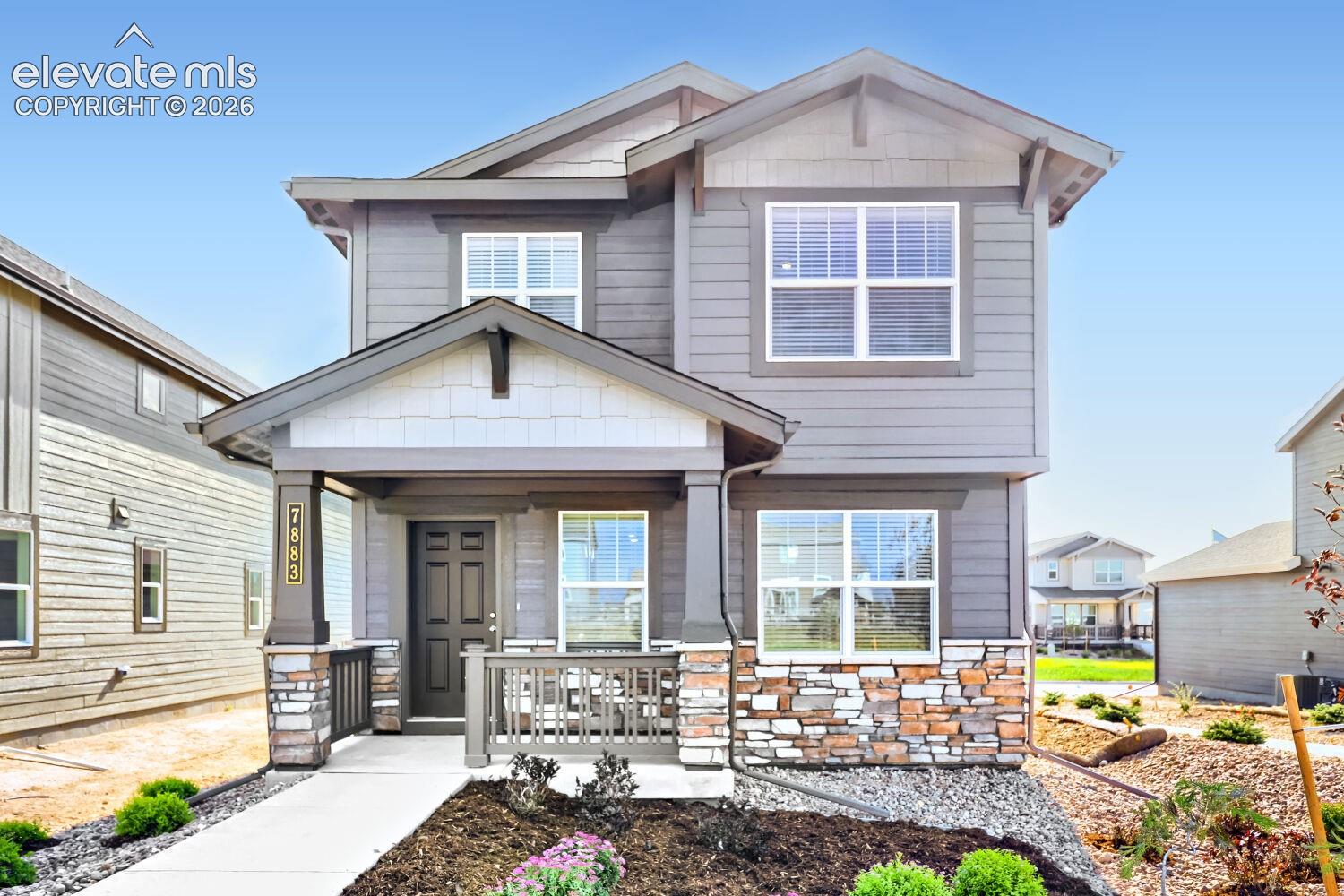
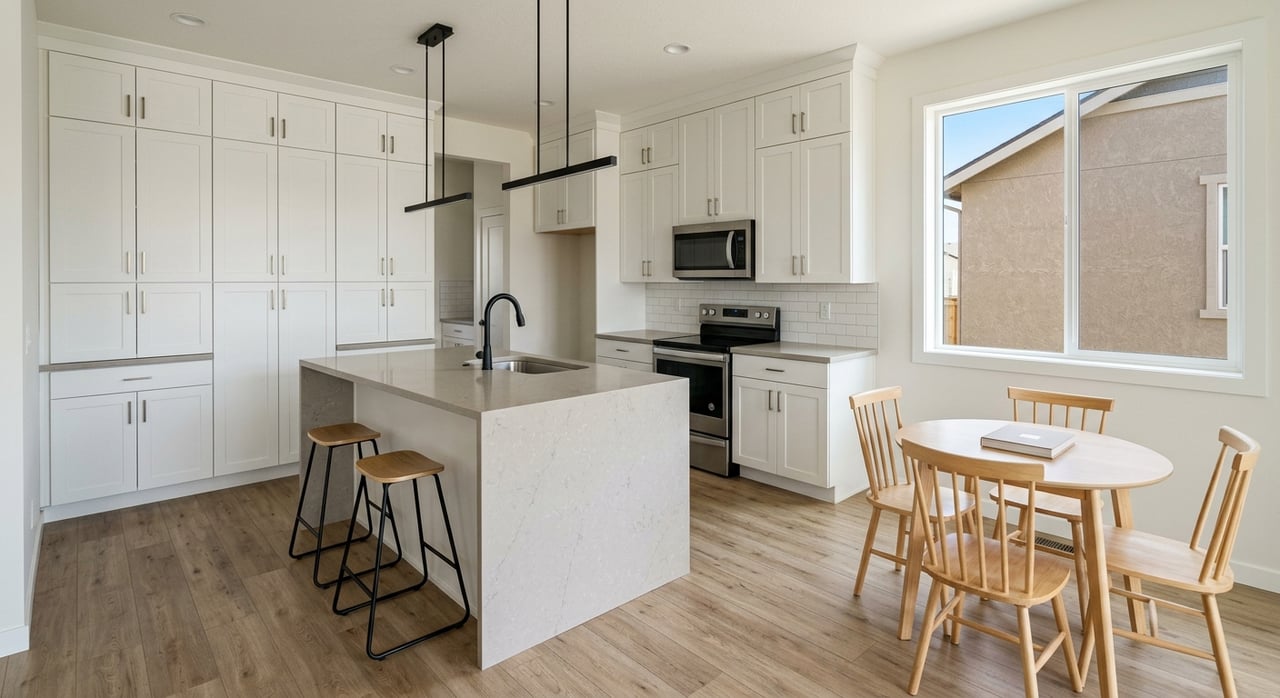
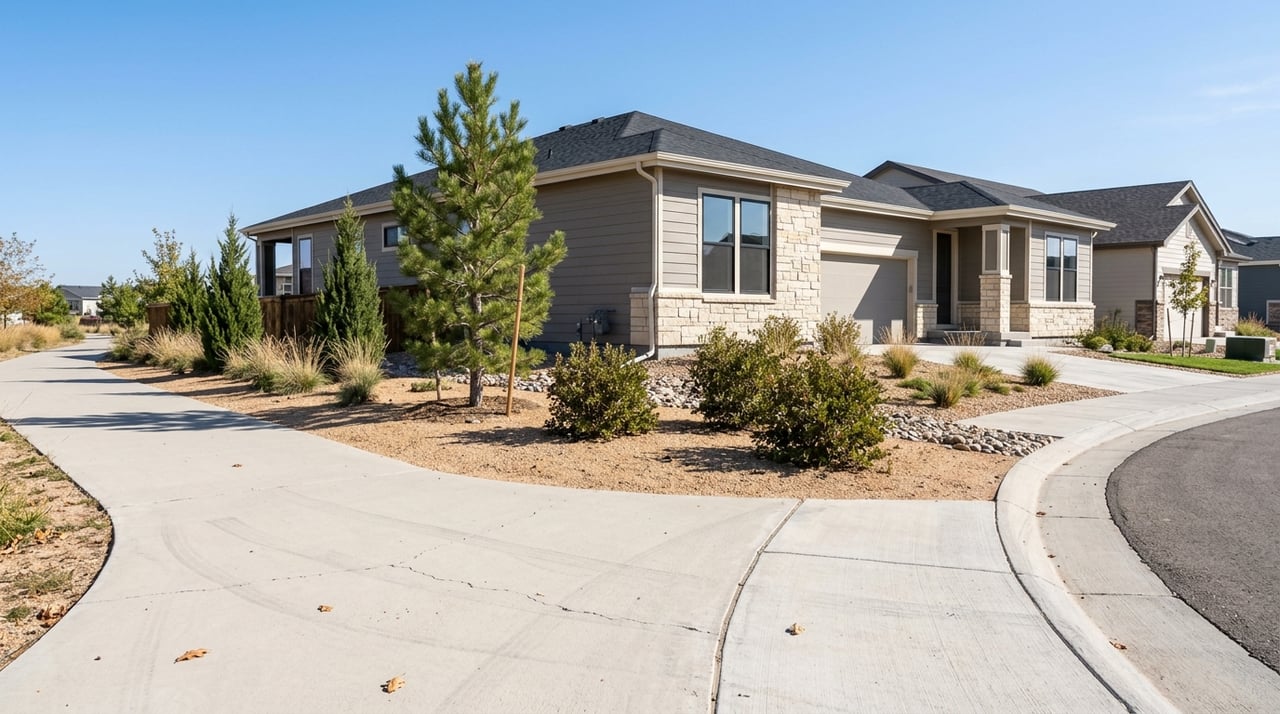
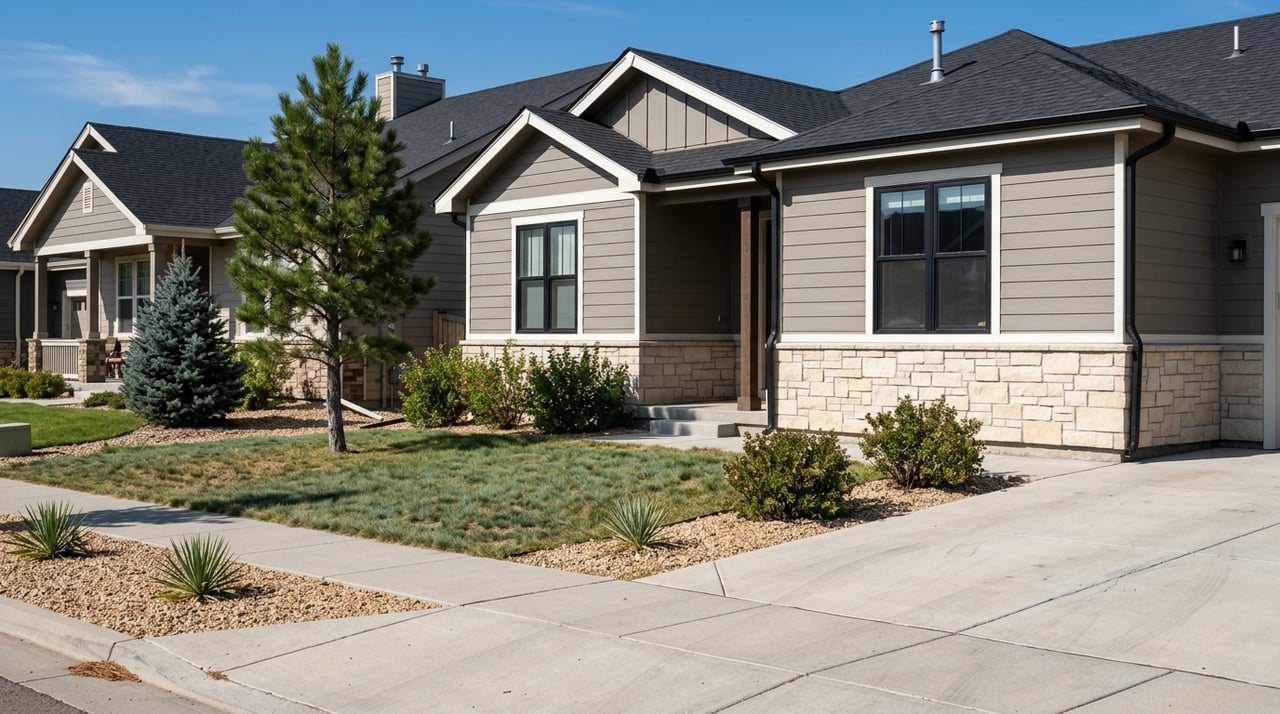
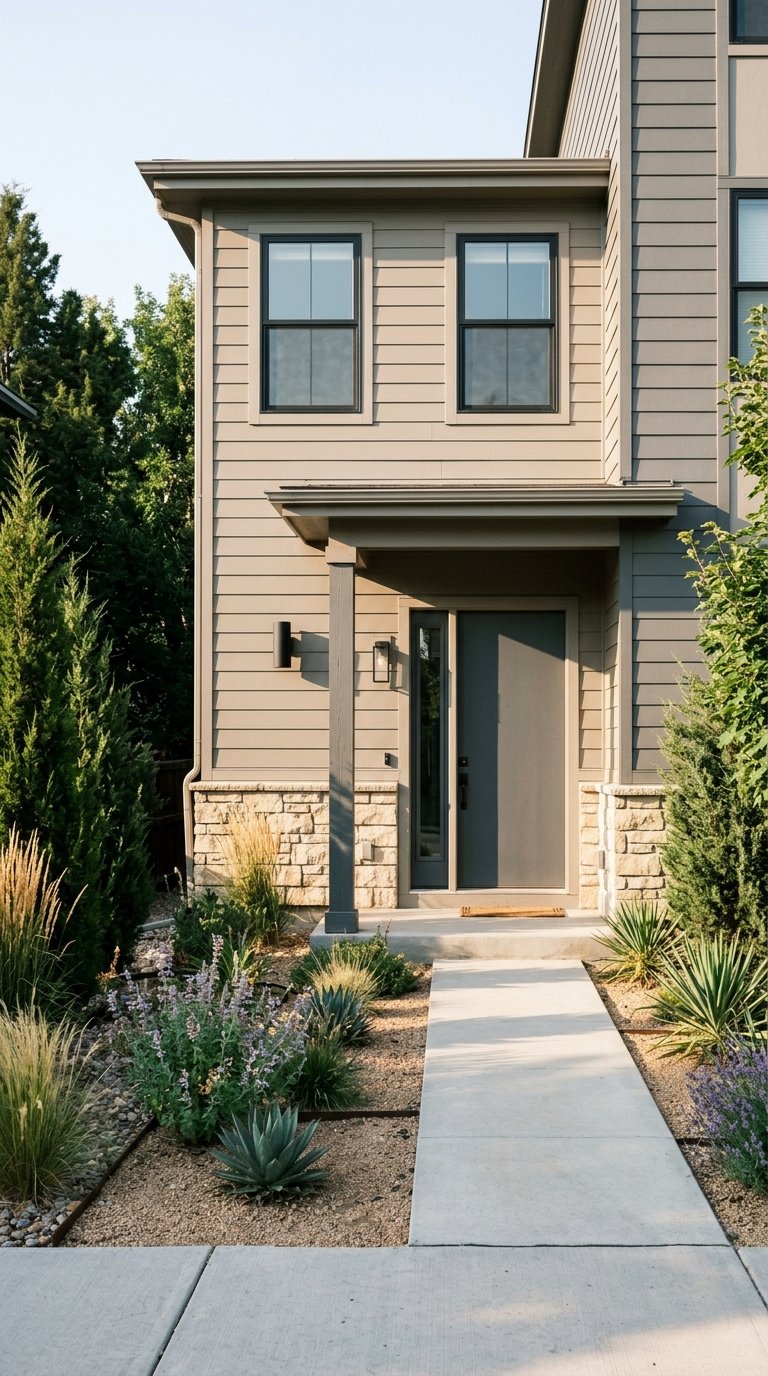
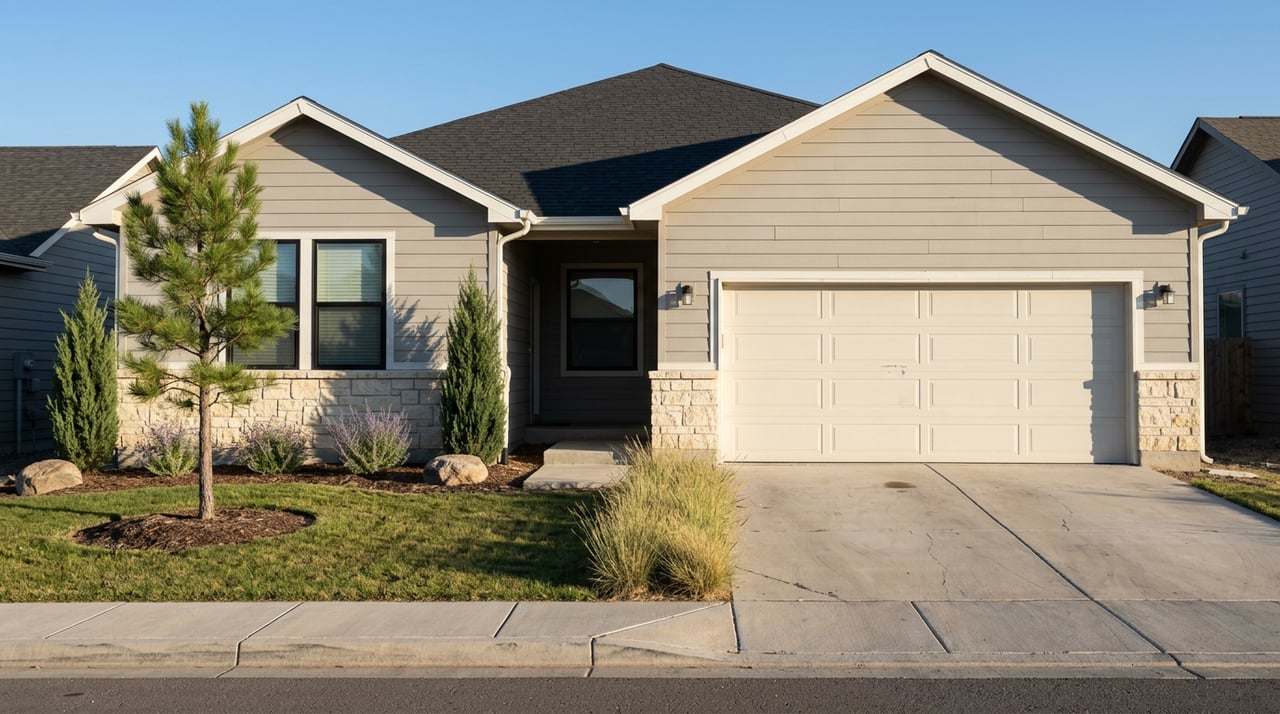
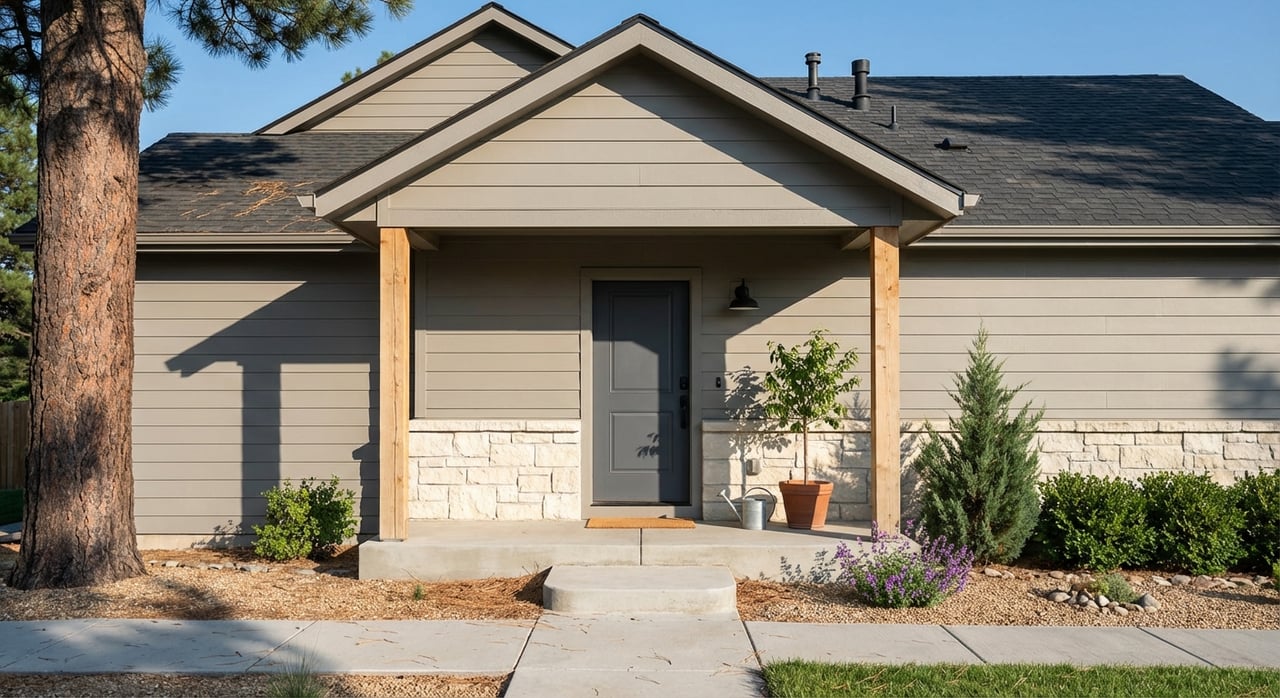
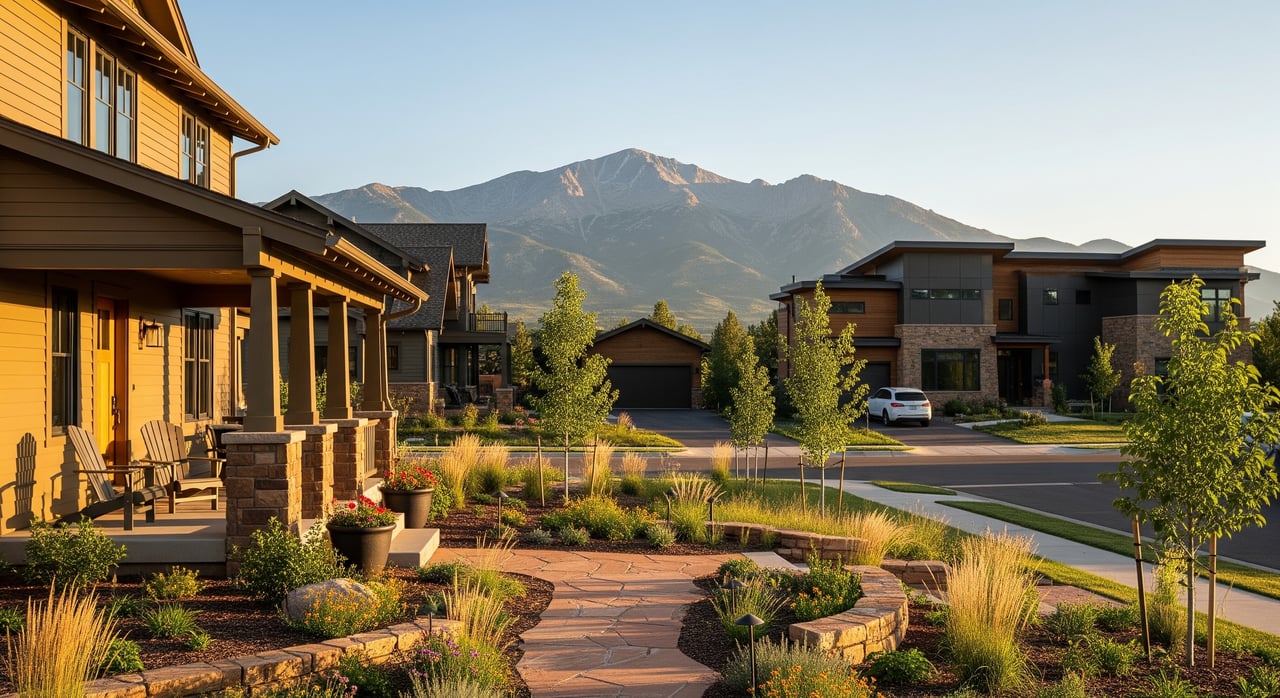
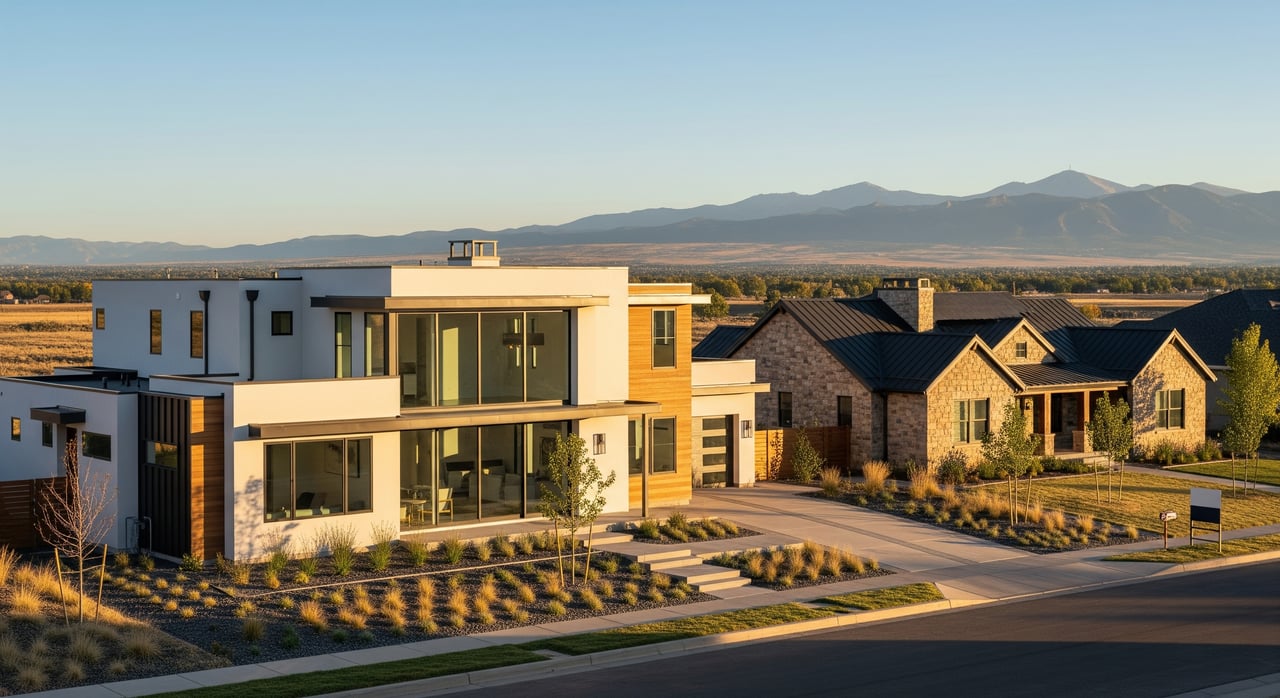
New Construction Subdivisions On the forest's southern and western edges — in communities like Sterling Ranch and Wolf Ranch — developers have introduced more structured neighborhoods with lot sizes ranging from a quarter acre to one acre. These homes offer contemporary ranch and two-story floor plans with modern finishes, community trail access, and shared open spaces. They tend to attract buyers who want the forest aesthetic and proximity to nature without the responsibility of managing a full acreage property. Price points in these communities are generally lower than core Black Forest estates, making them a compelling entry point.
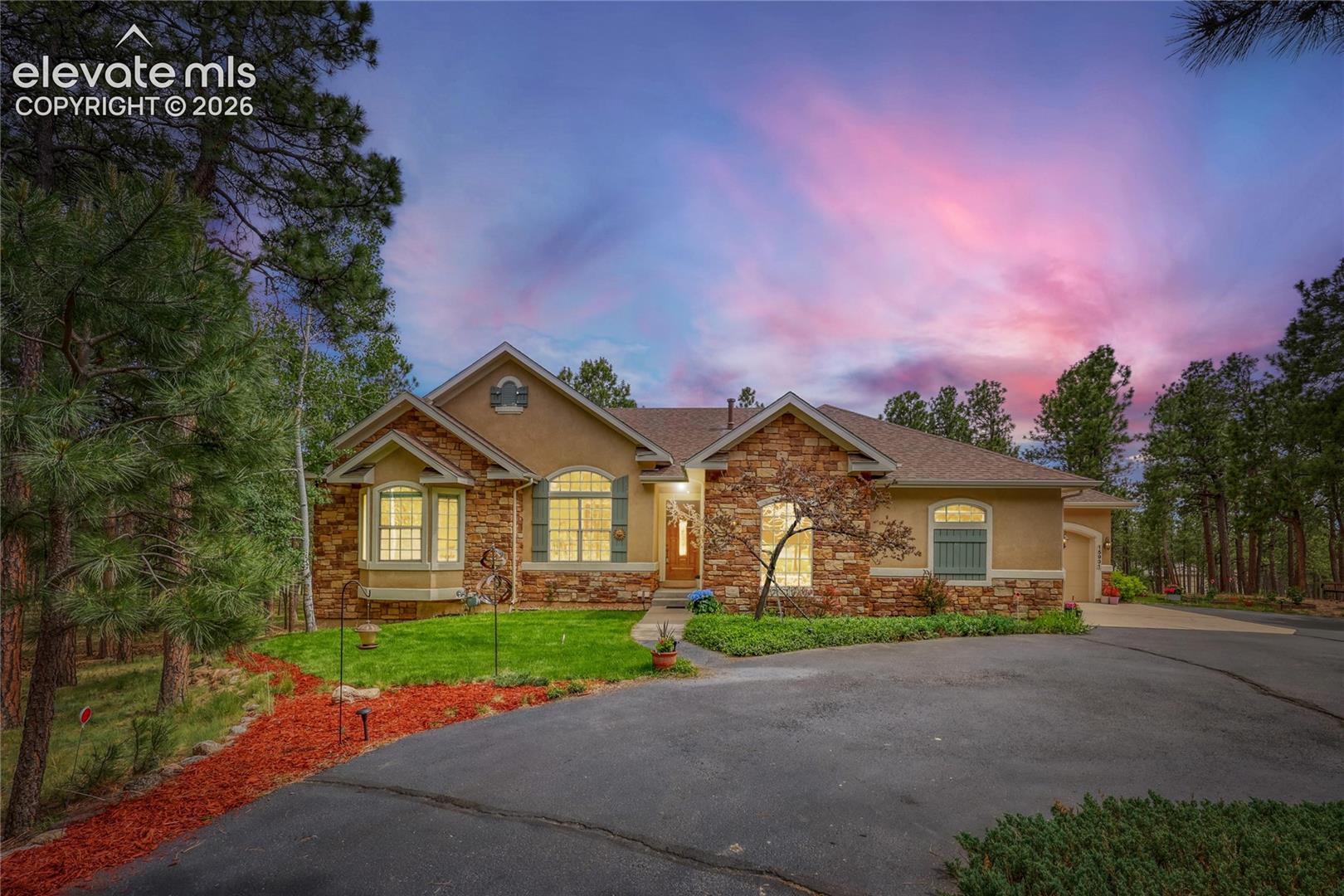
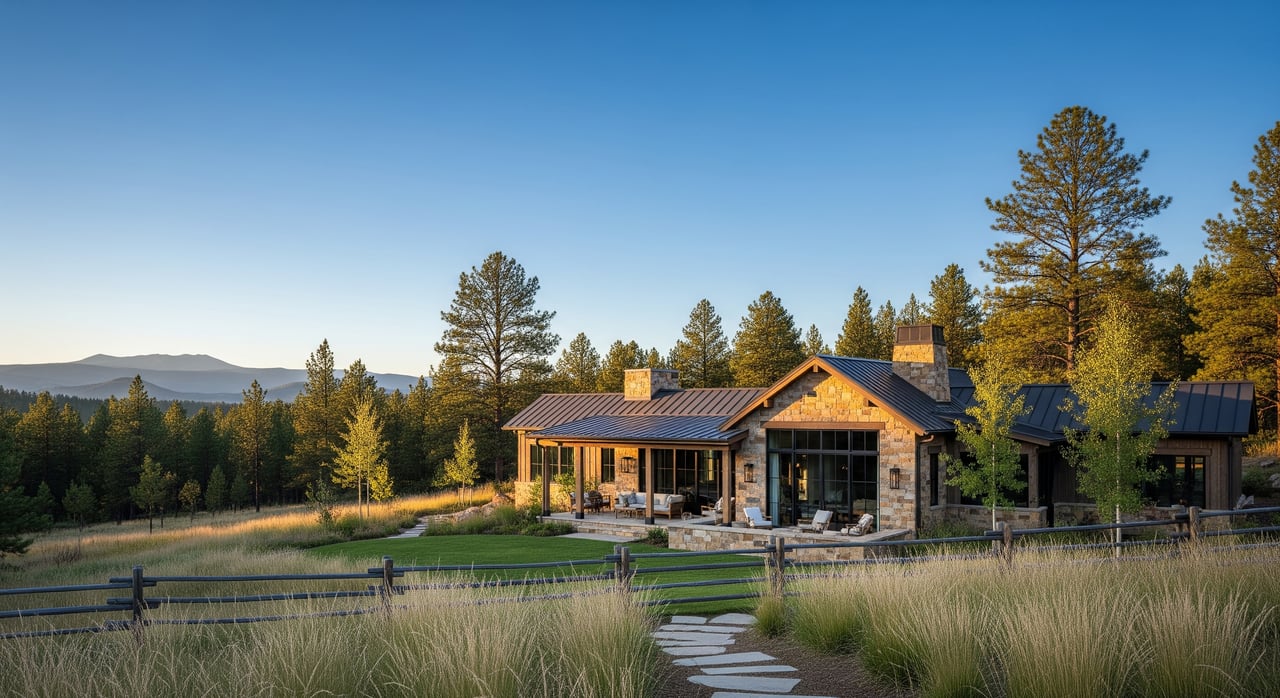
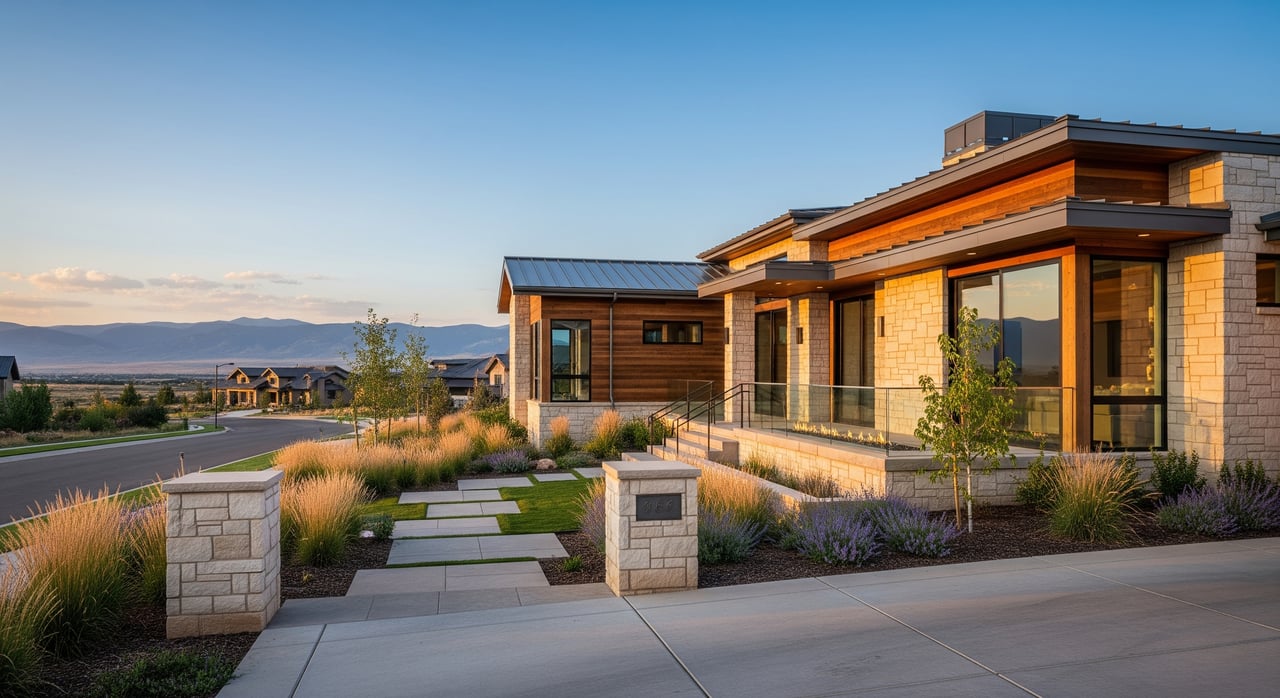
Luxury Fire-Rebuilds A significant and often overlooked segment of the Black Forest market is the post-2013 rebuild inventory. A large number of homes in the community are less than 12 years old, constructed to current wildfire codes with non-combustible siding, Class A roofing, ember-resistant vents, and sophisticated indoor-outdoor living spaces. These properties combine contemporary design with fire-resilient construction in a way that older homes simply cannot match, and they often carry insurance advantages as a result.
Condos & Multi-Family Condos and apartments are essentially nonexistent within Black Forest proper. The community's Rural Residential zoning was designed to prevent density-driven development, and it has succeeded. Buyers seeking multi-family options or investment properties with condo structures will need to look to the immediate borders — Northgate and Falcon both offer modern apartment complexes and townhome communities that serve the Black Forest workforce and provide a different investment profile.
Water and Waste Systems Most Black Forest properties operate on private wells and septic systems rather than municipal utilities — and understanding both is non-negotiable before closing. Request a recent pump test to verify well yield, particularly in dry years when production can drop significantly. Confirm whether water rights are adjudicated and whether outdoor watering restrictions apply. On the septic side, El Paso County requires a Transfer of Title inspection; ensure the system is rated for the number of bedrooms in the home, especially if renovation or addition is in your plans.
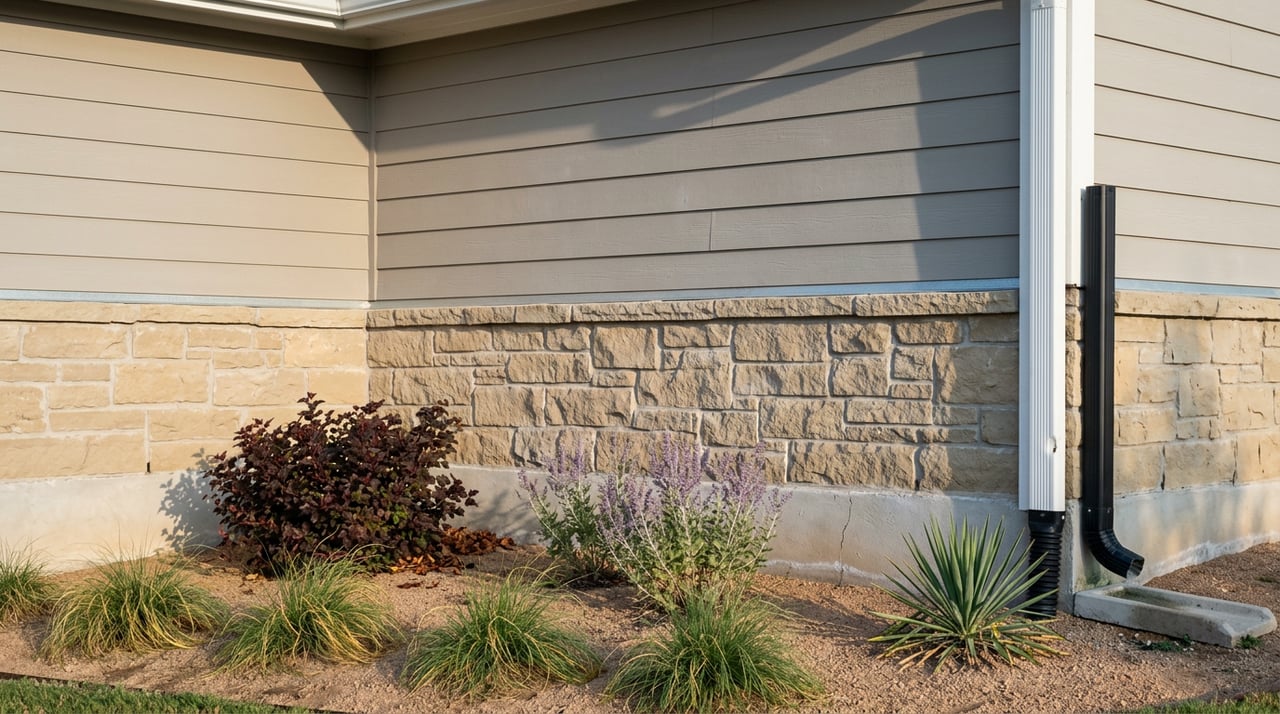
Wildfire Risk and Insurance This is the single most consequential non-price factor in a Black Forest purchase. Colorado's HB 1182, effective as of 2026, now requires insurers to disclose wildfire risk scores — meaning the insurability of a property is a legitimate due diligence step, not an afterthought. Look for homes with Class A fire-rated roofing, ember-resistant vents, and non-combustible siding such as stucco or stone. Confirm that defensible space — cleared brush within 30 to 100 feet of the structure — is in place or achievable. A property with strong mitigation not only insures more easily but commands stronger buyer demand when you eventually sell.
Zoning and Animal Rights Black Forest's Rural Residential zoning (typically RR-5 or RR-2.5) governs what can be done with a property beyond simply living on it. If horses or livestock are a priority, verify the specific "Animal Units" permitted per acre for that parcel — acreage alone does not guarantee unlimited animals. Outbuildings, shops, and barns are generally permitted but are subject to height and setback restrictions that vary by lot. Understand the zoning before falling in love with a property.
School District Boundaries Black Forest is served by three distinct public school districts — Academy D20, Lewis-Palmer D38, and Falcon D49 — and the boundaries do not follow obvious geographic logic. Two homes on the same street can fall into different districts. If a specific school is a priority, verify the address directly through the district's boundary map rather than relying on the listing details.
Pricing Strategy in a Balanced Market In 2026, Black Forest luxury acreage routinely takes 90 to 120 days to sell. That timeline is not the problem — mispricing is. Every lot in Black Forest is fundamentally unique, and pricing based on general neighborhood averages leads to extended market time and eventual reductions. The most effective pricing strategy anchors to usable acreage, well and septic age, proximity to paved roads, and the condition of the home's mechanical systems — not bedroom count alone.
High-ROI Pre-Sale Upgrades Buyers in this market increasingly want turnkey rural living, partly because the cost of rural labor and materials has risen sharply. Sellers who invest in professional forest mitigation — typically $5,000 to $10,000 — tend to see returns well beyond that in faster contract timelines and reduced buyer objections around insurance. Fire-resistant composite decks, outdoor stone fireplaces, and stone veneer on the home's exterior are among the highest-performing aesthetic investments, with garage door replacements and facade upgrades delivering returns exceeding 200% in some cases.
Seasonality Matters Late April through June is when Black Forest shows best. The pines are vibrant, the light is long, and buyers are actively making summer purchase decisions. Avoid listing in January or February; snow-covered gravel driveways and obscured pastures present the property at its lowest visual impact, which directly affects perceived value.
Know Your Buyer The most motivated buyers in the Black Forest market in 2026 are remote professionals seeking dedicated home office space with high-speed internet (Starlink or fiber), and multi-generational families looking for properties with accessory dwelling potential — a finished basement with a kitchenette, a detached guest suite, or a mother-in-law apartment. Staging and marketing that highlights these features explicitly will reach the right buyer faster.
The dining scene in Black Forest is intentionally small-town — a handful of genuinely good, community-anchored spots that locals treat as gathering places rather than just restaurants. For greater variety, the Briargate and Falcon corridors are 10 to 15 minutes away and offer the full range of national chains and upscale sit-down options.
Within the forest itself, Black Forest Brewing Co. serves as the social anchor of the community. It is where neighbors come for live music on weekends, trivia nights on Tuesdays, and cold pints of the locally brewed Forest Blonde Kölsch under a canopy of pines. The Black Forest Bistro offers a more refined experience — elevated comfort food with seasonal, locally sourced ingredients and a curated wine list, tucked away enough to feel like a true discovery. The Farm Shop at Backyard Market on Shoup Road functions as the community's morning ritual: gourmet coffee, fresh pastries, and artisanal goods in a space that feels more like a neighbor's kitchen than a commercial operation. For something quieter still, Latigo Winery on Black Forest Road pours Colorado-made wines in a rustic, intimate setting that is among the most underrated tasting experiences in the county.
Entertainment here is largely community-driven. The Black Forest Community Center hosts the annual Black Forest Festival every August — a full-day event featuring a parade, a community pancake breakfast, and the "Keeper of the Keys" ceremony honoring a local resident. The Meadowgrass Music Festival draws regional and national bluegrass and folk acts every Memorial Day weekend, while the Black Rose Acoustic Society hosts intimate live music twice monthly. Residents don't need to travel far for entertainment when the forest itself — the trails, the stargazing, the wildlife — is the primary venue.
Black Forest does not have a shopping mall within the pines, and that is by design. The community's zoning intentionally keeps commercial density out, which means residents develop a comfortable rhythm of local sourcing for daily needs and short drives for everything else.
For daily essentials and fresh local goods, The Backyard Farm Shop is the anchor — a year-round farmer's market format offering local produce, eggs, and forest-made products that many residents visit multiple times a week. For full grocery runs, King Soopers and Safeway serve the Falcon corridor to the east, while Natural Grocers and Whole Foods are available at the Briargate/Pikes Peak Parkway hub to the south — each roughly 10 to 15 minutes from most forest addresses.
The Promenade Shops at Briargate is the premier retail destination for Black Forest residents, an upscale outdoor shopping center featuring Apple, Anthropologie, and Lululemon alongside a strong lineup of sit-down restaurants. The Shops at Meridian Ranch to the east provides a more practical retail mix — Target, service businesses, and everyday convenience. Chapel Hills Mall, about 15 minutes out, offers traditional department store shopping and has become a social destination in its own right with a now-popular indoor pickleball facility that draws regulars from across the north Colorado Springs area. For outdoor gear and sporting goods, SCHEELS at Interquest Parkway is a destination unto itself, featuring an indoor Ferris wheel alongside an extensive selection of hiking, camping, and fishing equipment.
Recreation in Black Forest is not a feature of the community — it is the foundation of it. The terrain, the trails, the trees, and the open space are why people move here, and they remain the reason residents rarely want to leave.
Black Forest Regional Park is the community's recreational centerpiece: a 385-acre preserve with four miles of multi-use trails for hiking, mountain biking, and equestrian use. Its large picnic pavilions book months in advance for family reunions and community gatherings, and the playground and tennis courts make it a year-round destination for families. Section 16 Open Space offers a quieter, more meditative experience — a four-mile perimeter loop through dense pines and open meadows that locals favor for trail running, snowshoeing, and horseback riding. Fox Run Regional Park on the western edge is beloved for its scenic lakes and one of the best off-leash dog parks in the greater Colorado Springs area.
Pineries Open Space — more than 1,100 acres of ridgeline terrain — provides some of the longest uninterrupted horseback riding in the region and offers sweeping views of Pikes Peak from its elevated trails that stop most first-time visitors in their tracks.
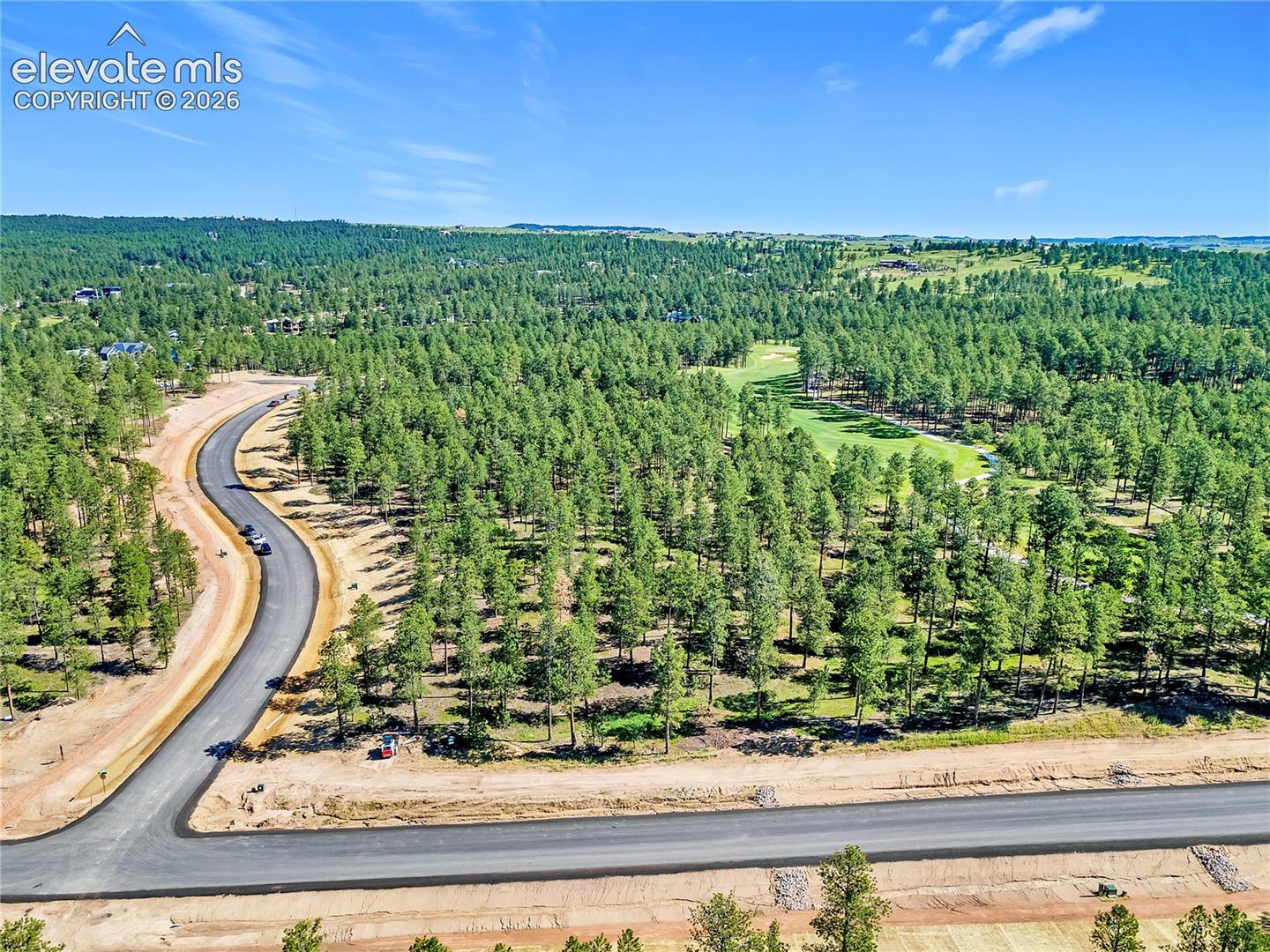
For golf, Flying Horse North is a private 18-hole championship course that winds directly through the Ponderosa pines and is widely regarded as one of the finest residential golf courses in the country. The Country Club at Woodmoor in nearby Monument offers a classic mountain-style layout at 7,300 feet elevation, affectionately known among enthusiasts as the "Augusta of the West" for its narrow, tree-lined fairways.
Culture in Black Forest is not performed — it is lived. There are no curated lifestyle amenities or master-planned community centers designed to manufacture a sense of place. The sense of place here was built over generations, sharpened by hardship, and sustained by a community that chooses this life deliberately.
The 2013 wildfire remains the defining event of modern Black Forest identity. The recovery effort that followed created bonds between neighbors that typical suburban life simply cannot replicate. "Mitigation parties" — community gatherings where neighbors help each other thin trees and clear brush — are a regular feature of life here and speak to a culture of mutual investment in shared safety and shared land. It is a meaningful expression of who these residents are.
The rhythms of the year are tied to the forest. Winters are spent close to wood-burning stoves, with 4WD drives through quiet, snow-blanketed pines. Spring brings the rush of green and the community's return to outdoor living. Summers are for gardening, 4-H projects, riding, and the community events that anchor the social calendar — the Black Forest Festival in August, the Meadowgrass Music Festival on Memorial Day weekend, and the twice-monthly acoustic sessions of the Black Rose Acoustic Society.
The "Forest Tempo" — as longtime residents sometimes call it — is an unspoken agreement to live at a human scale. Dark sky practices are observed so the stars remain visible. Privacy is respected across acreage boundaries, yet neighbors show up without hesitation when they're needed. It is a community for people who find meaning in the land they live on, and who prefer the sound of wind in the pines to the sound of traffic.
Black Forest is served by three of the strongest public school districts in Colorado, and proximity to each is determined entirely by your property's specific address — a fact that deserves careful attention during the buying process.
Academy District 20 covers the western and southern portions of the forest and carries an "Accredited with Distinction" designation year after year. Edith Wolford Elementary sits directly within the forest boundaries, while Pine Creek High School — approximately 15 minutes from most forest addresses — consistently ranks among the top high schools in the state for AP program rigor and collegiate outcomes. D20 is also home to the legendary School in the Woods, a fourth-grade immersive program where students spend an entire academic year learning a standard curriculum through the lens of natural science and forest stewardship. It is among the most distinctive K-12 programs in Colorado and a genuine draw for environmentally minded families.
Lewis-Palmer District 38 serves the northern forest area near Monument, distinguished by smaller class sizes and strong SAT performance. Ray E. Kilmer Elementary and Lewis-Palmer High School are the primary institutions for northern Black Forest residents. Falcon District 49 serves the eastern edge with a School of Choice model that includes charter and STEM-focused options like the Falcon Elementary School of Technology — a strong fit for families prioritizing technology integration and personalized learning pathways.
For private options, The Classical Academy (a D20 charter) offers a rigorous liberal arts K-12 curriculum and carries a significant waitlist — families serious about enrollment typically begin the process years before their children are school-age. Preschool families can access the Black Forest Preschool at the Community Center, a play-based program with deep community roots. For higher education, the University of Colorado Colorado Springs is approximately 20 minutes south, and the United States Air Force Academy borders the forest's western edge.
Black Forest's ridge position — once seen as a geographic drawback — has become one of its quiet advantages. The community's access points connect to Colorado Springs, the Denver Tech Center, and Denver proper with a directness that surprises most first-time buyers.
Black Forest Road runs north-south as the primary spine, connecting residents to the Research Parkway and Woodmen Road corridors to the south. Shoup Road and Hodgen Road serve as the community's east-west arteries, though both can become treacherous during heavy upslope snowstorms — reinforcing why AWD or 4WD is a practical requirement for daily life here. Highway 83 on the western boundary serves as the scenic backdoor to Parker and South Denver, with a typical drive to the Denver Tech Center running 50 to 60 minutes.
Typical commute times from the heart of Black Forest run 25 to 35 minutes to Downtown Colorado Springs, 10 to 15 minutes to the Northgate and Briargate shopping and dining hubs, and 30 to 35 minutes to Colorado Springs Airport. For Denver commuters, the Bustang South Line offers a park-and-ride stop at Woodmen and I-25 with Wi-Fi-equipped coach service to Denver Union Station — a practical alternative to daily highway driving for those making the trip regularly.
There is no public bus service within Black Forest itself. This is a car-dependent community by design and by geography. Buyers relocating from urban environments should factor transportation independence into their planning from the outset.
While every parcel in Black Forest has its own character, certain micro-locations and corridors consistently draw the most attention from discerning buyers.
Black Forest Road itself — particularly the stretches north of Hodgen — is home to some of the most established and mature estate properties in the community. Lots here often exceed 10 acres and feature the kind of old-growth Ponderosa canopy that cannot be manufactured or replanted in a single generation.
The Flying Horse North corridor on the western edge of the forest is among the most sought-after addresses for buyers who want luxury estate living paired with access to championship golf and proximity to the Briargate commercial hub. Custom homes here are newer, larger, and built to exacting specifications, with prices that reflect the combination of location and finish quality.
Properties along the Section 16 and Pineries Open Space perimeters are prized for their direct trail access and the privacy that comes with backing to preserved public land — a boundary that, by definition, will never change. For equestrian buyers, the Hodgen Road corridor to the east remains the traditional address of choice, with acreage properties that include working barns, fenced pastures, and cross-country riding access that few communities in the state can match.
For buyers entering the market at the $700,000 to $900,000 range, the Sterling Ranch and Wolf Ranch communities on the forest's southern fringe offer newer construction, manageable lot sizes, and genuine forest character without the full maintenance obligations of a 5-acre estate — an increasingly popular option for remote professionals and young families making their first Black Forest purchase.
At its core, Black Forest offers something the broader Colorado Springs market simply cannot replicate: the feeling that your home is genuinely yours — your land, your trees, your sky.
People come to Black Forest for the space. They stay for the community. The privacy of 5-acre lots does not translate to isolation; it translates to intention. When neighbors in Black Forest interact, they choose to. That voluntary quality makes the connections here more meaningful, not less. The mitigation parties, the festival pancake breakfasts, the acoustic concerts at the community center — these are not programmed amenities. They are expressions of who these people are.
The quality of life metrics are exceptional by any standard: access to elite school districts, proximity to a major metro without the density of one, recreational opportunities that rival mountain resort communities, and a natural setting that makes the daily experience of simply being home a restorative one.
For buyers who have grown weary of neighborhoods where every home looks like the next one, where the "backyard" is a 40-foot strip of lawn, and where privacy is theoretical, Black Forest is the answer. And in 2026, with inventory at healthy levels and seller concessions on the table, the window to buy into this community on favorable terms may not stay open indefinitely.
Black Forest does not just attract buyers. It converts them into lifers.
Navigating the Black Forest market requires more than general real estate experience — it requires specific knowledge of well yields, wildfire risk scores, school boundary nuances, zoning restrictions, and the art of pricing land that cannot be compared to the house next door. That is the expertise Scott Coddington brings to every transaction.
Scott has worked with buyers and sellers across the Colorado Springs market with a commitment to honest, informed guidance — helping clients make decisions they feel confident about long after closing day. Whether you are exploring Black Forest for the first time, ready to make an offer on an acreage estate, or preparing to sell a property you have called home for decades, Scott is the advisor you want in your corner.
Reach out to Scott Coddington directly to start the conversation about what Black Forest could mean for you.
There's plenty to do around Black Forest, including shopping, dining, nightlife, parks, and more. Data provided by Walk Score and Yelp.
Explore popular things to do in the area, including Germans Pretzelkings, The Little Bean Mobile Cafe, and Cured & Crafted.
| Name | Category | Distance | Reviews |
Ratings by
Yelp
|
|---|---|---|---|---|
| Dining | 1.19 miles | 3 reviews | 3.7/5 stars | |
| Dining | 2.35 miles | 0 reviews | 0/5 stars | |
| Dining | 2.35 miles | 1 review | 5/5 stars | |
| Dining | 3.59 miles | 1 review | 5/5 stars | |
| Dining | 3.59 miles | 116 reviews | 4.1/5 stars | |
| Dining · $ | 3.61 miles | 68 reviews | 3.9/5 stars | |
| Dining | 3.62 miles | 4 reviews | 5/5 stars | |
| Dining | 4.43 miles | 28 reviews | 4.3/5 stars | |
| Dining | 4.44 miles | 14 reviews | 3.9/5 stars | |
| Shopping | 3.43 miles | 0 reviews | 0/5 stars | |
| Active | 0.99 miles | 1 review | 5/5 stars | |
| Active | 1.19 miles | 1 review | 5/5 stars | |
| Active | 1.19 miles | 0 reviews | 0/5 stars | |
| Active | 3.54 miles | 0 reviews | 0/5 stars | |
| Active | 4.08 miles | 0 reviews | 0/5 stars | |
| Active | 4.33 miles | 13 reviews | 4.4/5 stars | |
| Active | 4.43 miles | 0 reviews | 0/5 stars | |
| Active | 4.45 miles | 0 reviews | 0/5 stars | |
| Nightlife | 1.76 miles | 0 reviews | 0/5 stars | |
| Nightlife | 3.54 miles | 2 reviews | 5/5 stars | |
| Beauty | 0 miles | 1 review | 4/5 stars | |
| Beauty | 3.42 miles | 4 reviews | 5/5 stars | |
|
|
||||
|
|
||||
|
|
||||
|
|
||||
|
|
||||
|
|
Black Forest has 5,250 households, with an average household size of 2.79. Data provided by the U.S. Census Bureau. Here’s what the people living in Black Forest do for work — and how long it takes them to get there. Data provided by the U.S. Census Bureau. 14,658 people call Black Forest home. The population density is 146 and the largest age group is Data provided by the U.S. Census Bureau.
Total Population
Population Density Population Density This is the number of people per square mile in a neighborhood.
Median Age
Men vs Women
Population by Age Group
0-9 Years
10-17 Years
18-24 Years
25-64 Years
65-74 Years
75+ Years
Education Level
Total Households
Average Household Size
Average individual Income
Households with Children
With Children:
Without Children:
Marital Status
Blue vs White Collar Workers
Blue Collar:
White Collar:
July 16, 2026
September 3, 2026
September 3, 2026
May 21, 2026
August 27, 2026
June 18, 2026
August 20, 2026
February 12, 2026
December 11, 2025
January 22, 2026
April 2, 2026
April 9, 2026
January 15, 2026
August 13, 2026
August 13, 2026
August 13, 2026
August 13, 2026
August 13, 2026
March 26, 2026
August 6, 2026
August 6, 2026
March 24, 2026
April 23, 2026
July 23, 2026
April 16, 2026
May 14, 2026
July 9, 2026
June 11, 2026
July 2, 2026
December 25, 2025
June 25, 2026
May 7, 2026
March 5, 2026
June 4, 2026
March 12, 2026
May 28, 2026
February 26, 2026
January 1, 2026
February 19, 2026

November 27, 2025
December 4, 2025
February 5, 2026
Scott Coddington | January 14, 2026
January 8, 2026
November 27, 2025
December 18, 2025

November 21, 2025
Serving communities from Colorado Springs through Pueblo and Denver, west into the mountains or east to the plains, our team is here to help with all your real estate needs across Colorado’s Front Range.