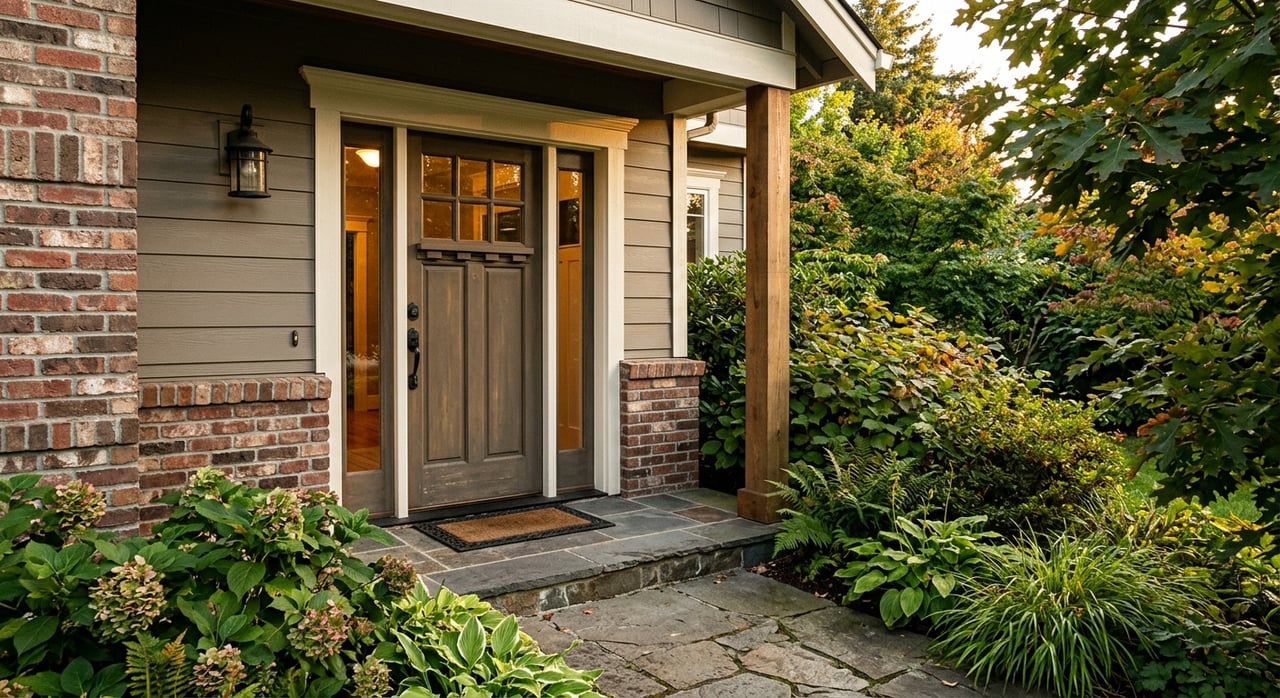
Fountain New Construction Versus Established Neighborhoods
May 28, 2026
May 28, 2026
Trying to choose between a brand-new home and an established neighborhood in Fountain? You are not alone. For many buyers, this decision comes down to more than age or style. It affects your monthly costs, your commute, your lot size, and even how your utilities are set up. If you are weighing both options, this guide will help you compare what really matters in Fountain so you can move forward with more confidence. Let’s dive in.
In some markets, new construction clearly costs more and resale homes clearly offer more land. Fountain is not that simple. Census data puts the median owner value at $398,000, while Realtor.com currently shows a median listing price around $417,000 and new-construction pricing around $409,900.
That means you cannot assume a new build will always be the pricier option. In Fountain, the better approach is to compare each property based on location, fees, taxes, lot type, and daily lifestyle fit.
Fountain has two very different development patterns that often shape your search. Olde Town reflects the historic core, while Mesa Ridge represents a newer growth corridor. Those patterns can influence home style, subdivision layout, and travel routes.
Commute can be a major factor here. Fort Carson sits immediately east of Fountain, and the city identifies US 85 as a key north-south route and SH 16, also called Mesa Ridge Parkway, as a major connection into the post. If you commute to Fort Carson or north toward Colorado Springs, the side of town you choose can change how your day feels.
New construction in Fountain usually centers on detached single-family homes. Current examples are commonly marketed with 3 to 5 bedrooms, 2.5 to 3.5 baths, and either move-in-ready or to-be-built options.
Some communities focus on modern layouts and shared amenities. Aspen Ranch, for example, is currently advertised from $439,995 and includes a large community park. Another builder page in Fountain advertises six open-concept floor plans from 1,687 to 2,415 square feet, with features like lofts, flex rooms, and 2-car garages.
If you like the idea of a more current floor plan, new construction may check that box. Open living areas, flexible bonus space, and simpler maintenance in the early years are often part of the appeal.
It is easy to assume new homes in Fountain always come with compact lots. That is not always true. Recent examples include a new-build lot of about 0.1188 acres, but there are also edge-of-town new builds on much larger parcels, including a 7.4-acre property with a cistern.
That is why lot size alone is not the best shortcut. In Fountain, subdivision type and utility setup often tell you more than the word “new” does.
Before you commit to a new build, ask clear Fountain-specific questions:
These details matter because Fountain new construction can include HOA fees, district-based taxes, and different utility arrangements depending on the area.
Established neighborhoods in Fountain bring more variety than many buyers expect. Recent resale examples include a 2014 detached home on 0.1825 acres with no HOA, a 2006 townhome on a 2,191-square-foot lot with a monthly HOA, and a 2016 tri-level on 2.83 acres.
That range matters. In Fountain, “established” does not automatically mean older, smaller, or more traditional. It can mean attached housing, suburban detached homes, or larger acreage properties.
If you want options, resale inventory may give you more variation in floor plans, lot shapes, and maintenance needs. Instead of assuming all established homes are alike, it helps to look closely at the actual property.
When you tour an established home in Fountain, ask practical questions that affect your budget and upkeep:
These questions can help you compare resale homes fairly against new construction. A lower purchase price does not always mean a lower total cost of ownership.
One of the biggest differences between homes in Fountain may have nothing to do with square footage. It may come down to fees and taxes.
Colorado HOAs are governed by CCIOA. Associations may manage common areas and set design or landscaping rules, although the state HOA office notes they cannot prohibit xeriscape or drought-tolerant landscaping.
Metro districts are different from HOAs. They are local governments that finance infrastructure and can levy property taxes to repay bonds. El Paso County tax entity maps show that parcels inside a district boundary are subject to that district’s mill levy.
This can have a real impact on your monthly ownership costs. County materials currently list metro districts in the Fountain area, including Cumberland Green Metro District, and the county treasurer’s mill-levy table currently shows Cumberland Green Metro District at 47 mills.
Whether you are buying new construction or a resale home, ask for these details in writing:
This is one of the most important comparison points in Fountain. Two homes with similar prices can carry very different long-term costs.
Utilities deserve extra attention in Fountain. Fountain Utilities provides residential water and electric service to about 16,000 households in the Fountain Valley area, but the city notes that new service is not same-day.
That means you should not assume every property has the same setup. Depending on whether the home is in town or on the edge of the city, listings may show city water and electric, association or district water, or private arrangements like a cistern.
For buyers comparing neighborhoods, this matters for both convenience and planning. A property’s utility source can affect your move-in process, monthly expectations, and how you think about future maintenance.
If you are relocating, especially for military service or a job in Colorado Springs, commute reliability should be a major part of your decision. In Fountain, location is not just about the neighborhood feel. It is also about how you move through town each day.
Because US 85 is a main north-south corridor and SH 16 connects into Fort Carson, your route priorities matter. Some buyers want the shortest path to the post. Others want easier northbound access toward Colorado Springs. Some want a balance between both.
This is where a side-by-side map review can help. A home that looks perfect online may not feel as practical once you account for your weekly driving patterns.
If you are still deciding, focus on the trade-offs that affect your life most.
In Fountain, the smartest move is usually not choosing “new” or “established” in the abstract. It is comparing the real cost, location, utility setup, and daily function of each property.
When you narrow down your options, compare each home using the same checklist:
This process can quickly show which home is actually the better fit. It also helps you avoid getting distracted by surface-level details while missing the costs that shape your long-term experience.
Whether you are buying your first place, relocating to the area, or trying to sort through builder versus resale options, Fountain gives you more variety than many buyers expect. The key is asking the right questions early and comparing properties based on how you will live in them every day. If you want help sorting through Fountain new construction and established neighborhoods, reach out to Scott Coddington for local guidance that keeps the details clear and the process moving.
Stay up to date on the latest real estate trends.

Fall Home Maintenance

Southern Colorado Activities
Halloween Events, Fall Festivals, Family Activities & Things to Do in Colorado Springs, Pueblo & Pueblo West

Pumpkin patches and fall festivals

Moving to Colorado Springs
Moving to Colorado Springs

Hiking
The Manitou Incline

Southern Colorado Activities
Live Music, Pumpkin Patches, Family Activities & Fall Fun in Colorado Springs, Pueblo & Pueblo West
Serving communities from Colorado Springs through Pueblo and Denver, west into the mountains or east to the plains, our team is here to help with all your real estate needs across Colorado’s Front Range.