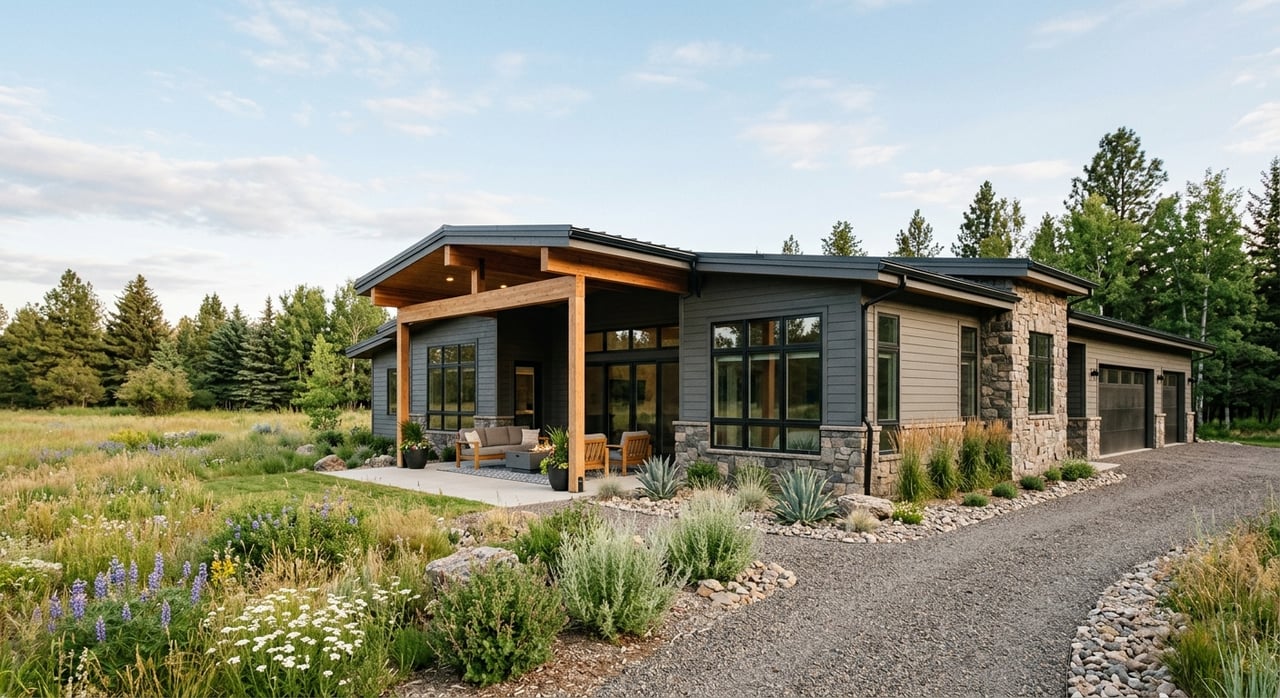
Pricing A Custom Home In Monument's Acreage Communities
July 2, 2026
July 2, 2026
If you try to price a custom home in Monument the same way you would price a house in a typical subdivision, you can miss the mark fast. Acreage properties live in a different lane, where views, land use, access, private systems, and neighborhood character can matter as much as the house itself. If you are getting ready to sell, this guide will help you understand what really drives value in Monument’s acreage communities and how to price with more confidence. Let’s dive in.
Monument has a strong appeal for buyers who want a small-town setting with access to Colorado Springs, Denver, trails, shopping, and a historic downtown. But within that broader market, custom homes on acreage form a micro-market of their own. That is why citywide averages can help with context, but they should not drive the final asking price.
For May 2026, Redfin reported Monument’s median sale price at $656,607 and median price per square foot at $228, while Realtor.com reported a median listing price of $825,000 and median price per square foot of $237. Those numbers are useful as a backdrop, but they are too broad to capture the value of a one-of-a-kind home on several acres. A custom property in King’s Deer, Woodmoor, or a similar setting often needs a far more tailored approach.
Price per square foot works best when homes are fairly similar in lot size, age, layout, and setting. That is rarely the case with custom acreage homes in Monument. Two homes with similar interior square footage can have very different values if one has better views, easier driveway access, more usable land, or stronger privacy.
Appraisal guidance supports that idea. Residential value is typically measured through recent comparable sales, with close attention to location, condition, size, and the features that truly affect buyer decisions. In a market with unique homes and fewer direct comparables, simple square-foot math becomes less reliable.
Not all acreage works the same way. Buyers look at how much of the land is usable, how the site lays out, and whether the property supports the lifestyle they want.
That can include:
A larger lot does not automatically mean a higher price. If the land is hard to use or less functional, buyers may not value every acre equally.
In Monument’s acreage communities, views are often part of the product. In King’s Deer, design standards call for lot sizes of 2.5 acres or more, discourage fencing to preserve open space, and state that new plantings should not unreasonably block neighboring views.
That tells you something important about pricing. A home that captures broad vistas or protects a strong view corridor may stand apart from another home with similar square footage but a less compelling setting.
Some communities are valued not just for the homes in them, but for the overall feel they preserve. King’s Deer materials emphasize a custom appearance, while Woodmoor highlights open space, fishing, hiking, and covenant control.
For buyers, that means the neighborhood identity can influence what they are willing to pay. When you price a custom home, you are not just pricing the structure and land. You are also pricing the setting, consistency, and lifestyle tied to that community.
With custom homes, quality can vary widely. Materials, design choices, maintenance, updates, and overall condition can all influence value.
Appraisal guidance points to property description, condition, upgrades, and structure details as important inputs. That means pricing should reflect not only size, but also how well the home has been built, cared for, and improved over time.
Acreage buyers often pay closer attention to utilities and systems than buyers in a standard neighborhood. In Colorado, local counties permit onsite wastewater treatment systems, or OWTS, that handle 2,000 gallons per day or less. El Paso County also requires OWTS to be maintained in good working order.
Private wells matter too. Colorado notes that private wells are not protected by the Safe Drinking Water Act and are the user’s responsibility to test. For sellers, that means records, maintenance history, and system clarity can affect buyer comfort and reduce uncertainty during the sale.
Monument sits in a wildfire-prone part of the Front Range, so buyers may look closely at mitigation work and structure vulnerability. The Colorado State Forest Service says wildfire risk analysis should consider fuel hazards, fire history, structure vulnerability, and community values. The Tri-Lakes and Monument community wildfire planning also notes that part of the Monument Fire District burned in the Black Forest Fire.
That does not mean every buyer will assign a set dollar amount to mitigation. It does mean that documented mitigation work, defensible space efforts, and thoughtful landscape management can strengthen the overall marketability of the property.
For a custom acreage home, a true comp is not just a nearby sale with similar square footage. It should be as similar as possible in location, land type, condition, quality, setting, and buyer appeal.
The sales comparison approach is usually the main lens in residential appraisal. Appraisers typically compare the home to recent sales of similar properties as near the subject as possible, then adjust for meaningful differences.
For Monument acreage homes, a strong comp often shares several of these traits:
If a sale requires many large adjustments, it may be less helpful than it first appears. That is one reason pricing these homes takes more than pulling a few recent numbers and averaging them out.
Acreage markets can have limited current inventory and fewer recent sales. In cases like that, older transactions may still be part of the analysis, though they need to be used carefully.
That is especially true if there have not been many recent closings that truly match the property. The key is not to force a weak comp just because it is newer. A more similar older sale may sometimes offer better insight than a recent but mismatched one.
The short answer is all three. A custom acreage home is usually worth more than a simple house value plus a simple land value. Buyers see the package as one combined offering.
A smart pricing strategy considers:
That is why blanket formulas tend to break down. Pricing works best when you view the property the way a likely buyer and an appraiser will view it.
For most residential properties, the sales comparison approach leads the analysis. But with a unique custom home, appraisers may also use the cost approach as a check, especially if the home is newer or highly customized.
The cost approach estimates what it would cost to buy a similar lot and build the same house, then subtracts depreciation. For sellers, that can be a useful reality check when improvements are extensive and the market may or may not fully support their cost.
The El Paso County Assessor gives property owners tools to review property characteristics and study-period sales in COMPER after receiving a Notice of Value. The county’s valuation materials also say the office inventories quantity, quality, use, condition, and other important characteristics.
That makes assessor data useful when you want to verify basic property facts or narrow the comp search. But assessor records alone usually are not enough to fully price a custom acreage home, because they may not capture how buyers react to views, privacy, lot utility, and other highly specific factors.
When your home is unique, documentation helps buyers and appraisers understand what they are really evaluating. It can also make the property feel more credible and easier to compare.
Helpful records may include:
This kind of prep can support a stronger pricing story because it reduces guesswork. It also helps your property read less like a one-off and more like a well-supported market offering.
For a Monument acreage listing, the marketing should explain more than bedroom count and square footage. Buyers need to understand what makes the property different and why those differences matter.
That often means highlighting:
In places like Woodmoor and King’s Deer, the setting is part of the value proposition. A pricing strategy works best when the marketing story clearly supports it.
Pricing a custom home in Monument’s acreage communities is part data, part strategy, and part market judgment. Citywide trends can give you a starting point, but the real answer usually comes from studying the land, the home, the community, and the best available comparable sales together.
If you are preparing to sell, the goal is not just to pick a number that sounds good. It is to choose a price that reflects how buyers, appraisers, and the market are likely to see your property today. If you want a pricing strategy built around Monument’s custom acreage market, reach out to Scott Coddington for local guidance and a thoughtful home valuation.
Stay up to date on the latest real estate trends.
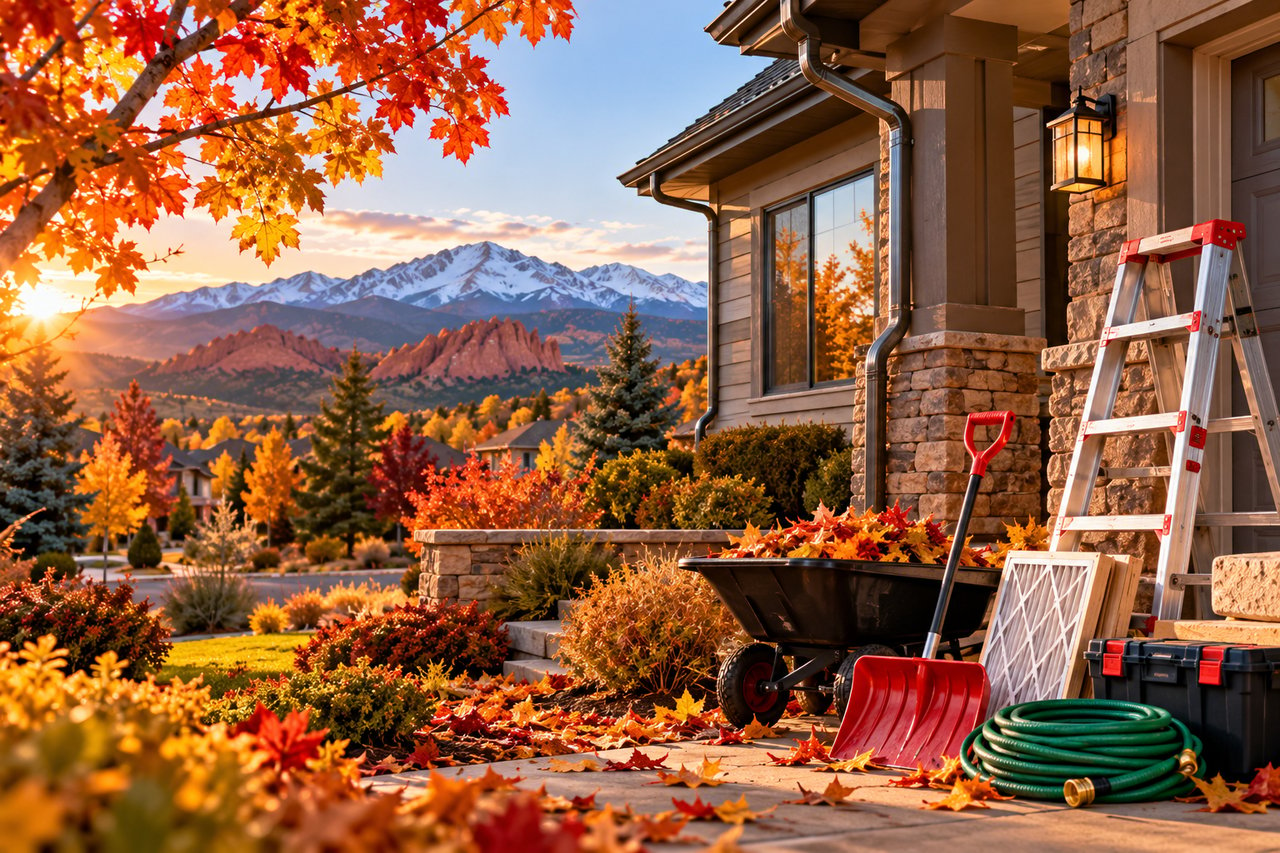
Fall Home Maintenance

Southern Colorado Activities
Halloween Events, Fall Festivals, Family Activities & Things to Do in Colorado Springs, Pueblo & Pueblo West

Pumpkin patches and fall festivals
Moving to Colorado Springs
Moving to Colorado Springs

Hiking
The Manitou Incline

Southern Colorado Activities
Live Music, Pumpkin Patches, Family Activities & Fall Fun in Colorado Springs, Pueblo & Pueblo West
Serving communities from Colorado Springs through Pueblo and Denver, west into the mountains or east to the plains, our team is here to help with all your real estate needs across Colorado’s Front Range.