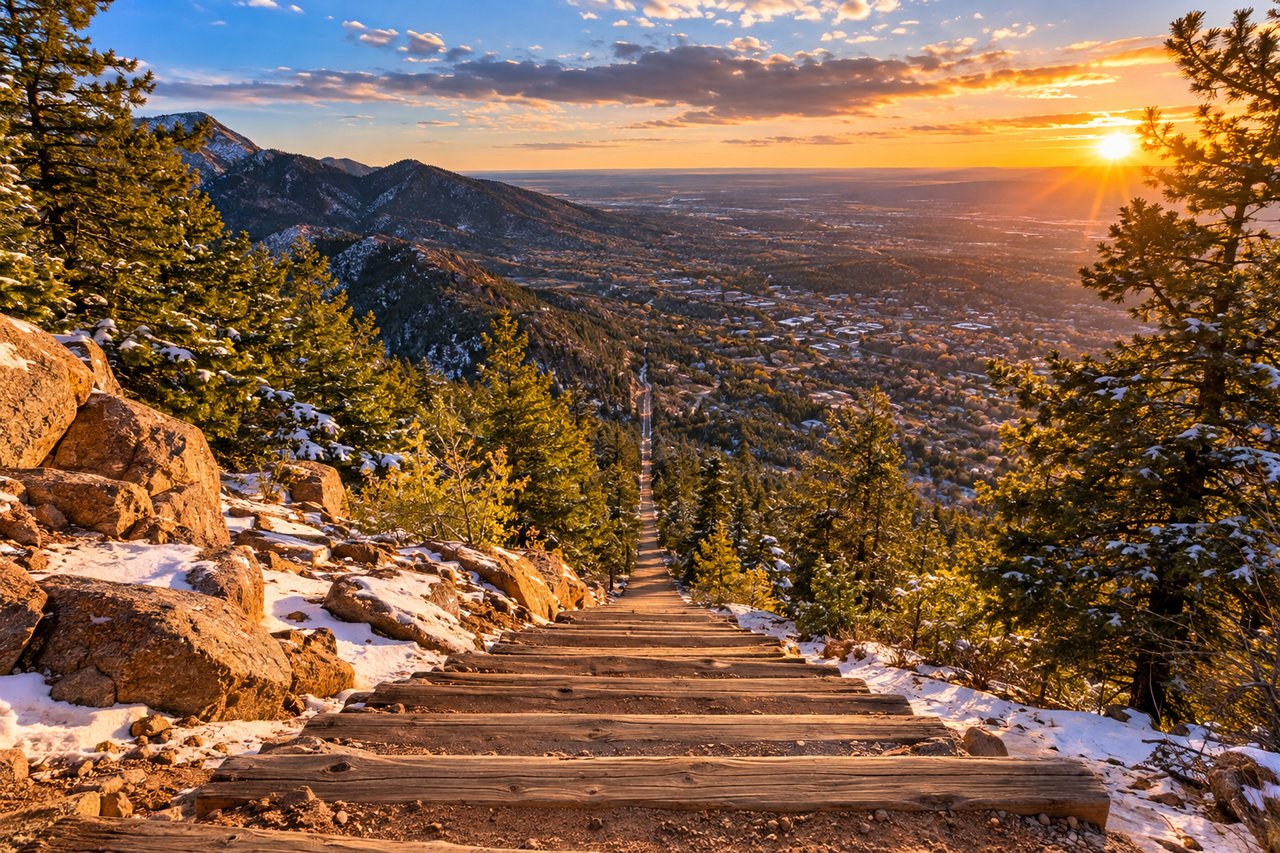
The Manitou Incline: 2,768 Steps, 2,000 Feet, and One Unforgettable Colorado Adventure!
Hiking Shannon Price October 8, 2026
Hiking Shannon Price October 8, 2026
Think you’re in shape? The Manitou Incline might have something to say about that!
If you’ve spent any time in Colorado Springs, you’ve probably heard someone mention the infamous Manitou Incline. Maybe they’ve bragged about conquering it, complained about how sore they were afterward, or proudly posted a sweaty summit selfie.
And if you’re new to the area, you might be wondering what all the fuss is about.
Well, imagine climbing nearly 2,800 stairs straight up the side of a mountain, gaining approximately 2,000 feet in elevation in less than a mile.
Sounds fun, right?
Welcome to the Manitou Incline, one of the most challenging, rewarding, and downright unforgettable hiking experiences in Colorado!
Before the Manitou Incline became a bucket-list hiking destination, it actually served a completely different purpose.
Originally constructed in 1903, the Incline was a cable railway used to transport materials up the mountain for the construction of pipelines associated with the area’s water system.
Once the construction work was completed, the railway became a tourist attraction, carrying visitors up the mountainside to enjoy spectacular views of Manitou Springs and the surrounding area.
That all changed in 1990 when a rockslide damaged the railway tracks, forcing the attraction to close.
The rails were eventually removed, leaving behind the wooden railroad ties.
And what did adventurous Colorado locals decide to do?
Climb them, of course!
Despite the trail being officially off-limits for years because of property ownership issues, determined hikers continued using it as an intense outdoor workout.
In February 2013, the Manitou Incline officially opened for legal public hiking.
Today, it’s one of the most recognizable outdoor adventures in the Pikes Peak region.
Here’s where things get interesting.
The Manitou Incline consists of 2,768 steps, climbing approximately 2,000 vertical feet in just 0.88 miles.
The average grade is approximately 45%, with some sections reaching an astonishing 68%!
To put that into perspective, imagine climbing stairs that seem to get steeper the higher you go.
And just when you think you’ve reached the top?
Surprise! There’s a false summit.
Yes, the Incline has a way of playing tricks on your mind.
One of my favorite things about the Manitou Incline is the comparison sign near the beginning of the climb.
It puts the challenge into perspective by comparing the Incline to some of the world’s most famous structures.
Climbing the Manitou Incline is roughly comparable to climbing:
These are approximate comparisons displayed on the trail’s warning signage, but they certainly make you appreciate what you’re about to attempt.
And remember, you’re doing all of this at Colorado’s high elevation!
Suddenly, taking the elevator sounds pretty appealing.
Unfortunately, there’s no elevator on the Incline!
Here’s something many first-time hikers don’t realize.
The weather can change dramatically between the bottom and top of the Manitou Incline.
You might start your hike in Manitou Springs enjoying sunshine, comfortable temperatures, and barely a breeze.
But as you climb nearly 2,000 feet higher, conditions can become noticeably different.
Temperatures generally decrease with elevation, and the upper sections can feel significantly colder when wind picks up.
You might encounter sunshine at the bottom, only to find strong winds, clouds, snow, or icy conditions farther up.
This is especially important during Colorado’s unpredictable spring, fall, and winter months.
And don’t underestimate summer weather!
Colorado is famous for afternoon thunderstorms, particularly during the warmer months.
Being on a steep, exposed mountainside when lightning moves into the area is not where you want to be.
My advice? Start early, check the mountain weather forecast, and always bring an extra layer.
Just because it’s beautiful at the bottom doesn’t mean Mother Nature has the same plans for the top!
Summer is a popular time to tackle the Incline, but don’t let the warm weather fool you.
The combination of sunshine, elevation, and an intense uphill climb can make this hike surprisingly demanding.
Here’s what I recommend wearing:
Avoid heavy cotton clothing, which holds moisture and can leave you feeling cold when temperatures drop.
And please, bring plenty of water!
There are no water stations along the Incline, and the combination of dry Colorado air and strenuous climbing can leave you dehydrated faster than you might expect.
I also recommend bringing a small backpack with snacks, water, and an extra layer.
Summer hiking tip: Start early in the morning to avoid the hottest temperatures and reduce your chances of encountering afternoon thunderstorms.
If you think the Manitou Incline is challenging during summer, winter takes things to an entirely different level.
Snow, ice, freezing temperatures, and strong winds can turn those wooden railroad ties into an extremely slippery staircase.
And here’s something important to understand.
You will likely need microspikes or another appropriate traction device on your shoes during winter.
Even when the lower section looks relatively clear, shaded areas farther up the mountain can remain covered in packed snow and ice.
Conditions can also change as snow melts during the day and refreezes overnight.
Regular athletic shoes often don’t provide enough traction for these conditions.
For winter hiking, I recommend:
Layering is especially important.
You might feel freezing when you begin, start sweating halfway up, and then find yourself shivering when you stop at the summit.
Winter hiking tip: Check trail conditions before leaving home, and don’t attempt the Incline if conditions exceed your experience or equipment.
There is absolutely no shame in saving this adventure for a safer day!
One of the wonderful things about hiking in Colorado is sharing the mountains with local wildlife.
Although the Manitou Incline attracts plenty of hikers, it’s still surrounded by natural mountain habitat.
Along the stairs and nearby trails, you may encounter curious chipmunks, squirrels, and a variety of birds.
You might also spot mule deer in the surrounding wooded areas.
The broader Pikes Peak region is home to larger wildlife, including black bears and mountain lions, although sightings along the busy Incline are uncommon.
And those adorable little chipmunks?
They may look like they’re asking for a snack, but please don’t feed them!
Feeding wildlife can harm animals and encourage them to approach people.
Enjoy the wildlife, take photographs from a safe distance, and remember that we’re visitors in their home.
First of all, congratulations!
Whether it takes you 45 minutes, an hour and a half, or considerably longer, reaching the top of the Manitou Incline is an accomplishment worth celebrating.
Take a moment to catch your breath, enjoy the mountain scenery, and snap that well-deserved summit photo.
But here’s something first-time hikers need to know.
You don’t hike back down the Incline stairs.
Instead, hikers use the designated return trails, including Barr Trail, to descend the mountain.
Barr Trail provides a more gradual route through beautiful mountain scenery, but it adds several miles to your adventure.
The return hike is still physically demanding, especially after your legs have already climbed nearly 2,800 stairs.
There are also designated bailout routes for hikers who decide not to complete the entire Incline.
Remember to save enough energy, water, and daylight for your descent.
Parking in Manitou Springs can be challenging, especially on beautiful weekends when everyone has the same idea.
Fortunately, there are several options.
Address: 134 Manitou Avenue, Manitou Springs, CO
This is the city’s preferred parking location for Incline hikers.
From here, you can connect with the Manitou Springs shuttle service to reach the Incline area.
Parking rates vary, so check current pricing before your visit.
Address: 10 Old Man’s Trail, Manitou Springs, CO
Another convenient parking option with access to the shuttle.
This location is especially useful if you want to explore downtown Manitou Springs after your hike.
Address: 444 Ruxton Avenue, Manitou Springs, CO
This paid parking option is closer to the Incline trailhead.
Spaces are limited and generally available on a first-come, first-served basis.
Be sure to check current rates and availability before arriving.
Parking tip: Don’t assume you can park along Ruxton Avenue or nearby residential streets. Many areas require residential parking permits, and parking violations can result in tickets.
Here’s some good news!
There is no admission fee to climb the Manitou Incline!
However, the City of Colorado Springs requires hikers to make a free online reservation and complete a waiver before beginning their climb.
Reservations help manage crowds, protect the trail, and improve hiker safety.
Current seasonal operating hours are:
Summer hours (May 1–October 31): 6 a.m. to 6 p.m.
Winter hours (November 1–April 30): 6 a.m. to 3 p.m.
The Incline occasionally closes for maintenance, special events, or safety concerns, so always check the official website before heading out.
You can find reservation information through the City of Colorado Springs’ official Manitou Incline webpage.
Absolutely!
But here’s the thing.
The Manitou Incline isn’t your average leisurely Colorado hike.
It’s physically demanding, mentally challenging, and sometimes downright humbling.
You’ll probably question your decision somewhere around step 1,000.
You might question it again at step 2,000.
And your legs may have a few things to say about it the following morning!
But reaching the top brings an incredible sense of accomplishment.
There’s something special about standing on that mountainside, looking out over the Colorado landscape, and knowing you earned every single step.
Whether you’re a Colorado Springs local looking for a new fitness challenge or a visitor searching for an unforgettable outdoor adventure, the Manitou Incline deserves a spot on your Colorado bucket list.
One of my favorite things about living in Colorado Springs is having access to incredible outdoor experiences like the Manitou Incline.
Where else can you challenge yourself on nearly 2,800 mountain stairs in the morning, enjoy lunch in a charming mountain town afterward, and still have the rest of the day to explore?
From challenging hikes and scenic mountain trails to beautiful neighborhoods and an incredible outdoor lifestyle, Colorado Springs offers something truly special.
And that’s exactly why so many people fall in love with living here.
Thinking about making Colorado Springs or the surrounding area your home?
I’m Shannon Price, a local REALTOR® with Pulse Real Estate Group, and I love helping people discover everything that makes this area such an incredible place to live.
Whether you’re relocating to Colorado Springs, buying your first home, or simply exploring neighborhoods near your favorite hiking trails, I’d love to help you find your perfect place in Colorado.
Because in Colorado Springs, the adventure doesn’t have to end when the hike is over. It can be part of your everyday life!
Shannon Price | REALTOR® | Pulse Real Estate Group
Stay up to date on the latest real estate trends.
Hiking
The Manitou Incline

Southern Colorado Activities
Live Music, Pumpkin Patches, Family Activities & Fall Fun in Colorado Springs, Pueblo & Pueblo West


Homeownership
From talking with your neighbor to HOAs, covenants, and Code Enforcement, learn how to address a neglected property next door—and what it could mean when buying or sel… Read more

Fall Foliage
Best Colorado Springs Neighborhoods for Fall Colors

Homeownership
A Colorado Springs homeowner’s guide to choosing the right landscaping for your lifestyle, water use, maintenance, curb appeal, and future resale.

Buying a Home | Colorado Real Estate
Found a foreclosure on Zillow or Auction.com? Before you bid, understand how Colorado foreclosure auctions work, why you may not be able to inspect the home, and the f… Read more

2026 Relocation Guide
Everything You Need to Know About Housing, Cost of Living, Neighborhoods, Traffic, Taxes, and Life in Colorado Springs
Serving communities from Colorado Springs through Pueblo and Denver, west into the mountains or east to the plains, our team is here to help with all your real estate needs across Colorado’s Front Range.