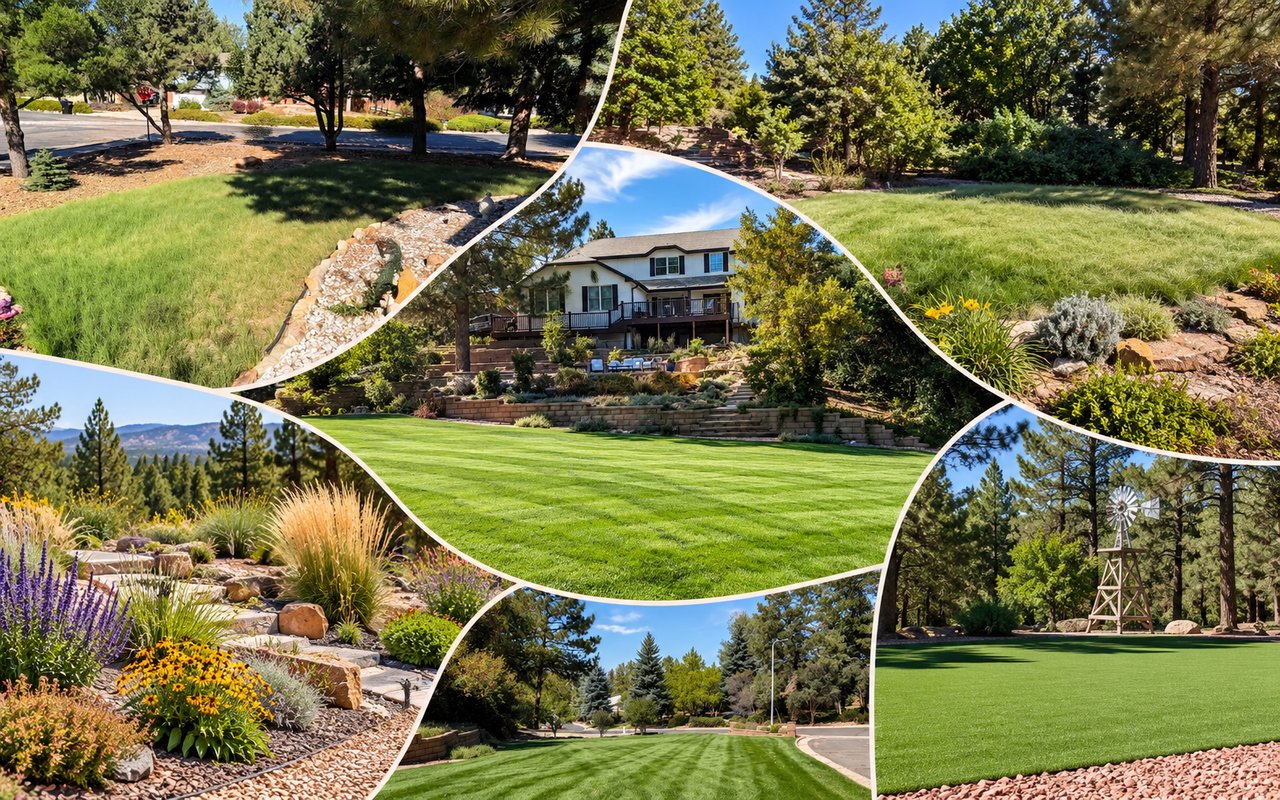
Traditional Grass, Native Grass, Artificial Turf, Xeriscape—or Simply Natural?
Homeownership Scott Coddington October 3, 2026
Homeownership Scott Coddington October 3, 2026
If you live in Colorado Springs—or you're thinking about moving here—you'll quickly discover that maintaining a beautiful yard in Colorado comes with some unique considerations.
We live in a relatively dry climate. Water matters. Our intense sunshine matters. And depending on the size and design of your property, maintaining a traditional lawn can require quite a bit of time, water, and money.
For years, the default landscaping choice for many homes was fairly simple: install Kentucky bluegrass, put in a sprinkler system, and keep everything green.
Today, homeowners have a lot more options.
You can stay with traditional grass, transition to native grass, install artificial turf, xeriscape the property, preserve areas of natural vegetation—or combine several of these approaches.
I've seen all of them used successfully around Colorado Springs, including at my own properties. My son also works professionally in landscaping, so I get to see some of the choices his clients are making and why one solution may make sense for one property but not another.
That's really what got me thinking about this article.
A neighbor down the street from me converted his lawn to native grass earlier this year.
I'll admit I was curious to see how it would turn out.
After watching it become established throughout the season, I was pleasantly surprised. It looks nice, has good curb appeal, and the grass itself has a soft appearance. It still looks and feels like a lawn, just different from the traditional Kentucky bluegrass we're accustomed to seeing throughout Colorado Springs.
What really caught my attention, though, was the maintenance.
When I talked with my neighbor about his experience, he told me the watering requirements have been very low. He also said he expects to mow the native grass only about two or three times during the entire growing season.
Compare that with a traditional lawn that you may be mowing every week or so throughout much of the spring and summer, and that's a pretty significant difference.
That conversation made me start thinking more seriously about the choices homeowners have today.
At our own home, we've actually chosen several different approaches. We have traditional grass in the front, artificial turf in portions of the backyard, and fairly large areas of scrub oak and natural ground that we've intentionally left alone.
We've also installed artificial turf at one of our Airbnb properties, while several members of my family have gone another direction and converted their yards to xeriscaping.
After seeing these different approaches firsthand, I don't think there's one landscaping solution that's right for every homeowner—or even every part of the same property.
A better question may be:
What do you want that particular part of your yard to do for you?
At our own house, we've chosen to keep natural grass in the front yard.
Why?
We like it.
I like the curb appeal of a healthy green lawn and the traditional appearance it gives the house. I even enjoy mowing it and the smell of freshly cut grass.
Those things are subjective, but they matter. Not every decision around your home has to be based strictly on which option requires the least amount of work or uses the least amount of water.
A healthy traditional lawn provides a dense, soft, usable surface.
It's great for kids, pets, entertaining, and areas that receive regular foot traffic. Kentucky bluegrass can also spread and repair damaged areas, which helps it stand up to everyday use.
It generally greens up earlier in the spring and stays green later into the fall than warm-season native grasses.
And there's the obvious curb-appeal factor. A nicely maintained green lawn is familiar, and for many homeowners, it's still exactly the look they want.
The trade-off is maintenance.
During the growing season, a traditional lawn typically involves:
You can spend your own time doing those things or pay someone else to handle some of them.
My son, for example, has clients who simply want someone to take care of regular mowing and lawn maintenance because they like having natural grass but don't necessarily want to spend their weekends maintaining it.
Traditional turf such as Kentucky bluegrass also generally requires considerably more supplemental irrigation than native grasses once they're established.
For us, that's a trade-off we're willing to make in the front yard because we enjoy having it.
But that doesn't mean we wanted traditional grass everywhere.
Native grass is probably the option that surprised me the most.
Colorado Springs Utilities has been encouraging homeowners to consider native grasses such as buffalograss and blue grama. These grasses are much better adapted to our relatively dry Colorado climate than a traditional high-water lawn.
Once established, native grasses can require substantially less supplemental irrigation. They can also require much less mowing and fertilizer.
Seeing my neighbor's lawn firsthand changed my perception.
When people hear "native grass," they may picture an unmaintained field or tall prairie grass.
That isn't necessarily what a native lawn has to look like.
My neighbor's yard looks intentional. It has good curb appeal, the grass looks soft, and it still gives the property the appearance of having a lawn.
At the same time, his experience has been very low water use and only a few mowings over the course of the season.
For someone who wants real grass without all the maintenance associated with traditional bluegrass, that's an interesting middle ground.
Native grass doesn't behave exactly like Kentucky bluegrass.
Many native lawn grasses are warm-season grasses. That means they generally green up later in the spring and go dormant earlier in the fall.
You'll need to be comfortable with your lawn being tan or dormant for a larger portion of the year.
Some varieties also aren't ideal for areas receiving constant heavy traffic, and many perform best with plenty of sunshine.
There's also an establishment period.
Converting an existing lawn isn't simply a matter of spreading native seed over your current grass. Proper ground preparation, seeding, weed management, and watering during establishment are important.
My son has worked with homeowners on preparing the ground and irrigation for new lawns as well. Whether someone is establishing native grass or trying to grow a traditional lawn from seed, that upfront preparation can make a significant difference in the finished result.
One reason native grass is especially interesting locally is that Colorado Springs Utilities has developed a Native Grass Lawn Program for residential water customers.
The program has offered assistance that can include native grass seed, education on establishing and maintaining the lawn, and water-efficient irrigation equipment.
Availability and incentives can change, and the program can reach capacity, so homeowners interested in participating should check directly with Colorado Springs Utilities for current information.
Even without an incentive, native grass is worth considering simply because it's adapted to our climate and can significantly reduce the amount of water and maintenance required for a lawn.
Artificial turf is another option we've personally used.
Our backyard has retaining walls and multiple elevations. If we'd installed traditional grass everywhere, I'd have to carry a lawn mower up and down between the different levels.
I didn't want to do that every week.
So we installed artificial turf.
For that particular space, the decision had less to do with water conservation and more to do with accessibility and maintenance.
It's worked well for us.
We've also installed artificial turf in the backyard of one of our Airbnb properties.
With a short-term rental, I want the property looking good when guests arrive without constantly coordinating lawn maintenance around reservations.
With turf, we can use a blower to remove leaves and debris, clean it when necessary, and keep the backyard looking presentable throughout the year.
There's no mowing schedule and considerably less landscape maintenance to coordinate between guests.
For that application, low maintenance has real value.
Artificial turf offers some obvious benefits:
But I wouldn't call it maintenance-free.
We still blow debris off ours. Pet areas may require cleaning. Weeds can occasionally appear along edges or seams, and eventually the turf itself will need replacement.
Cost is one.
A quality installation involves much more than laying artificial grass over dirt. The existing landscaping generally needs to be removed, the ground prepared and graded, a compacted base installed, drainage addressed, and the turf properly fitted and secured.
Another consideration is heat.
Artificial turf can become very hot when exposed to Colorado's intense summer sunshine. That's particularly important if children or pets will regularly use the area.
And finally, artificial turf simply isn't real grass.
For some people, that doesn't matter at all.
For others—including me in certain areas of my own home—there's something about natural grass that artificial turf can't completely replace.
That's why we've chosen turf in our backyard but kept natural grass in the front.
The fourth option is one that's especially relevant in Colorado: xeriscaping.
I've had several family members transition their yards to full xeriscaping, and my son has clients hiring him to do the same.
Instead of maintaining a traditional lawn, they're creating landscapes using drip irrigation, bushes, flowers, ornamental grasses, mulch, decorative rock, and other lower-water landscaping.
When it's designed well, xeriscaping can have tremendous curb appeal while significantly reducing the amount of water required to maintain the property.
This is an important distinction.
Sometimes people hear "xeriscape" and picture removing all the grass and replacing it with a giant field of rock.
That doesn't have to be the case.
A thoughtfully designed xeriscape can incorporate flowering plants, native plants, shrubs, trees, ornamental grasses, boulders, mulch, decorative rock, and other landscape features.
Different plants can bloom at different points throughout the growing season, giving the property changing color and texture.
Drip irrigation can also deliver water directly to plants rather than broadcasting water across thousands of square feet of lawn.
No.
That's another misconception.
Weeds still grow. Shrubs need trimming. Plants occasionally die and need replacement. Drip lines can need repairs. Mulch eventually needs replenishing, and even rock beds can develop weeds as dirt and organic material accumulate over time.
You're trading traditional lawn maintenance for a different type of landscape maintenance.
For many homeowners, however, that may be considerably more manageable than mowing and watering a large lawn every week.
There's another landscaping choice that I think is especially relevant for certain Colorado properties:
Don't landscape all of it.
We have fairly large portions of our own property with scrub oak and natural ground. We've intentionally chosen to embrace those areas rather than trying to turn every square foot into manicured landscaping.
We like the natural Colorado character they bring to the property.
Depending on where you live, your property may already have scrub oak, native grasses, mature trees, rocks, or other natural features that contribute to its appearance.
Not every area needs grass, turf, mulch, or decorative rock.
Sometimes the existing landscape is part of what makes the property attractive in the first place.
There can also be practical advantages. Leaving appropriate areas natural can mean less irrigation and less routine landscape maintenance, although natural areas still need attention for things such as weeds, debris, and appropriate property or wildfire mitigation where applicable.
The bigger point is that landscaping doesn't always have to mean adding something.
Sometimes it's about recognizing what's already there and incorporating it into the property.
Another thing I've learned from watching the landscaping projects my son works on is that the decision isn't always simply "grass or no grass."
Budget and timing matter too.
If someone wants immediate curb appeal, new sod can transform a property very quickly. That's especially useful when appearance is a priority or you're preparing a property for sale.
If cost is more of a concern and you have time for the lawn to become established, preparing the soil and irrigation system and then growing the lawn from seed may be another option.
Native grass introduces another possibility—properly preparing the existing yard and establishing a lower-water lawn that may require considerably less maintenance once it's mature.
And xeriscaping or preserving natural areas can eliminate the need for a large lawn altogether.
That's why I think it's important to start with the goal rather than the product.
This is probably the biggest takeaway from my own experience.
You don't have to choose one landscaping style for your entire property.
We haven't.
We have traditional grass in our front yard because we like the curb appeal, enjoy having a natural lawn, and, yes, I still enjoy the smell of freshly cut grass.
We use artificial turf in portions of our backyard because the retaining walls and elevations make mowing inconvenient.
We also have significant areas of scrub oak and natural ground that we've intentionally left as part of the landscape because we like the natural Colorado setting.
We've used artificial turf at an Airbnb because reducing ongoing maintenance makes sense for that particular property.
My neighbor has shown me that native grass can still provide an attractive lawn while substantially reducing water and mowing requirements.
And members of my family—and some of the projects I've watched my son work on—have shown me how attractive a thoughtfully designed xeriscape can be.
You can mix these ideas.
Keep traditional grass where you want the classic lawn.
Use artificial turf where maintenance or accessibility is difficult.
Convert a decorative lawn to native grass.
Xeriscape areas where you want lower water use, flowers, shrubs, and visual interest.
And if your property already has attractive native vegetation or natural terrain, consider whether you need to change it at all.
That's probably the philosophy I would use if I were designing a landscape today.
Instead of automatically putting grass, rock, or another material everywhere, ask what each part of the property is actually supposed to accomplish.
Do the kids play there?
Does the dog use it?
Is it primarily there for curb appeal?
Do you entertain there?
Is it difficult to mow?
Is there existing vegetation worth preserving?
Could an area simply remain natural?
How important is reducing your water usage?
Do you enjoy working in your yard, or would you rather spend your weekends doing something else?
Those questions can lead you toward very different landscaping choices.
As a real estate broker, this is another part of the equation I think homeowners should consider.
The lowest-maintenance option isn't automatically the option that will present your home the best.
Whatever approach you choose should look intentional and complement the property.
A beautiful traditional lawn can create great curb appeal.
So can a properly established native lawn.
High-quality artificial turf can look clean and polished in the right application.
A thoughtfully designed xeriscape with healthy plants, color, texture, and defined landscape areas can be extremely attractive.
And on the right property, preserving mature scrub oak and other natural Colorado landscaping can be part of the home's appeal.
Conversely, any of these options can detract from curb appeal when they're poorly installed or neglected.
Curb appeal is ultimately about the overall presentation of the property, not simply what type of grass or landscaping you choose.
There's another reason I encourage homeowners to think about their landscaping before the seasons change—especially if there's a possibility you'll be selling your home during the upcoming fall, winter, or spring.
Fall can be one of the best times to capture exterior photos of your property.
Here in Colorado Springs, winter and even early spring can leave us with a lot of dormant landscaping.
Grass may be brown. Deciduous trees may be bare. Flowers aren't blooming yet, and many yards simply don't show as well as they do during the warmer months.
If you think you may sell in the coming months, it can be worthwhile to plan ahead and have professional exterior photos taken while your property is still showing its best.
Depending on the timing, you may still have green grass, flowers in bloom, mature landscaping with plenty of foliage, or the changing colors of fall.
Those photos can then be available when it's time to put the home on the market—even if the landscaping outside doesn't look nearly as inviting on listing day.
Preparing to sell doesn't have to begin a week or two before your home goes on the market.
Planning several months ahead gives you time to evaluate landscaping, repairs, maintenance, staging, and other potential improvements.
More importantly, it gives you an opportunity to determine which projects are actually worth doing before you spend the money.
Maybe the lawn simply needs some attention.
Maybe fresh sod would dramatically improve the first impression.
Maybe repairing an irrigation system and establishing grass from seed makes more financial sense.
Maybe a portion of the lawn could be converted to a lower-maintenance alternative.
Or perhaps the landscaping is already perfectly appropriate for the property, and your money would be better spent somewhere else.
That's where getting advice before starting a project can be valuable.
Through our work in real estate and my family's experience in landscaping, we have relationships with professionals and resources throughout the Colorado Springs area.
If you're considering new sod, native grass, xeriscaping, irrigation work, mowing and lawn maintenance, or simply improving your property's curb appeal, we're happy to help connect you with resources based on what you're trying to accomplish.
And if you're preparing to sell, I'm happy to look at the property from a real estate perspective before you start spending money.
Sometimes an improvement is absolutely worth doing.
Other times, the money may be better spent somewhere else—or not spent at all.
At Pulse Real Estate Group, we can help you plan ahead, prioritize potential improvements, prepare for professional photography, and develop a strategy for getting your home ready for the market.
If you're considering selling a home in Colorado Springs or the surrounding area, we've also put together a complete Seller's Guide covering the steps you can take to prepare your property, market it effectively, and get ready for the selling process.
View the Pulse Real Estate Group Seller's Guide →
If you're deciding what to do with your Colorado Springs yard, I'd consider five things:
Appearance: What do you actually want your property to look like?
Function: How are you going to use the space?
Maintenance: How much time do you realistically want to spend taking care of it?
Water: How much irrigation will the landscaping require year after year?
Cost: What are you willing to spend upfront, and what will the landscape cost to maintain over time?
For some homeowners, traditional grass will still be worth every bit of the additional work.
For others, native grass may provide the right balance between having a real lawn and reducing water consumption and maintenance.
Artificial turf may make sense where accessibility, convenience, and a consistent appearance are priorities.
Xeriscaping may be ideal for homeowners who want to dramatically reduce lawn area while still creating an attractive, living landscape.
And sometimes preserving an existing natural area may be the simplest and most appropriate choice of all.
After seeing and using these different approaches around Colorado Springs, I don't think the question is:
"What's the best type of yard?"
A better question is:
"What type of landscaping makes the most sense for the way you actually use your property?"
Sometimes, the best answer may be a little bit of everything.
Stay up to date on the latest real estate trends.
Hiking
The Manitou Incline

Southern Colorado Activities
Live Music, Pumpkin Patches, Family Activities & Fall Fun in Colorado Springs, Pueblo & Pueblo West
Homeownership
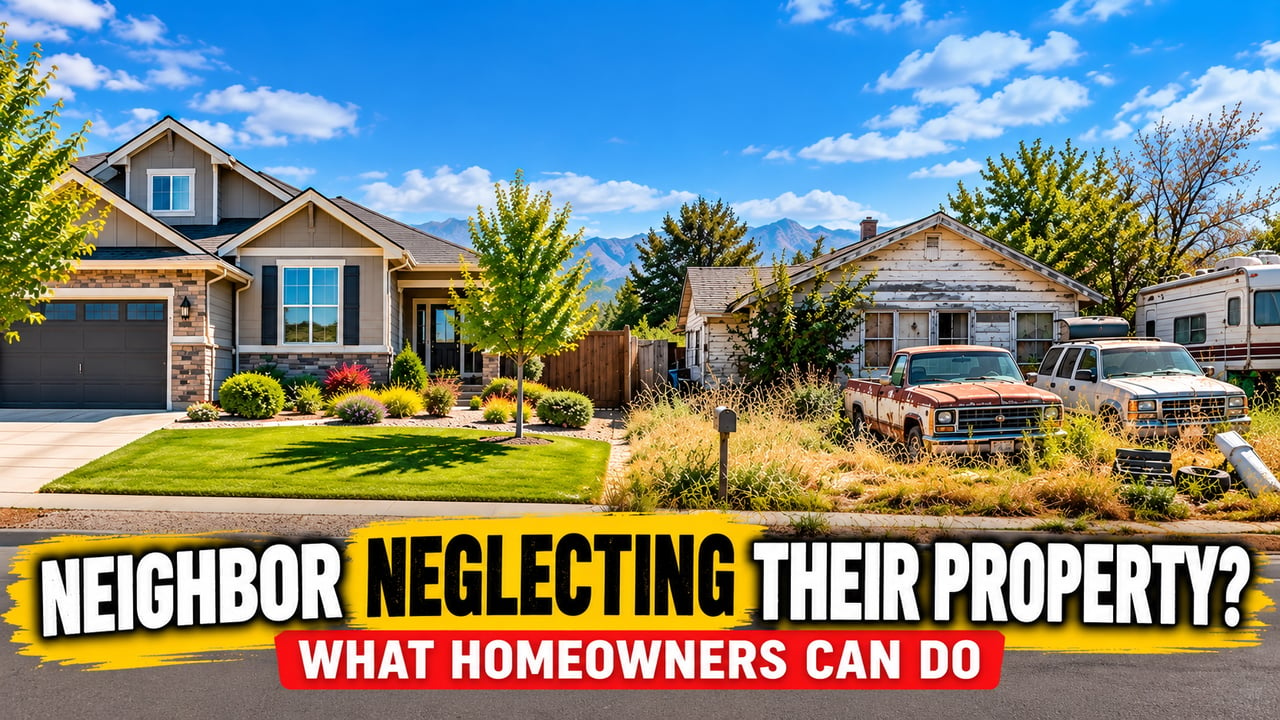
From talking with your neighbor to HOAs, covenants, and Code Enforcement, learn how to address a neglected property next door—and what it could mean when buying or sel… Read more
Fall Foliage
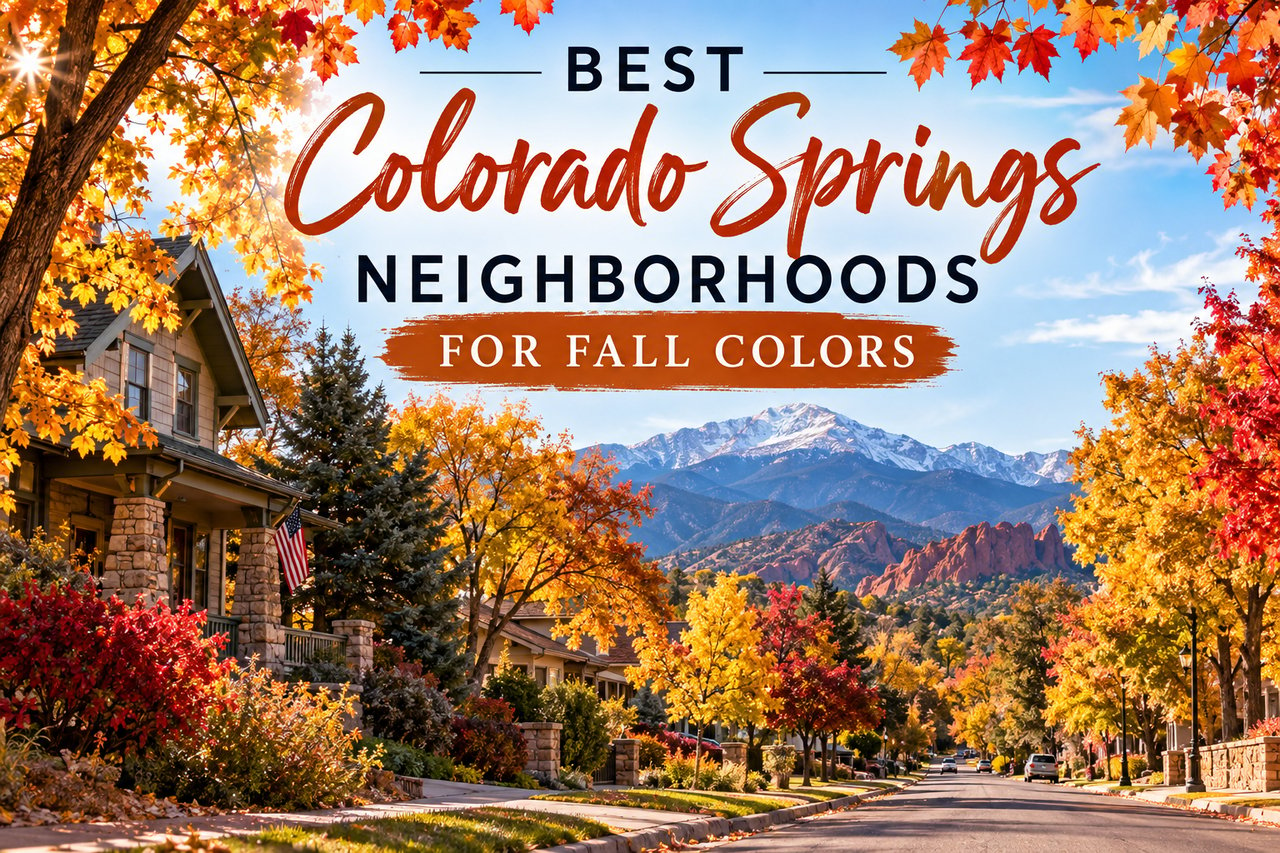
Best Colorado Springs Neighborhoods for Fall Colors
Homeownership
A Colorado Springs homeowner’s guide to choosing the right landscaping for your lifestyle, water use, maintenance, curb appeal, and future resale.

Buying a Home | Colorado Real Estate
Found a foreclosure on Zillow or Auction.com? Before you bid, understand how Colorado foreclosure auctions work, why you may not be able to inspect the home, and the f… Read more

2026 Relocation Guide
Everything You Need to Know About Housing, Cost of Living, Neighborhoods, Traffic, Taxes, and Life in Colorado Springs
Serving communities from Colorado Springs through Pueblo and Denver, west into the mountains or east to the plains, our team is here to help with all your real estate needs across Colorado’s Front Range.