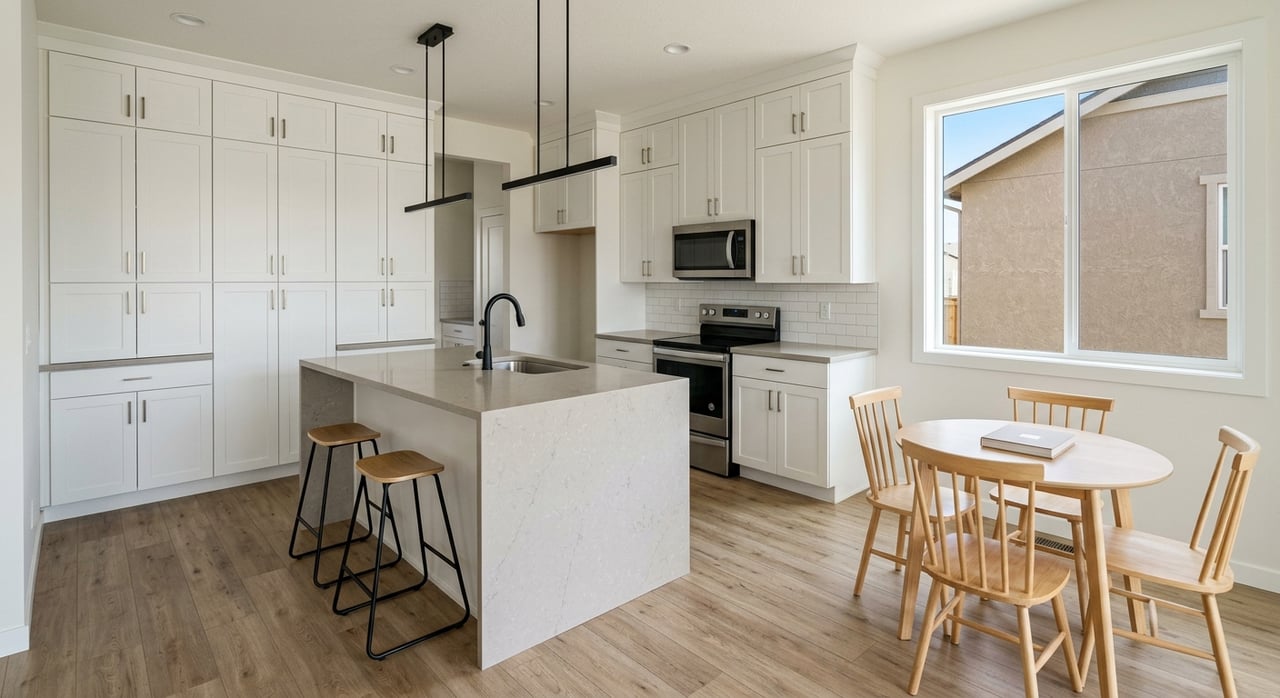
Are Security-Widefield Investment Properties Worth It?
May 21, 2026
May 21, 2026
If you are eyeing Security-Widefield as your next rental market, the short answer is yes, it can be a smart place to buy. The bigger question is what kind of rental makes sense and how you plan to manage the numbers. With prices in the high $300,000s to low $400,000s and steady demand tied to the Colorado Springs area, this market can work well for investors who want long-term rental stability over quick wins. Let’s dive in.
Security-Widefield sits in a fairly tight price range, which helps if you want to compare deals without a huge spread in entry points. Recent data puts the market around the high $300,000s to low $400,000s, with reported median or average home values ranging from about $380,000 to $408,000 depending on the source.
On the rent side, the numbers vary by property type and data source. Reported rents range from a $1,793 median gross rent in Census data to $2,395 average rent in Zillow’s rental manager, while Realtor.com reports a $2,150 median rent. That tells you one important thing right away: you need to comp each property carefully instead of relying on one headline rent number.
Security-Widefield benefits from being part of a military-connected metro area. The community is near Peterson Air Force Base, and the broader area also draws housing demand from Fort Carson and Schriever Space Force Base.
Fort Carson reports 23,716 active-duty personnel and 57,220 family members, with 82% of Soldiers and their families living off-post. Schriever Space Force Base reports about 8,000 military and civilian employees, and Peterson Space Force Base supports 111 mission partners. For you as an investor, that means a meaningful share of housing demand flows into the private rental market.
The local household profile also supports steady rental demand. Security-Widefield has a median household income of $91,142, a 23.2-minute mean commute, and a population that is 26.8% under age 18. The area is also heavily made up of family households, which helps explain why larger rental homes often fit this market better than smaller units.
A quick first screen can make Security-Widefield look appealing. Using the available pricing and rent data, rough gross rent-to-value ratios land between about 5.6% and 7.5%, depending on which sources you pair together.
That said, these are only pre-expense snapshots. They do not account for repairs, vacancy, insurance, property taxes, turnover, or property management. In a market like this, a property can look good on paper and still miss your target once you factor in the real cost of owning an older single-family home.
This is not a market that screams high churn. Census-based data shows an 87.2% owner-occupied rate, and 89.9% of residents lived in the same house one year ago. Only 10.1% of residents moved within the prior year, and just 3.5% of homes are vacant.
For you, that can be a good sign if your goal is stable, long-term occupancy. It may be less attractive if you are looking for constant turnover, frequent lease-up opportunities, or a fast repositioning strategy. Security-Widefield looks more like a hold market than a churn market.
If you want to match the local housing stock, detached homes should be at the top of your list. Census-based housing profiles show 94.5% of units are detached single-family homes, with only 2.6% as attached units. This is a big reason the market tends to fit single-family rental buyers better than investors chasing a multifamily-heavy strategy.
Bedroom count matters too. Trulia rent estimates show about $995 for one-bedroom units, $1,335 for two-bedroom units, $2,100 for three-bedroom units, and $2,495 for four-bedroom units. Combined with the area’s family-heavy profile and military-adjacent demand, 3-bedroom and 4-bedroom homes often stand out as the most practical rental targets.
Townhomes may also deserve a look if the numbers work. They can offer a lower entry point than detached homes, though you will still want to review layout, maintenance needs, and any association rules before moving forward.
Many homes in Security-Widefield are not brand new. The median construction year is 1981, and much of the area was built in the second half of the 20th century, with more development added in the 2000s and 2010s.
That can be a plus if you want established neighborhoods and more conventional suburban floor plans. It also means your underwriting should leave room for more than cosmetic updates. Systems, roofs, windows, plumbing, and major maintenance items deserve close review before you buy.
One mistake investors can make here is mixing apartment numbers with single-family numbers as if they mean the same thing. The Colorado Housing and Finance Authority reported a $1,450 median rent for the Security/Widefield/Fountain submarket in its 4Q2024 apartment survey, but that survey reflects stabilized market-rate apartment properties.
Single-family rental asking rents in the area appear materially higher. So if you are buying a house or townhome, apartment data can still be useful as a background benchmark, but it should not be your main pricing tool. Your best rent estimate should come from true like-kind comps.
The area’s income profile gives some support to rental pricing, though there is not endless room for error. Based on Census QuickFacts, the median gross rent equals about 23.6% of median household income. Using Zillow’s higher average rent figure, that share rises to about 31.5%.
In plain terms, Security-Widefield appears able to support family rentals, but higher payment properties need careful screening. If you stretch too far on price and rely on top-of-market rent, you may leave yourself with less margin for vacancy or repairs.
One local issue you should not skip is the area’s PFAS history. ATSDR says Security-Widefield was selected for a PFAS exposure assessment related to past drinking-water contamination near Peterson Air Force Base.
ATSDR also says the public drinking-water supply currently meets or is below the EPA’s 2016 health advisory. Even so, this should still be part of your due diligence. Review water-provider notices and property-specific disclosures as part of your underwriting process.
For many investors, yes. Security-Widefield can make sense if you want a family-oriented, military-adjacent rental market with relatively accessible entry prices and a housing stock dominated by detached homes.
The strongest fit is usually not every property on the market. It is more often a well-kept 3- to 4-bedroom single-family home or townhome with realistic rent comps, solid condition, and enough reserves built into the numbers. If you buy with a long-term mindset and stay disciplined on maintenance and screening, this market offers a practical case for steady rental ownership.
If you want help comparing Security-Widefield investment opportunities, evaluating rent comps, or deciding whether a property works better as a hold than a reposition play, connect with Scott Coddington. You will get local insight, responsive guidance, and investor-focused support grounded in the Front Range market.
Stay up to date on the latest real estate trends.

Fall Home Maintenance

Southern Colorado Activities
Halloween Events, Fall Festivals, Family Activities & Things to Do in Colorado Springs, Pueblo & Pueblo West

Pumpkin patches and fall festivals
Moving to Colorado Springs
Moving to Colorado Springs

Hiking
The Manitou Incline

Southern Colorado Activities
Live Music, Pumpkin Patches, Family Activities & Fall Fun in Colorado Springs, Pueblo & Pueblo West
Serving communities from Colorado Springs through Pueblo and Denver, west into the mountains or east to the plains, our team is here to help with all your real estate needs across Colorado’s Front Range.