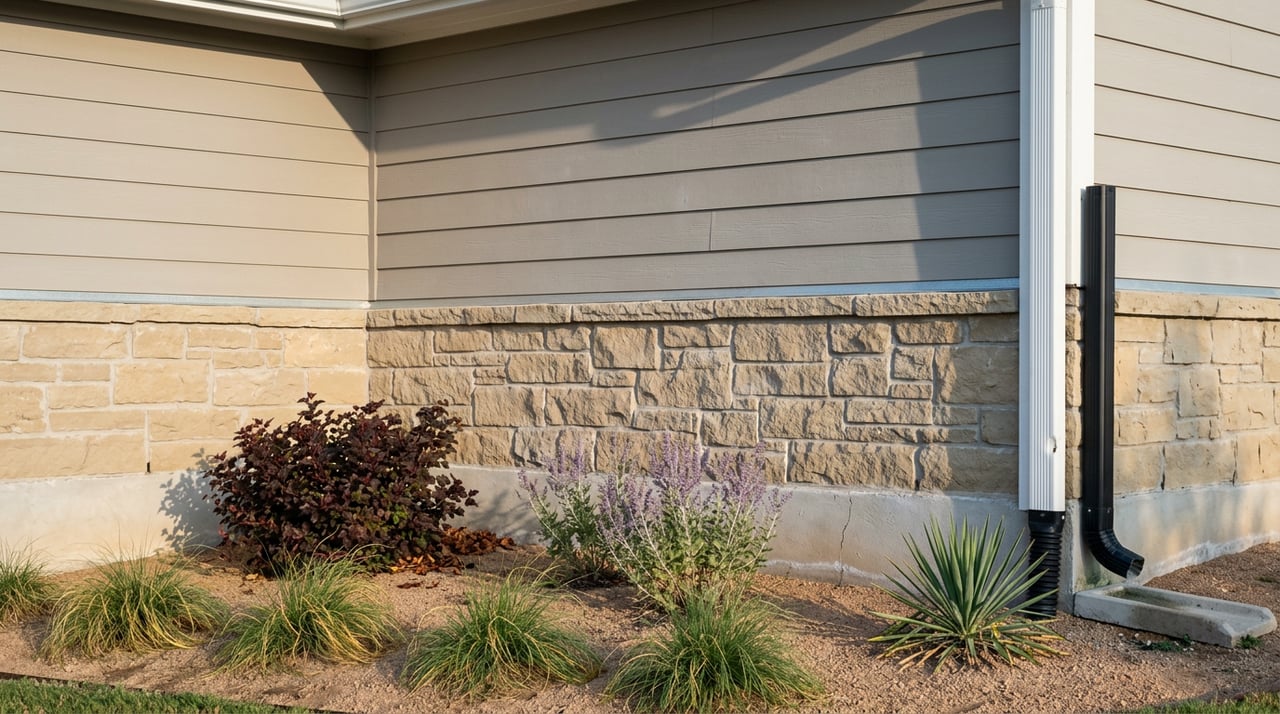
Why Almost Every Colorado Springs Home Inspection Comes Back to the Foundation
August 27, 2026
August 27, 2026
The inspection report lands in your inbox around day three or four of your due diligence period, and you scroll past the roof section, the electrical panel, the water heater, until you hit the line that actually matters: recommend evaluation by a licensed structural engineer prior to closing.
If you've bought or sold a house in Colorado Springs, you've probably seen some version of that sentence. It shows up on entry-level ranches in Widefield, on custom builds in the Broadmoor foothills, on brand-new construction that hasn't even had a full winter to settle. The instinct is to treat it as bad luck, a red flag on this particular house. It isn't. It's closer to a local constant, and understanding why changes how you should actually respond to it.
Colorado Springs sits on Pierre Shale and related claystone formations that run the length of the Front Range. These are clay-rich soils that swell when they get wet and shrink when they dry out, and the Colorado Geological Survey has ranked expansive soil as the state's single most damaging geologic hazard, ahead of floods, earthquakes, and tornadoes combined. The agency's own threshold is specific: a volume increase of 3 percent or more is generally considered potentially damaging to a structure, and CGS has documented swell pressures in these Front Range formations reaching as high as 30,000 pounds per square foot. The hazard is significant enough that CGS published a hazard map specifically for this city, MS-32, tracking where differential heave risk concentrates within Colorado Springs limits.
That's the piece most buyers never hear until an inspector says it out loud: this isn't a defect specific to the house you're under contract on. It's the ground the whole metro is built on.
Here's where the story gets more useful than alarming. Of new homes built on expansive soils in Colorado, roughly 60 percent show only minor damage over time, while about 10 percent see significant damage, occasionally severe enough to be difficult to repair. That means the presence of a crack tells you almost nothing on its own. Concrete cracks as part of normal curing and shrinkage, and in a region where the ground itself is constantly expanding and contracting with the seasons, some degree of foundation movement is close to expected rather than exceptional.
What separates a cosmetic finding from a genuine problem is pattern, not presence.
| Usually cosmetic | Usually worth a second look |
|---|---|
| Vertical hairline cracks in poured concrete | Horizontal cracks or measurable wall bowing |
| A single isolated crack with no other symptoms | Diagonal cracks near windows, doors, or load-bearing points |
| Minor slab cracking unconnected to the foundation wall | Doors or windows that stick or won't latch |
| Small, stable cracks that haven't changed over time | Cabinets or trim separating from walls, floors, or ceilings |
Buyers who panic at the first hairline crack and buyers who wave off every finding are both misreading the signal. The question isn't whether a Colorado Springs home has some evidence of soil movement. Almost all of them do, on a long enough timeline. The question is whether the pattern matches ordinary settling or something a structural engineer needs to put a name to.
Hollington Law Firm explains that Colorado law requires sellers to disclose known material defects that could affect a property's value, and case law has established that sellers owe buyers an independent duty to disclose latent defects they're aware of. That sounds like it should protect buyers from inheriting an undisclosed foundation problem. In practice, it protects less than it seems to.
The gap is simple: a standard home inspection doesn't test for expansive soil, and most sellers have never had a structural engineer look at their foundation unless something visibly forced the issue. A seller who genuinely hasn't experienced sticking doors or dramatic cracking has nothing to disclose, even if the property sits squarely inside an area CGS has mapped as higher risk. Disclosure law covers what the seller knows. It says nothing about what a geotechnical report would find if anyone had ordered one. For new construction, Pikes Peak Regional Building Department does require site-specific soil information and an engineered foundation design before a permit is issued, which is one reason newer builds in this market tend to have at least some baseline geotechnical data behind them. Resale homes built before that data was standard practice often don't.
That's the real takeaway for buyers: don't treat the seller's disclosure form as your soil report. It isn't one, and it was never designed to be.
This is where the transaction-specific friction actually bites. Colorado's standard contract runs on a defined inspection objection window. A standard structural engineer's report can take a week or more to complete, which is longer than many buyers have left once the recommendation actually appears in their inspection report.
Some local firms have built their service around exactly this gap. Arrow Home Inspections, working in partnership with Noble Engineering, offers foundation evaluations with a 48-hour turnaround specifically to keep due diligence periods on track. Structural engineering firms serving the Front Range, including Level Engineering and Timberland Structural, routinely turn around stamped observation letters within days rather than weeks when a transaction deadline is driving the timeline. The lesson isn't that every buyer needs to line up an engineer before they even see the inspection report. It's that if the recommendation shows up, the first call you make matters more than the first thing you Google, because turnaround time, not availability, is usually what determines whether you get a real answer before your objection deadline expires.
If you're buying, build in the assumption that a structural referral is a real possibility, not a worst-case scenario. Ask your agent which local engineers have a track record of fast turnarounds before you're staring down a inspection deadline. A referral to a structural engineer is a normal part of transactions here, not a sign the deal is falling apart.
If you're selling, the more useful move happens before you list. A pre-listing inspection, and a structural evaluation if your home shows any of the pattern-based warning signs, lets you address issues or price around them on your own timeline instead of renegotiating under a buyer's deadline pressure. It also means you're not relying on a disclosure form that only captures what you already knew to happen to catch a soil issue no one has actually assessed.
Either way, the foundation conversation in Colorado Springs isn't about whether your home has cracks. It's about whether anyone has actually looked closely enough to know what they mean, and whether you have enough runway left in your contract to get that answer before it's due.
Does every Colorado Springs home need a structural engineer? No. Most foundation cracks found in local inspections turn out to be cosmetic settling rather than structural. An engineer becomes necessary when the pattern points to genuine movement, such as horizontal cracking, wall bowing, or doors and cabinets that no longer sit properly.
If the seller's disclosure doesn't mention foundation issues, does that mean the house is fine? Not necessarily. Sellers are only required to disclose defects they actually know about, and most have never had a geotechnical or structural evaluation done unless a visible problem forced it. A clean disclosure form reflects the seller's knowledge, not a guarantee about the soil underneath.
How much time should I plan for if my inspector recommends a structural evaluation? Ask about turnaround time before you commit to an engineer. Some local firms can deliver a stamped letter within 48 hours to a few days when a transaction deadline requires it, while a standard report can take a week or longer. That difference can determine whether you have a real answer before your objection window closes.
Foundation questions are exactly the kind of local detail that separates a smooth closing from a scramble, and it's the sort of thing worth talking through with someone who watches these transactions happen every week. If you're weighing a purchase or thinking about what your own home would need before it goes on the market, the team at Pulse Real Estate Group can walk you through what to expect for your specific property. Get a Free Home Valuation and let's talk through the details before they become a deadline.
This article is general information, not legal, tax or financial advice. Consult a qualified professional about your situation.
Stay up to date on the latest real estate trends.

Fall Home Maintenance

Southern Colorado Activities
Halloween Events, Fall Festivals, Family Activities & Things to Do in Colorado Springs, Pueblo & Pueblo West



Pumpkin patches and fall festivals

Moving to Colorado Springs
Moving to Colorado Springs

Hiking
The Manitou Incline

Southern Colorado Activities
Live Music, Pumpkin Patches, Family Activities & Fall Fun in Colorado Springs, Pueblo & Pueblo West
Serving communities from Colorado Springs through Pueblo and Denver, west into the mountains or east to the plains, our team is here to help with all your real estate needs across Colorado’s Front Range.