Moving to Colorado Springs: The Complete 2026 Guide
If you're considering moving to Colorado Springs, Colorado, you're not just deciding which house to buy. You're choosing a community, neighborhood, commute, lifestyle, and potentially a very different housing market from the one you're leaving.
I'm Scott Coddington, Broker/Owner of Pulse Real Estate Group. I'm a Colorado Springs native, third-generation real estate professional, and I've worked in Colorado real estate since 1997.
Over the years, I've helped people move to Colorado Springs from across Colorado and throughout the country. One of the biggest things I tell relocation clients is that Colorado Springs isn't one uniform housing market.
A home in Briargate can be a very different buying experience from acreage in Black Forest. Monument is different from Fountain. The west side feels different from Powers. New construction along the eastern side of the city presents different considerations than a 50-year-old home near downtown.
This guide is designed to help you understand those differences before you move.
What Is the Colorado Springs Housing Market Like in 2026?
Buyers entering the Colorado Springs market in 2026 generally have more choices than buyers had during the extremely competitive markets of several years ago.
Recent market data shows increased inventory, more price reductions, and a market in which buyers can often take more time to compare properties. Different sources use different geographic boundaries and methodologies, so the exact statistics can vary, but the broader trend is important.
Buyers have more choices, but every house and every transaction is different.
A well-priced home in a desirable location can still attract considerable interest. Another property may sit on the market and eventually require a price adjustment or stronger seller incentives.
That's why I don't believe in approaching every property with the same negotiation strategy.
Ultimately, a home's market value is established by what a willing buyer and willing seller agree to, subject to considerations such as financing and appraisal. Our job as your real estate professionals is to understand the property, comparable sales, competition, seller motivation, market activity, and your priorities and use that information to negotiate the strongest overall terms we reasonably can.
Seller Concessions Are an Important Part of the 2026 Market
One of the biggest opportunities we're currently seeing isn't necessarily reflected in the advertised price of a home.
It's seller concessions.
Seller concessions have become increasingly common in today's market. Depending on the transaction and the buyer's financing, a seller concession may potentially be used toward eligible expenses such as closing costs and prepaid expenses, mortgage-rate buydowns, certain lender costs, or other negotiated expenses.
Exactly what a concession can cover and how much a seller can contribute depends on the loan program, lender requirements, appraisal, contract, and circumstances of the individual transaction.
This is why purchase price alone doesn't tell you whether you've negotiated a good deal.
Imagine one seller is willing to accept a substantially lower purchase price but won't provide closing-cost assistance. Another seller may hold closer to the asking price but provide a meaningful concession that reduces the buyer's cash required at closing or helps buy down the interest rate.
Depending on the buyer's financial situation, one structure could be considerably more attractive than the other.
That's the negotiation we want to have.
Rather than assuming every Colorado Springs seller will negotiate—or that every home should receive an offer below asking price—we evaluate each property individually and ask:
What's important to this seller, what's important to our buyer, and where can we potentially create a transaction that works for both?
How Much Does It Cost to Buy a Home in Colorado Springs?
One citywide average doesn't tell you very much about what you'll actually encounter when shopping for a home in Colorado Springs.
Price, location, age, condition, lot size, square footage, upgrades, and property type can vary considerably across the region.
Under $400,000
Buyers may find condos, townhomes, smaller or older single-family homes, and properties in several established areas. Inventory at this price point changes frequently, so it's important to look at what's actually available when you're ready to purchase.
$400,000–$500,000
This range includes a substantial portion of the mainstream Colorado Springs resale market. Depending on location and condition, buyers may find both established homes and some newer properties.
$500,000–$750,000
Buyers can encounter larger homes, newer construction, properties in northern and suburban areas, and homes with additional features or larger lots.
$750,000–$1 Million
This range opens additional possibilities for larger homes, upgraded properties, premium locations, custom features, and some acreage opportunities.
$1 Million+
Colorado Springs and the surrounding region offer luxury homes, custom construction, premium locations, mountain properties, and significant acreage.
Rather than assuming what a certain budget should buy, I prefer showing relocation clients actual current inventory in several different areas. It quickly demonstrates the trade-offs between location, age, size, condition, lot size, and amenities.
Where Should I Live in Colorado Springs?
There isn't one Colorado Springs neighborhood that's right for everybody.
Where you decide to live may depend on your commute, budget, desired property type, preferred lot size, access to shopping and recreation, and many other personal considerations.
Here are several areas relocation buyers frequently explore.
Briargate
Briargate encompasses established northern Colorado Springs communities with convenient access to shopping, parks, major roads, and I-25.
Housing varies by neighborhood, including properties built across several decades as the northern portion of Colorado Springs expanded.
Northgate
Northgate is located in northern Colorado Springs near the United States Air Force Academy and I-25.
The area includes a mixture of newer communities and established neighborhoods and can be particularly convenient for buyers who regularly travel north toward Monument, Castle Rock, or Denver.
Monument and Tri-Lakes
Monument and the Tri-Lakes area are north of Colorado Springs along the I-25 corridor.
Buyers considering this area often compare housing, lot sizes, commute requirements, and proximity to both Colorado Springs and the Denver metro area.
Black Forest
Black Forest is known for its trees, larger lots, rural characteristics, and acreage properties.
Buying in Black Forest can involve considerations that aren't typically encountered with a suburban home, including wells, septic systems, propane, private roads, zoning, outbuildings, and wildfire mitigation.
Falcon
Falcon is east of Colorado Springs and includes newer residential communities as well as rural and acreage properties.
The area can appeal to buyers who want additional space while retaining access to the eastern side of Colorado Springs.
Powers Corridor
The Powers area has experienced substantial residential and commercial development and provides access to shopping, restaurants, services, employment, and many newer housing communities.
Its eastern location can also be convenient for people working at Peterson or Schriever Space Force Base.
West Colorado Springs
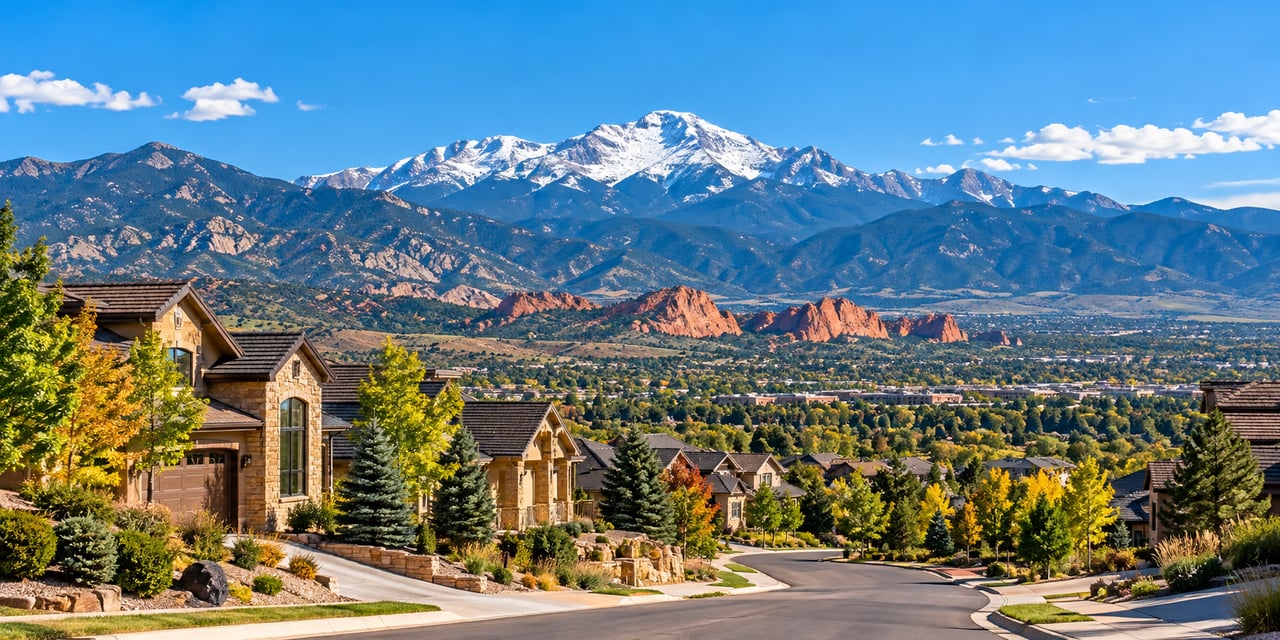
The west side provides proximity to the foothills, Garden of the Gods, Old Colorado City, Manitou Springs, and numerous recreational opportunities.
Housing ranges from older established properties to custom and higher-end homes depending on location.
Downtown Colorado Springs
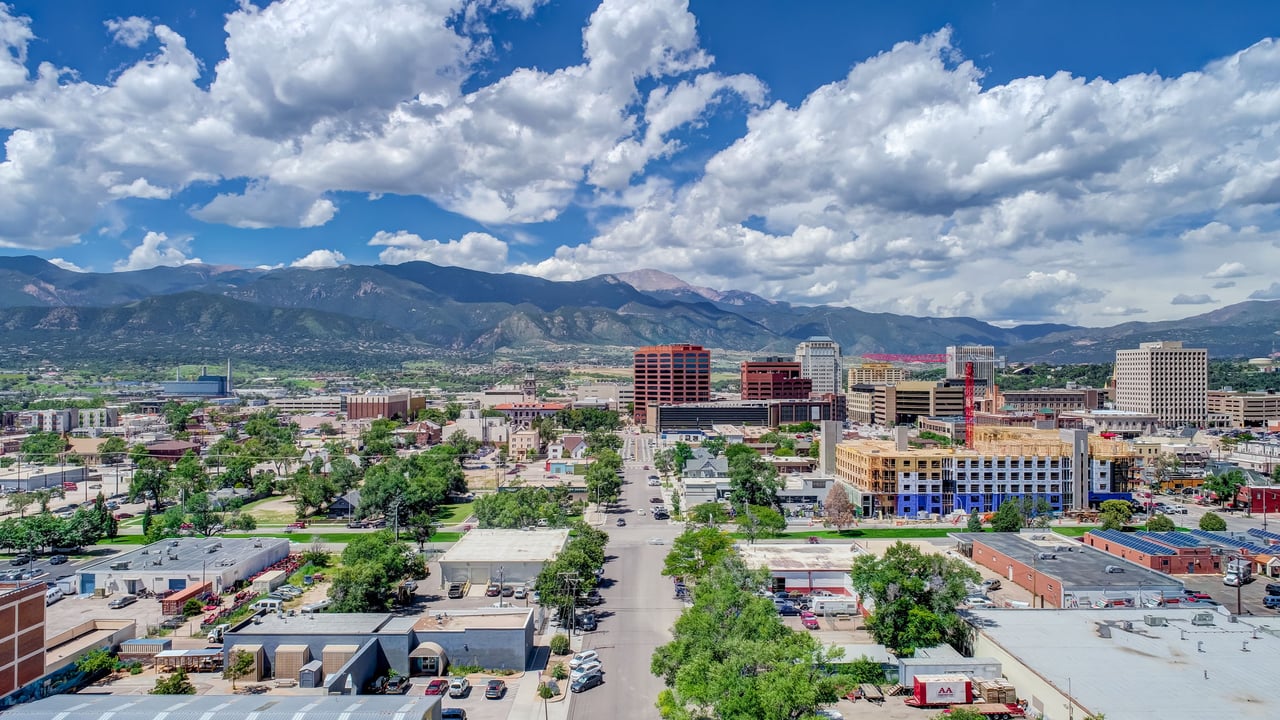
Downtown and the surrounding neighborhoods provide proximity to restaurants, businesses, entertainment, and the city center.
Many nearby neighborhoods have older housing stock, which means buyers should consider not only character and location but also updates, maintenance, electrical systems, plumbing, roofs, sewer lines, and other components common to older homes.
Fountain and Security-Widefield
Fountain and Security-Widefield are south of central Colorado Springs and are frequently considered by buyers who want convenient access to Fort Carson.
As with the rest of the region, housing varies considerably by neighborhood, age, and price range.
Moving to Colorado Springs for the Military
Colorado Springs has a significant military presence and is home to:
Fort Carson
Peterson Space Force Base
Schriever Space Force Base
United States Air Force Academy
Military relocation presents some unique challenges, particularly when PCS orders create a limited timeline.
I've worked with military families and VA buyers throughout my real estate career. For someone relocating to Colorado Springs, we can compare different areas based on commute, housing budget, property type, financing, and your anticipated length of time in Colorado Springs.
VA financing is also commonly used throughout the area. Working with an experienced VA lender and real estate professional can help you understand the financing requirements, appraisal process, seller concessions, and transaction timeline.
For buyers who aren't able to travel to Colorado Springs before purchasing, much of the process can also be handled remotely.
Buying a House in Colorado Springs Sight Unseen
Relocating across the country doesn't always provide an opportunity to visit every house in person.
Technology has made remote home buying much more practical, but I believe a remote walkthrough needs to do more than simply show you the attractive parts of the property.
When I'm helping someone evaluate a home remotely, I want them to understand the house and its surroundings.
That can include video walkthroughs of the property, street and neighboring homes, traffic and road conditions, lot characteristics, views, potential deferred maintenance, layout, storage, and things that may not be obvious in professional listing photographs.
We can also coordinate inspections, review documents electronically, communicate with your lender and other professionals, and work through much of the transaction remotely.
The goal isn't to convince you to buy a house you've never seen.
The goal is to provide enough information for you to make an informed decision about whether you're comfortable doing so.
New Construction in Colorado Springs
New construction continues to be an important part of the Colorado Springs housing market.
Buyers can find new communities throughout the region, particularly along growing portions of northern and eastern Colorado Springs and in surrounding communities.
Builders may advertise incentives such as closing-cost assistance, financing incentives, or mortgage-rate buydowns. These can be valuable, but it's important to compare the complete transaction rather than simply focusing on the advertised incentive.
Consider the base price, lot premium, upgrades, included features, landscaping, taxes, HOA or metro district costs, financing terms, estimated completion date, inspections, and eventual resale.
It's also important to understand that the builder's sales representative represents the builder's interests.
Having your own real estate professional gives you someone who can help evaluate the property, contract, comparable sales, lot, upgrades, financing incentives, inspections, and other considerations from the buyer's perspective.
Ideally, involve your agent before your first visit or registration with a builder because builder policies regarding outside representation can vary.
What Is the Weather Like in Colorado Springs?
Colorado Springs sits at an elevation of roughly 6,000 feet, and newcomers often notice the elevation and dry climate shortly after arriving.
The area experiences four seasons, snowfall, hail, thunderstorms, intense sunshine, and significant temperature changes.
Weather can also vary considerably within the region. Conditions in Monument, Black Forest, Woodland Park, or other higher-elevation areas can be noticeably different from conditions elsewhere in Colorado Springs.
For homeowners, climate can affect landscaping, irrigation, roofing, exterior maintenance, insurance, and even the features you may want in a property.
What Is the Cost of Living in Colorado Springs?
Housing is generally one of the largest expenses to consider when moving to Colorado Springs, but it isn't the only one.
Your actual cost of living can include mortgage or rent, property taxes, homeowners insurance, utilities, transportation, groceries, maintenance, HOA or metro district expenses, and other costs associated with your particular property and lifestyle.
Homeowners insurance deserves particular attention in Colorado because premiums and insurability can be affected by factors such as hail, wildfire exposure, roof age, property location, and claims history.
Rather than relying exclusively on an online cost-of-living calculator, I recommend obtaining actual estimates for the property you're considering.
Getting Around Colorado Springs
Colorado Springs covers a large geographic area, which makes location particularly important when choosing a home.
Major transportation corridors include Interstate 25, Powers Boulevard, Academy Boulevard, Woodmen Road, Marksheffel Road, and Highway 24.
North-to-south travel and east-to-west travel can feel quite different depending on the time of day and your destination.
Someone working at Fort Carson may evaluate locations differently from someone commuting to Peterson Space Force Base, downtown Colorado Springs, Monument, or Denver.
If commute time is important to you, I recommend testing the actual route during the time of day you'll normally travel rather than relying solely on mileage.
Buying Acreage Near Colorado Springs
One of the advantages of looking outside the more densely developed portions of Colorado Springs is the availability of acreage and rural properties.
I've worked extensively with rural and acreage real estate, and these properties require additional investigation.
Depending on the property, you'll want to understand:
- Water source and well information
- Septic systems
- Zoning and permitted uses
- Road maintenance
- Propane or natural gas availability
- Utilities
- Outbuildings
- Easements
- Surveys
- Soils
- Horses or livestock restrictions
- Wildfire considerations
- Financing requirements
A beautiful five-, ten-, or forty-acre property can present a very different ownership experience from a home on a suburban lot.
The objective is to understand those differences before you purchase.
Is Colorado Springs a Good Place to Retire?
Colorado Springs is considered by many people who are evaluating where they'd like to spend their retirement years.
Some of the factors worth comparing include housing choices, healthcare access, climate, recreation, airport access, transportation, taxes, proximity to family, and the type of home you want to maintain.
For some people, a low-maintenance patio home or townhome may make sense. Others may be looking for acreage, mountain views, or additional space for visiting family.
Rather than deciding whether Colorado Springs is universally a "good" retirement destination, I recommend evaluating how those individual factors align with the lifestyle you're looking for.
Should I Rent or Buy When Moving to Colorado Springs?
Whether it makes more sense to rent or buy when you first move to Colorado Springs depends on your timeline, finances, monthly housing costs, and how certain you are about where you want to live.
If you're only planning to be in Colorado Springs for a short period, renting may provide more flexibility. Renting can also give you time to learn the different parts of town before deciding where you'd like to purchase.
For someone planning to stay longer, buying may be worth considering. Homeownership can provide more stability and the opportunity to build equity, but it also comes with closing costs, maintenance, property taxes, insurance, and the costs associated with eventually selling.
Rather than assuming one option is automatically better, we can look at your expected length of stay, available cash, financing options, estimated monthly payment, and current rental alternatives. From there, you can make a decision based on your actual numbers.
Frequently Asked Questions About Moving to Colorado Springs
Is Colorado Springs a good place to live in 2026?
Colorado Springs offers a wide range of housing options and lifestyles, from established city neighborhoods and newer master-planned communities to mountain properties and homes on acreage. Outdoor recreation, military installations, employment opportunities, and proximity to the mountains are among the reasons people consider relocating here.
Whether Colorado Springs is right for you depends on what matters most to you. When helping relocation clients, I recommend comparing specific areas based on housing budget, commute, desired property type, amenities, and lifestyle rather than trying to identify one part of town that's "best" for everyone.
What should I know before moving to Colorado Springs?
One of the biggest things to understand is how geographically diverse the Colorado Springs area is.
You can live in an established neighborhood near downtown, a newer community on the eastern side of town, near the foothills on the west side, on several acres in Black Forest, farther north in Monument, or south toward Fountain.
Elevation, weather, commute times, utilities, property characteristics, and even the home-buying process can vary depending on where you look.
If possible, spend some time exploring several different parts of the area before narrowing your home search.
How much money do I need to buy a house in Colorado Springs?
The amount of money required depends on the price of the home, loan program, down payment, closing costs, prepaid expenses, and terms you negotiate with the seller.
A buyer does not necessarily need a 20% down payment. Conventional, FHA, VA, and other financing programs have different requirements.
Seller concessions can also be important. Depending on the transaction and loan program, negotiated seller assistance may help cover eligible closing costs, prepaid expenses, or a mortgage-rate buydown.
That's why it's helpful to talk with both a lender and your real estate agent before deciding what price range is comfortable.
Are Colorado Springs home prices coming down?
The answer depends on the property, neighborhood, price range, and period being compared.
In 2026, buyers generally have more inventory to choose from than they did during the extremely competitive market of several years ago, and price reductions have become more common on listings that don't initially connect with buyers.
That doesn't mean every property is declining in value or that every seller will accept an offer substantially below asking price. Properly priced homes can still generate strong interest.
We evaluate recent comparable sales, current competition, days on market, previous price reductions, property condition, and other available information before developing an offer strategy.
Is Colorado Springs a buyer's market or seller's market in 2026?
I wouldn't use one label to describe every segment of the Colorado Springs market.
Certain neighborhoods and price ranges can have substantially more inventory than others. A property that is priced correctly and shows exceptionally well can behave differently from a competing home that's been sitting on the market.
For buyers, increased inventory generally means more choices and potentially more negotiating opportunities. For sellers, pricing, condition, presentation, and understanding the competition have become increasingly important.
Are Colorado Springs sellers paying buyer closing costs?
Seller-paid concessions have become an important part of many Colorado Springs transactions.
Whether a particular seller will provide a concession depends on the property, competing interest, time on market, seller's circumstances, financing, and overall offer.
Rather than looking only at the purchase price, we look at the complete transaction.
Sometimes negotiating closing-cost assistance or a mortgage-rate buydown may be more valuable to a buyer than negotiating the same amount off the purchase price.
Can I ask a Colorado Springs seller for concessions?
Yes. Seller concessions can be included as part of an offer, although a seller isn't required to accept them.
The amount and permitted use of concessions can also be affected by the buyer's financing and lender guidelines.
Before writing an offer, we can evaluate the property and discuss whether requesting concessions makes sense as part of the overall negotiation strategy.
Can seller concessions help buy down my mortgage interest rate?
Depending on the loan program and lender requirements, seller concessions may potentially be used toward an eligible mortgage-rate buydown.
This can be particularly important when interest rates are affecting a buyer's monthly payment.
For example, a buyer may determine that negotiating money toward eligible closing costs or a rate buydown is more useful than negotiating the equivalent amount as a reduction in purchase price.
Your lender should provide the actual numbers so you can compare the alternatives before deciding how to structure an offer.
How much below asking price should I offer on a Colorado Springs home?
There isn't a percentage that should automatically be applied to every property.
A home that was listed yesterday and already has considerable activity presents a very different negotiation from a home that's been on the market for several months and undergone multiple price reductions.
Before making an offer, I prefer to examine comparable sales, active competition, listing history, days on market, property condition, potential repairs, and whatever information we can reasonably obtain about the seller's situation.
The best deal isn't always the lowest purchase price. It's the combination of price and terms that best accomplishes your goals.
What are the different areas of Colorado Springs like?
Colorado Springs has many distinct areas.
Briargate and Northgate provide access to the northern part of the city and I-25. Powers and the eastern side of Colorado Springs include many newer residential communities and extensive shopping and services. The west side provides proximity to the foothills, Garden of the Gods, and older established neighborhoods.
Black Forest is known for larger properties and acreage. Falcon combines suburban development with rural properties farther east. Monument and the Tri-Lakes area are north of Colorado Springs, while Fountain and Security-Widefield are south of the city and convenient to Fort Carson.
Understanding these differences can make a major difference when deciding where to begin your home search.
Where can I find new construction in Colorado Springs?
New construction can be found throughout the Colorado Springs region, particularly in growing areas on the northern and eastern sides of the metro area, as well as surrounding communities.
When comparing new construction, look beyond the advertised base price. Lot premiums, upgrades, landscaping, financing incentives, HOA or metro district costs, taxes, completion dates, and included features can materially affect the actual cost.
Builder incentives can also change frequently, so comparing the complete package is important.
What should military families know about moving to Colorado Springs?
Colorado Springs is home to Fort Carson, Peterson Space Force Base, Schriever Space Force Base, and the United States Air Force Academy.
For military buyers, location decisions frequently involve commute times, PCS schedules, VA financing, length of assignment, and potential resale or rental considerations.
I've worked with military families and VA buyers throughout my real estate career. If you're relocating before you can visit Colorado Springs personally, much of the home-search and transaction process can also be handled remotely.
Can I buy a Colorado Springs home without seeing it in person?
Yes. I've helped relocation buyers evaluate properties remotely using video walkthroughs, photographs, electronic documents, inspections, and other technology.
A video tour should go beyond simply walking through the attractive parts of the house. I want remote buyers to understand things such as street conditions, neighboring properties, traffic, lot characteristics, potential deferred maintenance, layout, views, and anything else that may not be obvious from listing photographs.
The objective isn't to convince you to buy a property remotely. It's to provide enough information for you to decide whether you're comfortable doing so.
Can I use a VA loan to buy a home in Colorado Springs?
VA financing is commonly used in the Colorado Springs area because of our significant military community.
Eligibility and individual loan requirements should be confirmed with a qualified VA lender. From the real estate side, it's helpful to work with professionals who understand VA transactions, appraisal considerations, property requirements, seller concessions, and PCS timelines.
What is it like living near Fort Carson?
Areas south of central Colorado Springs, including Fountain and Security-Widefield, are commonly considered by people who want convenient access to Fort Carson.
However, military buyers don't necessarily need to live immediately outside the installation. Depending on your acceptable commute, budget, home preferences, and family needs, your search can include a much larger portion of the Colorado Springs area.
What is it like living near Peterson or Schriever Space Force Base?
Buyers assigned to Peterson or Schriever often consider communities on the eastern side of Colorado Springs because of their access to Powers Boulevard, Marksheffel Road, and Highway 24.
Falcon and other communities east of Colorado Springs can also be worth exploring, particularly for buyers interested in newer construction or larger properties.
Actual commute times can vary considerably by location and time of day, so I recommend testing the commute rather than relying solely on mileage.
What does $500,000 buy in Colorado Springs?
What approximately $500,000 buys can vary substantially by neighborhood, age, size, condition, lot, and current inventory.
That budget might purchase a newer home in one part of the metro area, an older established property closer to the center of town, or something completely different farther outside the city.
Rather than relying on a citywide average, I recommend looking at current homes in several different areas. It quickly demonstrates the trade-offs between location, square footage, age, lot size, condition, and amenities.
Is Colorado Springs more affordable than Denver?
Housing costs and available property types can differ significantly between Colorado Springs and the Denver metro area, but the comparison changes over time.
If you're deciding between the two, don't compare home prices alone. Consider your commute, employment, property taxes, insurance, transportation costs, desired property type, and lifestyle.
For someone who needs access to both markets, Monument and the northern portion of the Colorado Springs area may also be worth investigating.
What should I know about buying acreage near Colorado Springs?
Buying acreage requires additional due diligence compared with many suburban properties.
Depending on the property, you'll want to investigate water source and well information, septic systems, zoning, road maintenance, utilities, propane, easements, surveys, soils, outbuildings, wildfire considerations, and permitted uses.
Financing can also become more complicated as acreage increases or when a property includes agricultural or unusual improvements.
This is an area where understanding the individual property is particularly important.
Do I need a Realtor when buying new construction in Colorado Springs?
You aren't necessarily required to have your own real estate agent when purchasing from a builder, but it's important to understand that the builder's sales representative represents the builder's interests.
Your agent can help you evaluate the property, contract, comparable homes, lot, upgrades, incentives, financing options, inspections, and eventual resale considerations.
Ideally, involve your agent before your first visit or registration with a builder, because builder policies regarding outside agent representation can vary.
How do I choose a Realtor when relocating to Colorado Springs?
Look for someone who understands more than simply how to find available homes.
A relocation Realtor should be able to explain different parts of Colorado Springs, discuss property values and current market conditions, evaluate new construction and resale homes, understand different financing situations, coordinate remote transactions, and help you evaluate the trade-offs between properties and locations.
I've been licensed in Colorado real estate since 1997. I'm a Colorado Springs native, third-generation real estate professional, and Broker/Owner of Pulse Real Estate Group. My experience includes residential buyers and sellers, military and VA clients, relocation, new construction, investment properties, acreage, and rural real estate.
More importantly, my job isn't to tell you which house you should buy. It's to give you the information, experience, and local perspective you need to make that decision confidently.
Ready to Start Your Move to Colorado Springs?
Moving to a new city can involve a lot of decisions before you ever write an offer.
If you're considering relocating to Colorado Springs, I'm happy to start with a conversation. We can talk about your timeline, budget, work location, financing, preferred type of property, and the things that are most important to you.
From there, we can narrow down the areas and properties that make the most sense to explore.
Scott Coddington
Broker/Owner | Pulse Real Estate Group
Colorado Springs, Colorado
719-399-0000
Whether you're moving across town or across the country, our goal is straightforward:
Help you understand your options, negotiate the strongest overall terms we reasonably can, and make your move to Colorado Springs as informed and smooth as possible.