
Moving From Texas to Colorado Springs: 2026 Relocation Guide
2026 Relocation Guide Scott Coddington September 30, 2026
2026 Relocation Guide Scott Coddington September 30, 2026
If you're thinking about moving from Texas to Colorado Springs, you're not alone. Texas has consistently been one of the largest sources of people relocating to Colorado, and Colorado Springs attracts newcomers looking for mountain access, four-season living, employment opportunities, military connections, and a wide range of housing options.
But living in Colorado Springs is different from living in Dallas, Houston, Austin, San Antonio, or other parts of Texas.
From housing costs and property taxes to snow, altitude, insurance, utilities, commuting, and choosing the right neighborhood, there are several things worth understanding before making the move.
This Colorado Springs relocation guide covers what Texans should know before buying a home and moving to the Pikes Peak region.
Colorado and Texas offer very different lifestyles, but there are also some similarities that make Colorado Springs attractive to Texas residents.
Colorado Springs offers a major metropolitan area without feeling like one of the country's largest cities. Residents have convenient access to shopping, restaurants, healthcare, entertainment, and employment while remaining only minutes from hiking trails, parks, open space, and the mountains.
Colorado Springs is also home to a substantial military and defense community, including Fort Carson, Peterson Space Force Base, Schriever Space Force Base, the U.S. Air Force Academy, and Cheyenne Mountain Space Force Station.
Other reasons people consider Colorado Springs include:
Your experience will vary considerably depending on where in Texas you're coming from and where you choose to live in the Colorado Springs area.
One of the first questions people ask is:
Is Colorado Springs more expensive than Texas?
There isn't one simple answer because Texas housing costs vary dramatically between cities.
Someone moving from Austin may have a very different comparison than someone coming from Amarillo, San Antonio, Dallas, or Houston.
Housing is typically the largest factor to evaluate. Beyond the purchase price, buyers should compare:
Colorado property taxes may surprise some Texas homeowners because the structure is substantially different. However, buyers shouldn't compare property taxes alone. The overall cost of owning a particular property matters more.
Some newer Colorado Springs-area communities may also be located within metropolitan districts that can affect the property's total tax bill.
Before purchasing a home, review the actual tax information for that specific property rather than assuming every Colorado Springs neighborhood will have similar taxes.
Colorado Springs has a remarkably diverse housing market.
Depending on budget and location, you'll find everything from condos and townhomes to established suburban neighborhoods, newer master-planned communities, luxury properties, mountain homes, and properties with several acres.
Popular areas buyers often investigate include:
Briargate is one of northern Colorado Springs' largest established residential areas. It offers convenient access to shopping, parks, schools, medical facilities, and Interstate 25.
Located near the U.S. Air Force Academy and the northern edge of Colorado Springs, Northgate provides convenient access to I-25, newer neighborhoods, restaurants, shopping, and northern El Paso County.
Buyers looking farther north often explore Monument and the surrounding Tri-Lakes area. You'll find established neighborhoods, newer construction, larger lots, and properties with a more wooded or semi-rural setting.
Black Forest can appeal to buyers wanting more land, privacy, trees, workshops, horses, or a more rural lifestyle while remaining relatively close to Colorado Springs.
The Powers area on the east side of Colorado Springs provides extensive shopping, restaurants, entertainment, and relatively convenient access to Peterson and Schriever Space Force Bases.
East and northeast of Colorado Springs, Falcon and Peyton offer newer communities as well as larger properties and acreage. Buyers should carefully investigate commute times, water sources, metro districts, and taxes when comparing these areas.
South of Colorado Springs, these communities can be particularly convenient for households connected to Fort Carson and provide additional housing choices at a range of price points.
Buyers looking for historic architecture, established neighborhoods, local restaurants, shops, and a more urban or walkable environment may want to explore Downtown Colorado Springs and Old Colorado City.
There isn't one "best" Colorado Springs neighborhood. The right location depends on your budget, commute, preferred home style, lot size, lifestyle, and priorities.
Texans moving to Colorado Springs should prepare for four distinct seasons.
Colorado Springs receives snow, but newcomers are sometimes surprised by how quickly conditions can change. A snowstorm can be followed by sunshine and significantly warmer temperatures.
The area's elevation also contributes to large temperature swings between daytime and nighttime.
You'll want to become familiar with:
Colorado receives abundant sunshine, but don't mistake sunshine for warmth. A sunny January afternoon can still be cold.
Colorado Springs sits approximately 6,000 feet above sea level, with some surrounding communities considerably higher.
Someone arriving from Texas may notice the elevation immediately.
New residents commonly find that strenuous exercise feels different while they're acclimating. Drinking adequate water, taking it easier initially, and allowing your body time to adjust can make the transition more comfortable.
Elevation can also affect cooking and baking, something many newcomers don't expect.
Insurance deserves special attention when purchasing a Colorado home.
Colorado properties can be exposed to hail, wind, wildfire, snow, and other weather-related risks.
Insurance premiums can vary substantially based on:
Before getting too far into a purchase, it's wise to obtain an insurance quote for the specific property you're considering.
Don't assume the premium on one Colorado Springs home will be representative of another.
Colorado Springs continues to grow, particularly toward the north, northeast, and east.
New construction can offer attractive incentives, modern floor plans, energy-efficient features, and reduced near-term maintenance.
However, buyers should understand the complete cost.
Some newer developments are located within metropolitan districts that can result in higher property taxes than older neighborhoods.
Builder incentives can also change frequently. Incentives may include closing-cost assistance, financing incentives, upgrades, or interest-rate buydowns.
Compare the complete financial picture rather than looking only at the advertised home price.
This is one area where Colorado Springs provides some interesting options.
Drive 20–40 minutes outside portions of the city and the housing landscape can change considerably.
Depending on location and budget, buyers may find properties with:
Areas such as Black Forest, Falcon, Peyton, Calhan, Ellicott, Monument, Palmer Lake, Fountain, and communities farther east or south can provide alternatives to conventional suburban neighborhoods.
However, acreage introduces additional considerations, including wells, septic systems, zoning, road maintenance, fire protection, insurance, and sometimes longer commute times.
Someone relocating from Dallas, Houston, or Austin may find Colorado Springs traffic relatively manageable, but location still matters.
Interstate 25 is the primary north-south corridor. Powers Boulevard is another major route on the eastern side of the city.
Commute times can change significantly depending on where you live and work.
For military households, proximity to the appropriate installation can make a substantial difference.
A beautiful house may not feel quite as attractive after discovering that your everyday commute is much longer than expected.
When relocating, I recommend evaluating neighborhoods based on your actual daily routine rather than simply drawing a radius around Colorado Springs.
One of the biggest mistakes someone relocating from another state can make is treating Colorado Springs as one uniform market.
It isn't.
Housing characteristics can change considerably from one part of the Pikes Peak region to another.
You can move from an established neighborhood with mature landscaping to a brand-new development and then to five-acre properties within a relatively short drive.
That's why online searches are useful for discovering properties, but understanding the differences between communities becomes particularly important when you're relocating from another state.
There's no universal answer.
Renting first may make sense if you're unfamiliar with Colorado Springs, uncertain where you'll be working, or aren't sure which part of town fits your lifestyle.
Buying may make more sense if you've researched the area, expect to remain in Colorado Springs for an extended period, and find a property that works financially.
Before deciding, consider:
The right answer should be based on your circumstances rather than the idea that everyone should immediately buy after relocating.
After helping buyers throughout the Colorado Springs area, there are several details I'd encourage out-of-state buyers to investigate carefully.
Property taxes vary by neighborhood. Don't assume the tax bill on one house applies to the house down the road.
Water matters. Especially when looking at acreage, determine whether the property has municipal water, a community system, or a private well.
Hail matters. Roof condition and insurance coverage deserve attention.
Orientation matters. A north-facing driveway can retain snow and ice longer than a south-facing driveway.
Elevation changes quickly. Colorado Springs is already high, and some surrounding communities are considerably higher.
Commutes can be deceptive. Ten miles doesn't necessarily mean ten minutes.
Wildfire risk varies. Properties near heavily wooded areas or the wildland-urban interface deserve additional due diligence.
Builder incentives aren't always the same as a price reduction. Compare financing incentives, closing-cost credits, taxes, and the actual monthly payment.
These aren't necessarily reasons not to purchase a particular home. They're things you should understand before you do.
Relocating across state lines is very different from moving across town.
Ideally, your home search should begin before you arrive.
Start by narrowing down:
From there, we can identify which Colorado Springs communities make sense and eliminate the ones that don't.
I've lived in the Colorado Springs area for decades and have worked in real estate here since 1997. My team and I work throughout Colorado Springs, Monument and the Tri-Lakes area, Black Forest, Falcon, Peyton, Fountain, Widefield, Security, Woodland Park, Pueblo, and many of the surrounding communities.
If you're considering moving from Texas to Colorado Springs, I'm happy to help you understand the area before you make the trip.
We can narrow down neighborhoods, review current homes and new construction, compare taxes and other ownership costs, and build a property search around what you're actually looking for.
Thinking about moving from Texas to Colorado Springs? Contact Pulse Real Estate Group to start planning your Colorado Springs relocation.
Stay up to date on the latest real estate trends.

Fall Home Maintenance

Southern Colorado Activities
Halloween Events, Fall Festivals, Family Activities & Things to Do in Colorado Springs, Pueblo & Pueblo West

Pumpkin patches and fall festivals
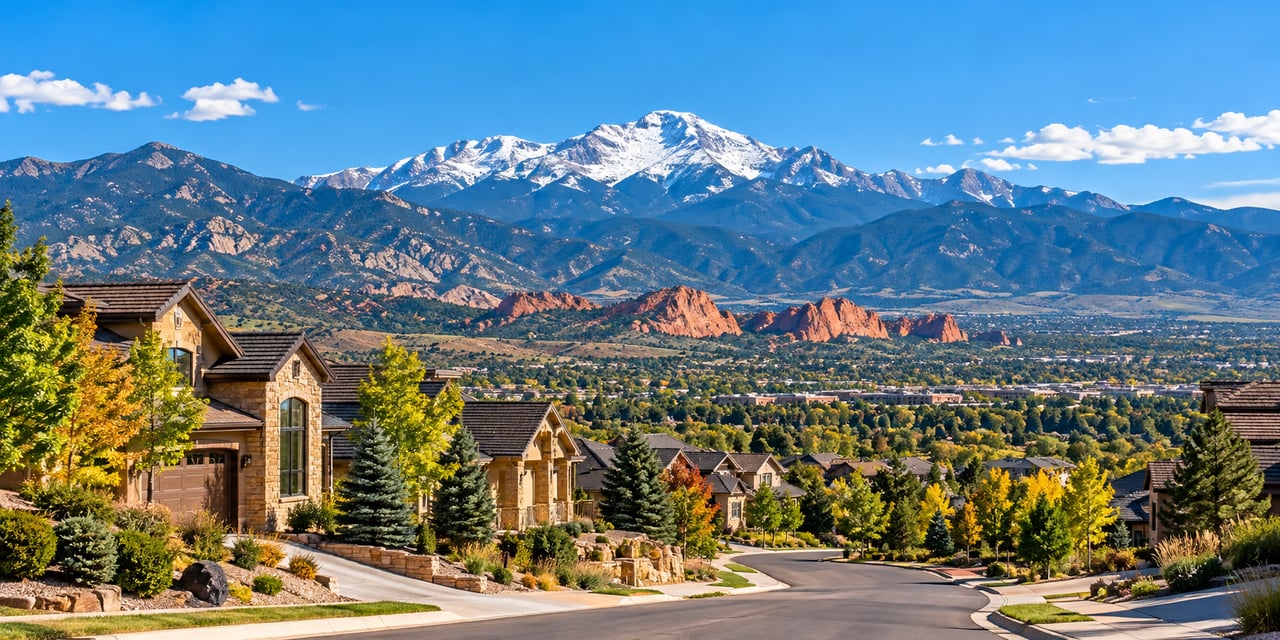
Moving to Colorado Springs
Moving to Colorado Springs

Hiking
The Manitou Incline

Southern Colorado Activities
Live Music, Pumpkin Patches, Family Activities & Fall Fun in Colorado Springs, Pueblo & Pueblo West
Serving communities from Colorado Springs through Pueblo and Denver, west into the mountains or east to the plains, our team is here to help with all your real estate needs across Colorado’s Front Range.