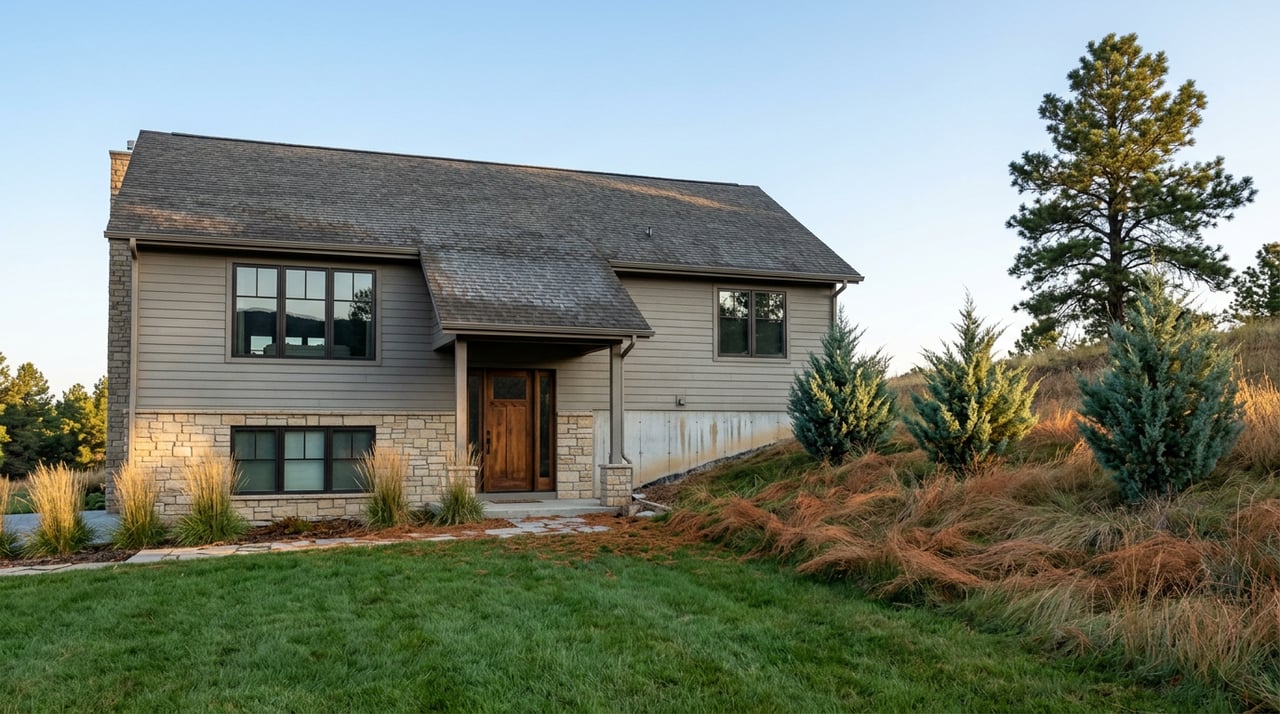
In Monument, The Radon Number Rarely Kills A Deal. The Second Visit Does.
September 3, 2026
September 3, 2026
Say you're eight days into a Monument contract. The general inspector already flagged the usual things: a water heater near end of life, a few roof shingles to watch. You ordered a radon test the same day, because your agent told you to. Forty-eight hours later the number comes back at 6.2 pCi/L, well above the EPA's action level of 4 pCi/L. Not shocking. Not even unusual for the Tri-Lakes area. You ask the seller to install a mitigation system before closing. The seller agrees. A contractor comes out, quotes a standard sub-slab system, installs it, and schedules the follow-up test to confirm it worked.
That's where things get interesting in Monument specifically, and it's the part almost nobody explains up front. A standard single-point system, the kind priced and installed every day on flatland lots across Colorado Springs, doesn't always work the first time on ground like this. The retest comes back at 4.3. The contractor has to return, cut a second suction point, add fan capacity. That takes another visit, another test, another 48 hours minimum. And your Inspection Resolution deadline was five days ago.
The radon number itself almost never kills a Monument transaction. The clock does.
Colorado Springs proper sits mostly on flat to gently sloped ground with a fairly uniform slab-on-grade or basement foundation profile. A radon mitigation contractor can cut one hole, run one pipe, install one fan, and be done. Monument and the broader Tri-Lakes area sit higher, on fractured granite bedrock that's part of what gives the Rampart Range its exposed rock outcrops. That same fractured rock creates more pathways for soil gas to move underneath a foundation, and it means radon doesn't always concentrate at one predictable point the way it does in a home built over uniform, undisturbed soil. A local mitigation contractor who works this ground regularly will often size a system with a second suction point or a higher-capacity fan from the start, precisely because a single-point system on fractured rock has a higher chance of not fully doing the job.
That distinction matters more than the raw pass or fail number, because it changes what a "standard" quote actually needs to include.
A typical Colorado radon mitigation system, the kind you'll see quoted most often, runs in a fairly narrow range for a straightforward slab foundation. Homes with crawlspaces or more than one foundation type cost more, because they need a sealed vapor barrier and sometimes a hybrid system layered on top of the basic sub-slab approach.
| Foundation type | Typical install cost | Suction points | Retest risk on first attempt |
|---|---|---|---|
| Simple slab, single foundation | Lower end of the standard range | One | Lower |
| Crawlspace or mixed foundation | Meaningfully higher | One, plus sealed vapor barrier | Moderate |
| Fractured bedrock or multiple foundation types, common through Monument and Tri-Lakes | Mid to upper range | Often two or more | Higher without proper sizing |
A lowball bid that only accounts for a single suction point can look attractive on paper. On a bedrock lot, it's often the bid most likely to fail its own retest, which turns a one-visit fix into a two-visit fix and adds days you may not have left in your contract.
Colorado's standard Contract to Buy and Sell gives the buyer the right to inspections at the buyer's own expense, and that right runs on a specific timeline built into the Dates and Deadlines table: an Inspection Objection deadline, an Inspection Resolution deadline, and an Inspection Termination deadline. Radon lives inside that same window, even though it's easy to treat as a separate, slower-moving issue because it feels more like a health question than a structural one.
A short-term radon test needs a minimum of 48 hours running with the house closed up beforehand, and in practice a real estate transaction test often takes two to five days once you account for device delivery and lab turnaround. That already eats into the Objection deadline if you wait to schedule it. If the number comes back elevated and you move into negotiation, the seller then needs time to get a mitigation quote, schedule the install, and get it done before the Resolution deadline. Add a failed retest and a second suction point to that sequence, and the math stops working unless everyone moved fast from day one.
The fix isn't complicated. Order the radon device the same day as the general inspection, not after you see the inspector's written report. That single scheduling choice is often the difference between a mitigation negotiation that resolves calmly inside your deadlines and one that turns into an extension request nobody wanted to ask for.
Buyers in a Monument transaction should treat radon as a same-day task, not a follow-up item.
Colorado's radon disclosure law, Senate Bill 23-206, took effect August 7, 2023 and is now part of state statute. It requires a few specific things: the residential sale contract has to include a warning about the health risks of radon and the need for testing, the seller has to disclose any radon testing history they know about including reports and any mitigation work already done, and the buyer has to receive the current state radon brochure.
What it does not require is a test. A seller can list a Monument home without ever running a radon device, and that's fully compliant with the law as long as no prior test results are being withheld. It also doesn't require the seller to pay for mitigation. If your test comes back elevated, fixing it is a negotiation like any other repair request, not an automatic seller obligation. Knowing that distinction going in changes how you approach the conversation. You're negotiating a repair, not enforcing a mandate.
For buyers, order the radon device on day one alongside the general inspection rather than waiting to see what else the inspector finds. Ask any mitigation contractor bidding on the work whether their quote assumes a single suction point or whether they've priced in the possibility of a second one given the bedrock in the area. A contractor who works Monument regularly should be able to answer that question without hesitation.
For sellers, if you already have a mitigation system installed from a prior owner or a prior test, get it inspected before you list. Radon fans typically run seven to eight years before wearing out, and a system that's aging out can turn a routine buyer test into a bigger negotiation than it needed to be. El Paso County Public Health's lab, at 1675 West Garden of the Gods Road, sells low-cost do-it-yourself kits if you want a rough read on where your home stands before it ever hits the market.
Does a cheaper mitigation bid mean a worse job? Not automatically, but on fractured bedrock a bid that only includes one suction point is more likely to fail its own follow-up test than one priced for two. Ask what happens, and who pays, if the first retest doesn't clear 4 pCi/L.
Is the seller required to install mitigation if the test comes back high? No. Colorado law requires disclosure of known radon history, not a guaranteed fix. Mitigation is a negotiated repair item, the same as a roof or water heater issue found in the general inspection.
If my home already has a mitigation system, do I still need to test again? Yes. A working system installed years ago doesn't guarantee current performance, and buyers in a real estate transaction should still request a current short-term test regardless of what's already installed.
Radon in a Monument home is rarely the deal breaker people expect it to be. The number is fixable, the cost is predictable within a range, and the health guidance is well established. What actually catches people off guard is timing, specifically the gap between a system that's sized for flat ground and one that's sized for the fractured rock underneath a Tri-Lakes lot. Get ahead of that gap early and the rest of the transaction moves the way it's supposed to.
If you're buying or selling in Monument and want a read on how a specific property's radon history, foundation type, or system age might affect your timeline, Pulse Real Estate Group has walked this exact process with plenty of Tri-Lakes buyers and sellers. Get a free home valuation and let's talk through what your contract clock actually looks like before you're eight days in and counting.
Stay up to date on the latest real estate trends.

Serving communities from Colorado Springs through Pueblo and Denver, west into the mountains or east to the plains, our team is here to help with all your real estate needs across Colorado’s Front Range.