House Hacking In Colorado Springs For First-Time Buyers
July 23, 2026
July 23, 2026
Thinking about buying your first home in Colorado Springs and using rent to help cover the payment? House hacking can be a smart way to lower your monthly housing costs, but it only works when the property, financing, and local rules all line up. If you want a clear picture of what is actually possible in Colorado Springs, this guide will walk you through the options, the local limits, and the questions to ask before you buy. Let’s dive in.
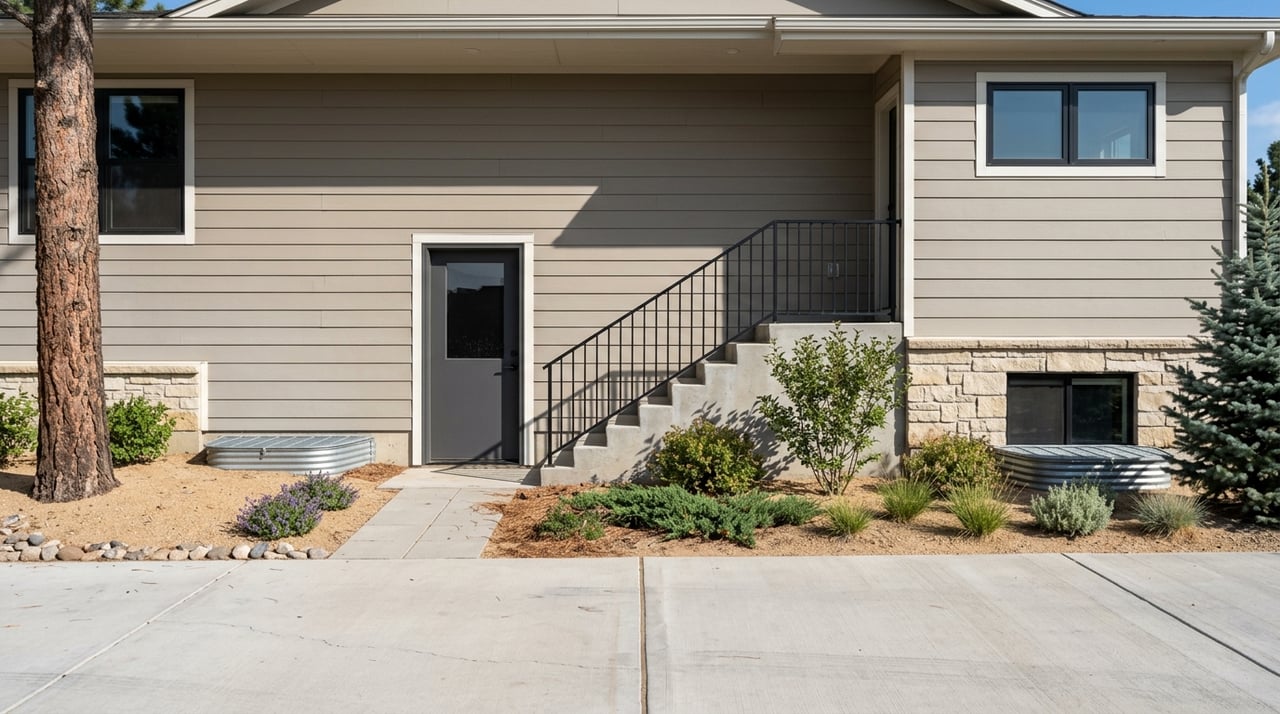
House hacking usually means you live in the home and rent out part of it to offset your costs. In Colorado Springs, that can look like a home with an ADU, a basement suite, a duplex or fourplex where you occupy one unit, a roommate setup, or a short-term rental that follows local rules.
The big local detail is where the property sits. Rules can differ inside Colorado Springs city limits versus unincorporated El Paso County, especially for ADUs and short-term rentals. That means your first step is not guessing what a property could do, but confirming what it is allowed to do.
An ADU can be one of the most appealing setups for first-time buyers because it creates a separate living area on the same lot. In Colorado Springs, one ADU is allowed per lot developed with a single-family home, and it can be attached, integrated, or detached in many zone districts.
There are important limits, though. The city caps ADU size at 50% of the primary home or 1,250 square feet, requires one off-street parking space, and generally does not allow the ADU to be sold separately from the main home. Detached and attached ADUs are also not allowed in the Wildland Urban Interface Overlay district.
For many buyers, the biggest issue is timing and legality. An ADU is authorized through a building permit, not through an informal conversion, and the city requires public notice before the permit is issued. Because of that, buying a property with an already legal secondary space may be easier than planning a major conversion after closing.
One more rule matters a lot if you are comparing rental strategies. In Colorado Springs, an ADU cannot be used as a short-term rental.
If you want the clearest house hacking structure from a lending standpoint, a small multifamily property may be worth a close look. When you buy a two- to four-unit property as your primary residence and live in one unit, Fannie Mae allows lenders to consider rental income from the subject property with the right documentation.
That makes this setup different from a basic roommate arrangement. Instead of relying on informal rent sharing, you may have a property type that is more directly recognized in underwriting. For a first-time buyer trying to qualify responsibly, that can make a big difference.
The tradeoff is inventory and budget. Small multifamily properties can be harder to find and may come with more maintenance, but they often offer one of the cleanest paths to reducing your monthly payment through rental income.
Renting a bedroom to a roommate is often the simplest form of house hacking. You buy a home, live there, and have another person contribute to housing costs through a written rental arrangement.
The catch is that lender treatment is usually limited. Fannie Mae generally does not treat boarder income from a principal residence as acceptable stable income except in narrow situations, and when it is allowed, the lender needs proof of shared residency and at least 12 months of receipt history.
That means roommate income may help your monthly budget after you move in, but you usually should not assume it will help you qualify for the mortgage up front. Once you have a written rental agreement in Colorado, state law treats it as a lease relationship, and the landlord must provide a signed copy within seven days along with the landlord’s name and address.
Some buyers wonder if they can use short-term rental income to offset costs right away. In Colorado Springs, this option has some of the most detailed rules, so you need to be careful.
State law defines a short-term rental as a lodging unit rented for less than 30 days. In Colorado Springs, owner-occupied short-term rentals must be in lawful dwelling units in zones where residential units are permitted, and the owner must physically occupy the property for at least 185 days each year.
The city also requires an active short-term rental permit before a property is listed on a hosting platform. The permit is issued to a specific owner and does not transfer with the property, so you cannot assume an existing listing setup carries over after a sale.
There are also operating rules to plan for. The city requires at least $500,000 in liability insurance for the permit, occupancy is limited to two people per bedroom plus two additional occupants with a maximum of 15, and certain sleeping areas are not allowed, including sheds, unfinished garages, outdoor areas, and recreational vehicles.
If you are considering a property with an ADU, read this carefully: Colorado Springs says properties with an ADU are not permitted to have a short-term rental permit, except for limited grandfathered situations. So if your plan is “ADU now, short-term rental later,” that may not work.
In the Colorado Springs area, the city-versus-county line matters more than many first-time buyers expect. Inside city limits, ADUs and short-term rentals have clear local permitting rules. In unincorporated El Paso County, the county says it has no codified short-term rental ordinance for the principal structure, although accessory structures used as short-term rentals need zoning approval and all rentals still must follow county land-development rules and ordinances.
This difference can affect what kind of house hacking plan is realistic. A property just outside city limits may offer a different rule set than a similar home inside the city. That is why buyers should confirm the property location, zoning, and allowed use before building a financial plan around projected rent.
Before you get too excited about a property, verify the zoning in SpringsView. Colorado Springs specifically tells buyers to do this before assuming a property can support an ADU, short-term rental, or other accessory use.
You also need to review HOA covenants, if there are any. A homeowners association may prohibit a use even when the city allows it, and the city does not enforce those private restrictions. In practice, that means both the public rules and the private rules matter.
One of the biggest mistakes first-time buyers make is counting future rent too early. Mortgage underwriting requires income to be current or reasonably expected and verified with reliable third-party records.
For house hacking, the way rental income is treated depends on the property type and documentation. Lenders may use tax returns, lease agreements, or appraisal rent schedules depending on the scenario. For a one-unit primary residence with an existing ADU, rental income may be considered in certain transaction types, but the guide says it is generally capped at 30% of total qualifying income.
This is why owner-occupied small multifamily properties often stand out. The rental structure is easier for lenders to evaluate than projected roommate income or a loosely planned rental arrangement. If financing is part of your strategy, ask the lender exactly how they will treat the income for the specific property you are considering.
House hacking changes your risk profile, so insurance should be an early conversation, not an afterthought. Standard homeowners coverage is often not designed for short-term rental activity, and paying guests may not be covered under a basic policy.
If you are considering roommates, a separate unit, or a short-term rental setup, ask your insurer what type of coverage fits the use. In Colorado Springs, the short-term rental permit also requires at least $500,000 in liability insurance or equivalent platform coverage.
Taxes can also change the numbers. Colorado law provides that for property tax years beginning on or after January 1, 2026, some short-term rental units that are not primary residences may be classified differently if they were leased for short-term stays for more than 90 days in the previous year. For first-time buyers, the safest move is to confirm tax treatment with a tax professional instead of assuming the income math is simple.
A good house hack should still make sense when things do not go perfectly. That means using rent estimates that are below the best-case number and testing the payment with and without rental income.
Your model should account for more than principal and interest. Include vacancy, turnover, repairs, utilities, HOA dues, insurance, permit costs, extra maintenance, and if you are considering short-term rental use, platform fees and furnishings.
A conservative approach helps you avoid buying a property that only works on paper. If the home becomes stressful the moment rent is delayed or a repair pops up, the strategy may be too tight for a first-time purchase.
If you are serious about house hacking in Colorado Springs, follow this order before you write an offer:
This process matters because some strategies are allowed, some require permits, and some do not mix well together. The goal is not just to buy a home, but to buy one that supports your plan without surprises.
House hacking can absolutely help you get into homeownership in Colorado Springs, but it is not a shortcut around zoning, underwriting, insurance, or local permits. The best opportunities are usually the ones that are legal, easy to document, and still affordable even if the rental side underperforms for a while.
For many first-time buyers, that means comparing an owner-occupied duplex or fourplex, a home with a legal secondary space, or a straightforward roommate setup. The right fit depends on your budget, your comfort level, and how the property lines up with city or county rules.
If you want help finding properties that fit your goals and asking the right questions before you commit, reach out to Scott Coddington for local guidance tailored to Colorado Springs.
Stay up to date on the latest real estate trends.



Serving communities from Colorado Springs through Pueblo and Denver, west into the mountains or east to the plains, our team is here to help with all your real estate needs across Colorado’s Front Range.