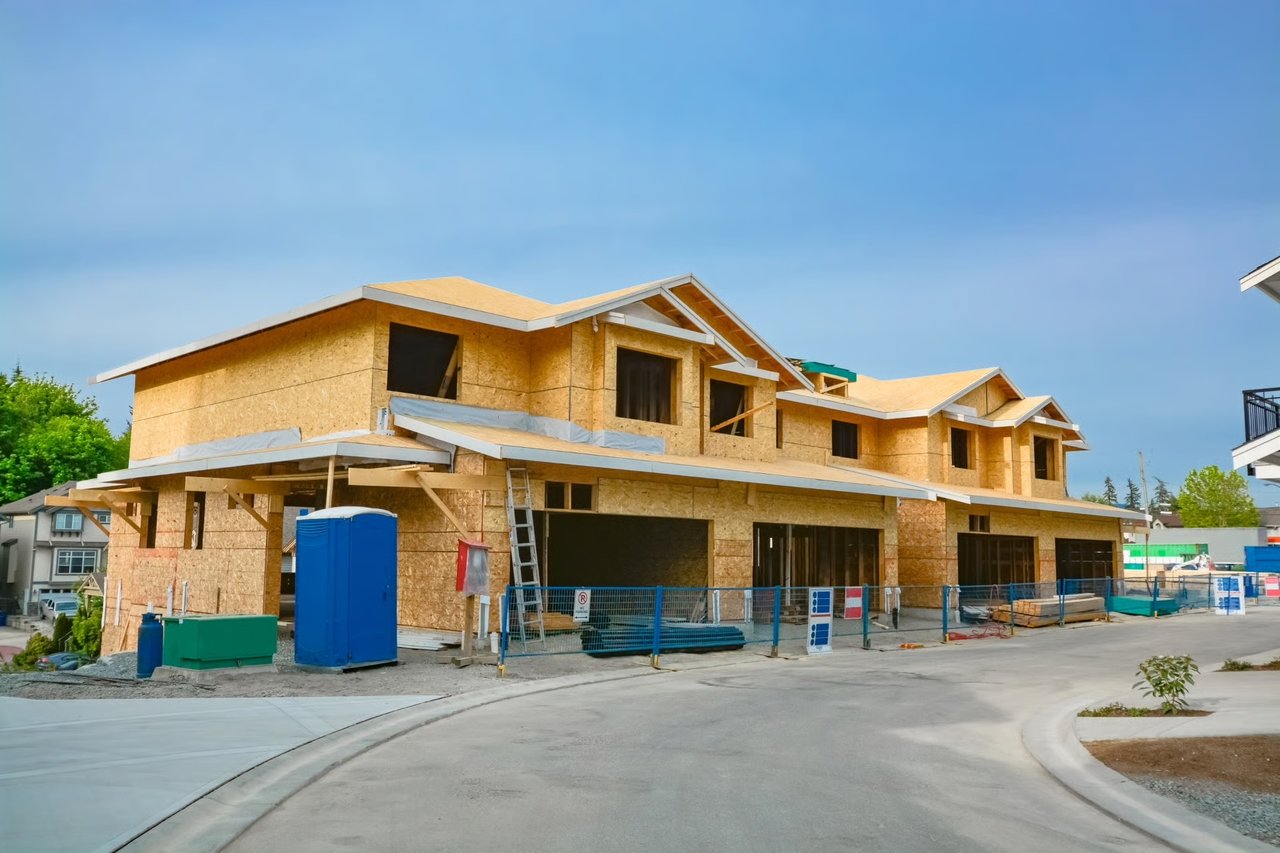
Colorado Springs Builders Are Offering Lower Mortgage Rates — But There’s More to the Story
New Construction Scott Coddington September 17, 2026
New Construction Scott Coddington September 17, 2026
If today's mortgage rates are making you question whether buying a home makes sense, there may be another part of the market worth exploring: new construction builder incentives.
Throughout Colorado Springs, El Paso County, Pueblo, Pueblo West, and surrounding Southern Colorado communities, some home builders are offering incentives designed to make purchasing a new home more affordable.
Depending on the builder, community, home, and financing program, these incentives may include below-market interest rates, temporary or permanent rate buydowns, closing-cost assistance, upgrade credits, or other buyer incentives.
For buyers focused on their monthly payment, these programs can sometimes make a significant difference.
View New Construction Homes for Sale in the Colorado Springs Area
But an attractive advertised interest rate doesn't tell the whole story.
Before deciding whether new construction or a resale home makes more sense, buyers should look at the purchase price, financing, property taxes, metro district mill levies, HOA expenses, existing debt, potential resale value, and expected length of ownership.
The goal isn't simply to find the lowest advertised mortgage rate. It's to determine which opportunity makes the most financial sense for you.
Home builders approach selling properties differently than individual homeowners selling resale properties.
A resale seller may negotiate on price or contribute toward allowable buyer expenses. Builders, however, may have additional tools available.
Depending on the builder and financing arrangement, they may work with a preferred lender and use incentive dollars to subsidize financing for buyers.
Instead of simply reducing the price of a home, a builder might choose to direct those dollars toward financing incentives.
For a buyer financing most of the purchase, reducing the mortgage rate can sometimes have a greater immediate effect on the monthly principal-and-interest payment than a comparable reduction in the purchase price.
That's one reason new construction deserves consideration when you're comparing homes based on affordability.
Builder promotions change frequently. Some last several months, while others may apply only to a handful of completed homes or contracts written before a particular deadline.
Depending on current market conditions, buyers may encounter incentives such as:
Not every buyer or property will qualify.
Many programs require financing through a builder's preferred lender and may have requirements involving credit score, loan program, down payment, contract date, closing date, or specific inventory.
That's why it's important to look beyond an advertisement saying "Rates as low as..."
You need to understand what you're actually being offered.
Not all advertised builder rates are structured the same way.
A particularly low advertised rate could represent a permanent fixed rate, an adjustable-rate mortgage, or only the first year of a temporary mortgage-rate buydown.
Those are very different financial products.
With a temporary 2-1 buydown, for example, the buyer's payment is reduced during the first two years before eventually reaching the full note rate.
An adjustable-rate mortgage may provide an attractive initial rate but can potentially adjust later according to the terms of the loan.
A permanent rate buydown, on the other hand, may reduce the interest rate for the life of a fixed-rate mortgage.
None of these options is automatically right or wrong. The important thing is understanding what happens to your payment over time, rather than making a decision based only on the introductory number in an advertisement.
One of the biggest mistakes buyers can make is comparing homes based solely on purchase price.
Imagine finding a resale home and a new construction home at similar prices.
If the builder is offering financing substantially below the rate available on the resale property, the principal-and-interest payments could be very different.
But principal and interest are only part of the equation.
A more useful comparison includes your total monthly housing expense, such as:
A lower mortgage rate can create meaningful savings, but those savings need to be evaluated alongside everything else you're paying to own the home.
This is particularly important when purchasing new construction in Colorado Springs and El Paso County.
Many newer communities are located within metropolitan districts or other special taxing districts.
These districts may use additional property-tax mill levies to help fund infrastructure and community improvements such as roads, utilities, drainage, parks, and other services.
As a result, two homes with the same purchase price can potentially have very different property-tax obligations.
A new construction home might offer a substantially lower mortgage rate while also carrying higher property taxes than a similarly priced home in an established neighborhood.
That doesn't automatically make either property the better choice.
It simply means you need to run the whole calculation.
When we're helping buyers compare new construction with resale properties, we want to understand not just the advertised mortgage payment but the estimated taxes, applicable metro district mill levies, HOA expenses, insurance, and other recurring costs.
Sometimes the builder incentive still creates a significant advantage. Other times, the difference becomes much smaller after all of the expenses are included.
Eligible VA buyers should pay particularly close attention to how seller or builder concessions are structured.
VA guidelines allow certain seller concessions to be used toward expenses that aren't normally considered traditional closing costs, subject to VA limitations and lender approval. This can include certain debt payoff strategies.
Depending on the buyer's circumstances and available concessions, it may be possible to use some of those funds toward qualifying consumer debt rather than directing every available dollar toward an interest-rate buydown.
Why could that matter?
If a buyer has qualifying credit card debt or another monthly obligation, reducing or eliminating that obligation could potentially improve the buyer's overall financial position and, in some circumstances, assist with loan qualification.
It could also allow someone to enter homeownership with fewer monthly obligations.
For that reason, an eligible VA buyer shouldn't automatically assume that using every available incentive dollar to obtain the lowest possible mortgage rate is necessarily the best strategy.
Instead, ask the lender to compare available options, which could include:
The best approach depends on the buyer's finances, available builder or seller concessions, VA requirements, and lender underwriting.
The important question isn't simply:
"What's the lowest mortgage rate?"
It's:
"How can the available incentive be structured to provide the greatest benefit for my particular situation?"
There's another side of builder incentives that buyers should understand.
A builder may choose to offer substantial financing incentives rather than reduce the advertised purchase price of a home.
For someone planning to own the property for many years, that may work very well. The buyer receives a favorable monthly payment and has time for the market and their equity position to develop.
But what happens if you need to sell relatively quickly?
That's where the original purchase price becomes important.
A financing incentive can make a particular purchase price affordable, but it doesn't necessarily mean another buyer will immediately pay that same price for the property.
There is an important distinction between what makes a home affordable today and what the property could sell for tomorrow.
If there's a reasonable possibility you'll need to move again within the next few years, your expected ownership period should be part of your new-construction decision.
Suppose you purchase a new home using a substantial builder financing incentive.
A year or two later, you need to sell.
The next buyer may not have access to the same financing incentive you received.
Even more importantly, if the builder is still developing the neighborhood, your resale home may be competing directly against brand-new homes being sold by the builder.
Those new homes may come with financing incentives, closing-cost assistance, warranties, upgrade packages, or other promotions that you can't necessarily offer as an individual homeowner.
You also have the normal expenses associated with selling a home.
Depending on market conditions and appreciation, a homeowner selling relatively soon after purchasing may not have accumulated enough equity to comfortably absorb those expenses.
This doesn't mean new construction is a poor investment or that buyers should avoid builder incentives.
It means buyers should consider both the short-term affordability and longer-term ownership picture.
There are situations where new construction incentives can create an excellent opportunity.
There are also situations where an established resale home may make more sense.
The answer depends on the individual buyer.
Instead of asking:
"Which home is cheaper?"
A better question is:
"What will each home actually cost me, and how does each option fit my plans?"
One property might have a higher mortgage rate but lower property taxes.
Another might have a significantly lower builder-subsidized mortgage rate but higher taxes because of a metropolitan district.
One home might require repairs in the next several years, while another comes with new systems and builder warranties.
One community may be nearly completed, while another could have several more years of new construction competing with future resale properties.
If you'd like to see what's currently available, you can search new construction homes for sale in the Colorado Springs area here and begin comparing properties, locations, and price ranges.
One thing buyers don't always realize is that the sales representative at a new construction community represents the builder.
Buyers can have their own real estate agent represent them during the purchase.
An experienced buyer's agent can help you compare builders and communities, evaluate available incentives, review comparable sales, research property taxes and metro districts, evaluate the lot and location, coordinate inspections, and compare the builder's financing package with other available options.
It's generally a good idea to involve your real estate agent before your first visit or registration with a builder, because builder policies regarding outside agent representation can vary.
Builder incentives can change quickly.
A financing promotion available today could be modified next month—or even next week. Some incentives apply only to specific homes, while others may depend on the buyer's loan program or closing timeline.
That's why Pulse Real Estate Group maintains a current reference of new construction communities and builder incentives throughout Colorado Springs, El Paso County, Pueblo, Pueblo West, and surrounding Southern Colorado communities.
Rather than publishing specific builder rates that could quickly become outdated, we can help identify current opportunities based on your:
More importantly, we'll help you look beyond the headline incentive.
We can compare purchase price, financing, estimated property taxes, metro district mill levies, HOA expenses, available builder incentives, resale alternatives, and overall monthly housing costs so you can see the numbers side by side.
Contact Pulse Real Estate Group and ask for our current New Construction & Builder Incentive List.
We're tracking opportunities throughout Colorado Springs, Monument, Falcon/Peyton, Fountain, Eastern El Paso County, Pueblo, Pueblo West, and surrounding Southern Colorado communities.
You can also browse current new construction homes through Pulse Real Estate Group to see what's currently on the market.
We'll help you identify current builder promotions and compare them with resale alternatives so you can understand both the opportunity and the complete financial picture behind it.
Pulse Real Estate Group
Colorado Springs & Southern Colorado Real Estate
Builder incentives, mortgage rates, property taxes, mill levies, seller concessions, and financing programs are subject to change. Incentives may apply only to select homes and qualified buyers and may require use of a preferred lender. VA concessions and debt payoff strategies are subject to VA requirements and lender approval. Buyers should verify current loan terms, APR, property taxes, special district obligations, HOA expenses, and other costs applicable to a specific property with the appropriate lender, builder, taxing authority, and other professionals.
Stay up to date on the latest real estate trends.

Homeownership
From talking with your neighbor to HOAs, covenants, and Code Enforcement, learn how to address a neglected property next door—and what it could mean when buying or sel… Read more

Fall Foliage
Best Colorado Springs Neighborhoods for Fall Colors

Homeownership
A Colorado Springs homeowner’s guide to choosing the right landscaping for your lifestyle, water use, maintenance, curb appeal, and future resale.

Buying a Home | Colorado Real Estate
Found a foreclosure on Zillow or Auction.com? Before you bid, understand how Colorado foreclosure auctions work, why you may not be able to inspect the home, and the f… Read more

2026 Relocation Guide
Everything You Need to Know About Housing, Cost of Living, Neighborhoods, Traffic, Taxes, and Life in Colorado Springs

2026 Relocation Guide
Everything You Need to Know About Housing, Cost of Living, Neighborhoods, Weather, Taxes, and Life in Colorado Springs

2026 Relocation Guide
What You Need to Know Before You Move

Southern Colorado Activities
Fall Festivals, Pumpkin Patches, Live Music, Sports & Family Events in Colorado Springs, Pueblo & Pueblo West

Haunted Houses
Haunted Houses in Colorado Springs
Serving communities from Colorado Springs through Pueblo and Denver, west into the mountains or east to the plains, our team is here to help with all your real estate needs across Colorado’s Front Range.